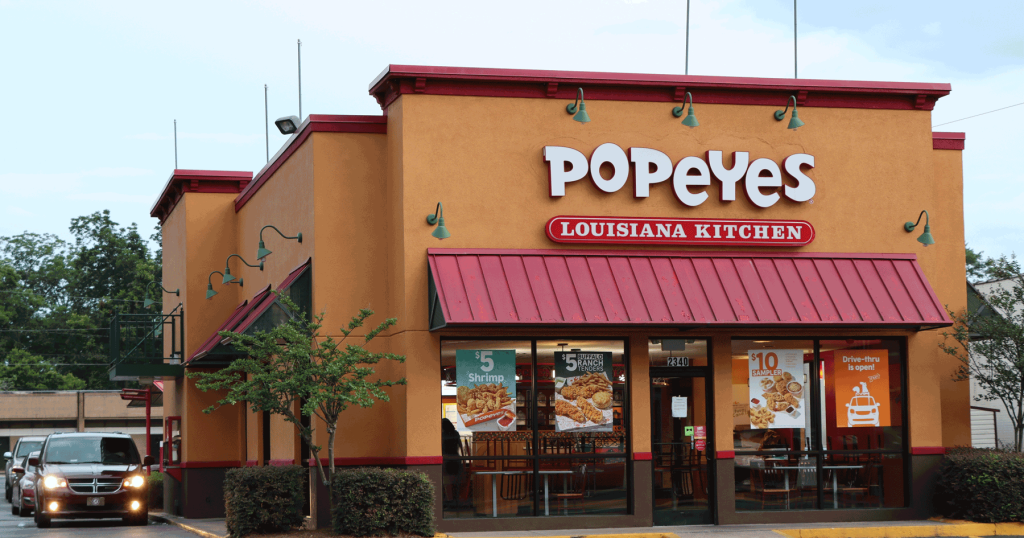
Bankruptcy Puts 130 Popeyes Restaurants at Risk of Closing
Thousands of workers, landlords, and customers across Florida and Georgia face uncertainty as a major Popeyes franchise operator seeks bankruptcy protection.
More than 100 Popeyes fast-food restaurants across the U.S. South could close after their operator, Sailormen Inc, filed for bankruptcy protection in federal court on January 19, 2026.
The Miami-based company operates roughly 130 Popeyes locations, primarily in Florida and Georgia, and cited an unsustainable debt burden combined with rising operating costs.
The filing immediately placed the future of dozens of neighborhood restaurants in question, particularly in suburban and highway-adjacent areas where Sailormen has concentrated its footprint.
The development matters because it underscores mounting pressure on franchise-based restaurant models during a prolonged cost-of-living squeeze.
While the Popeyes brand itself is not in bankruptcy, individual franchise failures can disrupt local employment, commercial real estate markets, and consumer access.
From a legal standpoint, the filing also triggers federal bankruptcy protections that pause creditor actions while the company attempts to restructure or sell assets, a process that can determine whether stores survive or permanently shut.
Court Filings Detail Debt Load and Failed Turnaround Efforts
According to bankruptcy documents, Sailormen said it accumulated significant debt over years of expansion, leaving it vulnerable when food, labor, and rent costs rose sharply.
Founded in 1987, the company grew into one of the largest Popeyes franchisees in the Southeast, operating restaurants across multiple metropolitan areas and smaller regional markets.
The company disclosed that it had attempted to sell 16 underperforming restaurants before filing but was unable to secure buyers at acceptable prices. It also acknowledged falling behind on rent at multiple locations, leading to disputes with commercial landlords.
Such disputes are common precursors to restaurant bankruptcies, as leases are often long-term and difficult to renegotiate outside of court supervision.
Under U.S. bankruptcy law, the filing allows Sailormen to temporarily halt eviction actions and debt collection while it seeks court approval to assume, reject, or renegotiate leases.
Franchise Structure Limits Corporate Liability
Executives at Popeyes emphasized that the bankruptcy does not involve the brand or its parent company, Restaurant Brands International.
Popeyes operates almost entirely through franchising, meaning individual operators like Sailormen are legally separate businesses responsible for their own debts, leases, and payroll.
In a memo sent to franchisees, U.S. and Canada president Peter Perdue said Sailormen had taken on substantially more leverage than most Popeyes operators.
He noted that many of the restaurants involved remain profitable on a store-by-store basis, suggesting financial stress stemmed from debt structure rather than daily sales alone.
This distinction is significant legally because corporate Popeyes is not required to cover franchise debts or guarantee leases.
Legal Process Will Shape Store-by-Store Outcomes
The bankruptcy case will proceed under federal court oversight, with Sailormen required to file detailed schedules listing assets, liabilities, and ongoing contracts.
Creditors including landlords, suppliers, and lenders—will have the opportunity to object to proposed restructuring plans.
One key legal issue will be lease assumption. Under bankruptcy rules, Sailormen must decide whether to keep, renegotiate, or reject each restaurant lease.
Rejected leases typically result in store closures, while assumed leases may be assigned to buyers if restaurants are sold. Courts often impose strict deadlines for these decisions to limit uncertainty for property owners.
For consumers, this process means outcomes will vary location by location. Some restaurants may continue operating without interruption, while others could close with limited notice once court approvals are granted.
Key Questions Answered
Is Popeyes as a brand in financial trouble?
No. Only Sailormen Inc., an independent franchise operator, filed for bankruptcy. Popeyes and its parent company are not part of the case.
How many Popeyes restaurants could close?
Up to 130 locations are involved, but closures are not automatic. Outcomes will depend on lease decisions and potential sales approved by the bankruptcy court.
Will customers lose gift cards or loyalty rewards?
Typically, gift cards and loyalty rewards are honored only at operating locations. Customers may face limitations if local stores close permanently.
Are landlords protected in the bankruptcy process?
Landlords can file claims in bankruptcy court and object to lease rejections, but federal law gives debtors broad flexibility to restructure or exit leases.
Could other Popeyes franchisees face similar issues?
Industry data shows that heavily leveraged franchise operators face higher risk when costs rise and consumer demand softens.
Court Timeline Will Determine Closures and Broader Industry Signals
Sailormen’s bankruptcy now enters a court-managed phase that will decide whether its 130 Popeyes locations remain open, are sold, or shut down.
The company is required to submit full financial disclosures and outline a plan to restructure its debts or wind down operations.
Bankruptcy judges will set deadlines for lease decisions and possible asset sales, with landlords and lenders able to challenge or negotiate proposed terms through the court process.
If closures occur, the company must coordinate with property owners and provide legally required notice to employees.
These decisions are expected to unfold over the coming months and may differ from one location to the next.