Wenne Alton Davis’ Fatal Midtown Collision: Why the Right-of-Way Question Now Sits at the Heart of the Case
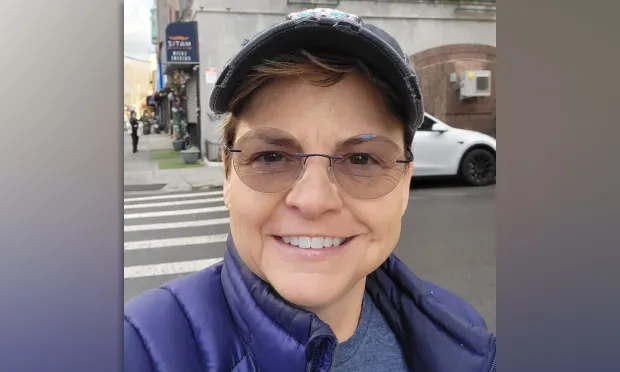
Actress Wenne Alton Davis, 60, was struck and killed by a Cadillac while crossing a Midtown Manhattan intersection. Police say she had the right-of-way and the driver remained at the scene; no charges have been filed as the investigation continues. Her death highlights how New York evaluates responsibility in fatal pedestrian collisions.
Breaking news
Monday evening’s rush through Midtown Manhattan came to a sudden halt when actress Wenne Alton Davis — best known for her appearance in The Marvelous Mrs. Maisel — was struck during a left-turn collision at West 53rd Street and Broadway. She suffered a severe head injury and died later that night at Mount Sinai Hospital.
The central search-intent question — what happened legally, and why does right-of-way matter so much in this case? — emerged immediately. Police confirmed that Davis was crossing with the legal right-of-way when the 61-year-old Cadillac driver turned left and hit her. He remained at the scene, cooperated fully, and has not been charged. The NYPD’s Collision Investigation Squad has now taken over, a standard step in any fatal crash where duty-of-care questions arise.
This section of Midtown, lit by holiday crowds and surrounded by landmarks like Radio City Music Hall, is among the city's most pedestrian-dense corridors. Friends say Davis had left her Queens home for dinner and a movie — an ordinary night that turned into a devastating legal case now governed by New York’s strict but highly fact-dependent pedestrian laws. With the emotional shock still fresh, investigators must now determine how the collision unfolded and what the law requires next.
What we know so far
Police reports say Davis was lawfully crossing West 53rd Street when a Cadillac turning left from Broadway struck her around 6 p.m. Monday. Witness accounts and preliminary findings indicate she had the pedestrian signal.
Emergency services transported her to Mount Sinai Hospital, where she died later that night from head trauma.
The driver remained at the scene and provided information to officers. He has not been charged, and authorities have not publicly identified him.
The NYPD’s Collision Investigation Squad is reviewing nearby traffic cameras, intersection timing, and vehicle dynamics — standard procedure in a fatal pedestrian crash.
The legal issue at the centre
This case turns on New York’s pedestrian right-of-way and driver duty-of-care laws. Under city and state regulations, drivers making turns must yield to pedestrians who are lawfully in the crosswalk.
In fatal collisions, investigators consider:
• whether the pedestrian had the walk signal
• whether the driver exercised reasonably safe care
• whether speed or visibility played a role
• whether distraction, impairment, or mechanical issues contributed
• whether the roadway’s design or lighting affected conditions
Criminal charges require evidence of recklessness or negligence meeting a statutory threshold. Civil liability is separate and evaluated under a lower evidentiary standard, often arising even when criminal charges are not pursued.
At this stage, the investigation is fact gathering — not fault finding.
Key questions people are asking
Is the driver facing possible charges?
Yes. The absence of immediate charges does not close the door. Prosecutors often wait for the Collision Investigation Squad’s full report before making determinations.
Does right-of-way automatically determine liability?
No. It is a major factor but not the sole one. Investigators assess the entire intersection environment and the driver’s actions leading up to the turn.
Why did the case go to the Collision Investigation Squad?
Any fatal crash in New York typically triggers CIS involvement. The unit reconstructs collisions using technical analyses that can take weeks.
Could civil claims arise later?
Yes. Civil actions follow different standards and may proceed whether or not criminal charges are filed.
Does remaining at the scene affect the legal process?
Drivers are legally required to stay. Compliance does not determine liability but ensures investigators can collect immediate information.
What this means for ordinary people
Fatal pedestrian collisions illustrate how traffic law, criminal law, and civil law intersect. Many assume pedestrian right-of-way is decisive — when in reality, legal responsibility depends on a structured investigation examining timing, distance, visibility, and driver behaviour.
For drivers, the case underscores the duty to anticipate pedestrians during turns, reduce speed, and maintain clear sightlines. For pedestrians, it shows how investigations unfold even when they appear straightforward.
This process is designed to avoid assumptions, relying instead on physical evidence, camera footage, and statutory criteria before any legal action is taken.
Possible outcomes based on current facts
Best-case procedural scenario
Investigators determine the collision does not meet the threshold for criminal charges, and the case closes with documented findings.
Worst-case procedural scenario
If evidence shows statutory violations — such as failure to yield or unsafe turning — prosecutors may file charges. Civil litigation could also be pursued independently.
Most common pathway in similar cases
A detailed reconstruction, a prosecutor’s review, and a final determination issued weeks later — often without a public statement until the investigation is complete.
Frequently asked questions
Is the investigation likely to take a long time?
Yes. Fatal crash investigations typically require video review, measurement, and expert reconstruction, extending beyond initial police statements.
Can the family request information during the process?
Families may seek updates, but investigative records are often restricted until the process concludes.
Does the driver’s age matter legally?
Age is not a factor unless it is connected to impairment or ability to operate the vehicle, which must be supported by evidence.
Is this considered a crime scene?
A fatal collision scene is treated with heightened investigative procedures, though not all result in criminal charges.
Final takeaway
The death of Wenne Alton Davis places a spotlight on a critical legal issue: how New York determines responsibility when a pedestrian with the right-of-way is struck by a turning vehicle. The Collision Investigation Squad’s forthcoming analysis will guide prosecutors on whether any statutory violations occurred.
While emotions around the tragedy are profound, the legal process remains evidence-first — a system designed to ensure accuracy, transparency, and fairness as authorities decide what comes next in a case that has shaken both the entertainment community and the city she called home.
👈