Can the U.S. Legally Demand Tourists’ Social Media History?
The United States is weighing one of the most sweeping digital screening requirements ever proposed for foreign visitors: compelling travelers to provide five years of social media history as part of the entry process.
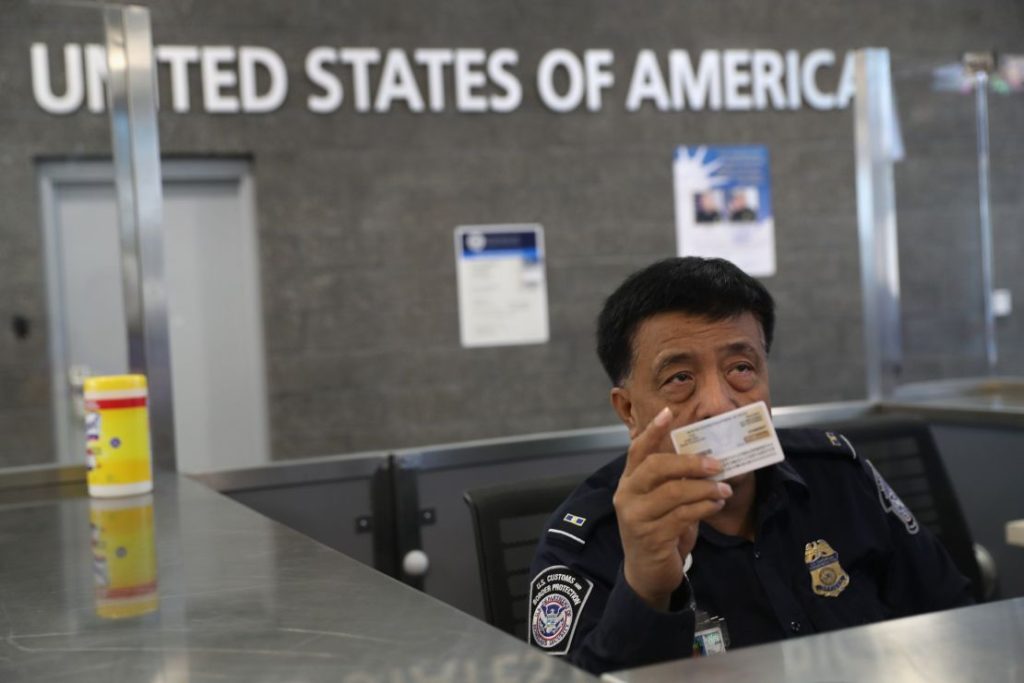
Customs and Border Protection published the proposal in the Federal Register as the Trump administration expands ideological vetting, reinstates travel freezes, and signals a tougher line on migration.
This article examines not the headline itself, but the deeper legal question: whether U.S. border authority can truly sustain turning years of personal online expression into a mandatory condition for stepping into the country.
WHAT YOU NEED TO KNOW
What’s being proposed:
CBP wants to require many foreign visitors — including those from visa-free countries — to disclose up to five years of social media identifiers and related digital details before or during travel to the U.S.
Why it’s legally significant:
Border agencies have broad powers, but modern digital content implicates heightened First Amendment concerns and unsettled Fourth Amendment standards around device and cloud searches.
Where this fits historically:
Since 2019, visa applicants have already been required to provide their social media handles; extending that practice to tourists dramatically widens both scale and impact.
Why timing matters:
The U.S. is preparing to host the 2026 World Cup and 2028 Olympics, which will generate unprecedented volume at airports and land borders — raising practical, diplomatic, and economic stakes.
Why This Is the Big Unanswered Question
What sets this policy apart is not its complexity but its reach. A suitcase search has long been part of travel; a five-year digital diary is something else entirely. Social media archives blend political opinions, jokes, intimate conversations, and snapshots of daily life — all scattered across platforms in ways that rarely resemble traditional “documents” a traveler might carry. When a government demands access to this material as a condition of entry, the public instinctively asks: Can they do that? And if so, how far does that power extend?
Border searches occupy a legal grey area where the government’s authority is at its strongest and constitutional protections are at their most unsettled. In practice, travelers often assume that border officers can do nearly anything. In law, the picture is more nuanced. Courts have increasingly recognized that digital information is different in both scale and sensitivity. That tension between old doctrines and new realities is precisely why this issue matters — and why the legality question remains unresolved.
What the Breaking News Didn’t Explain
The initial news coverage focused on the proposal’s political context, its connection to broader immigration measures, and the scale of travelers who would be affected. What it did not detail — but what will ultimately determine the policy’s legal fate — are the operational questions that define whether such a system is even lawful. For clarity, and in accordance with your rule allowing a single bullet section, these are the essential unknowns:
-
What counts as “social media history,” and does CBP intend to include private messages, deleted posts, or metadata tied to location and interactions?
-
How long DHS and its partner agencies intend to retain the data, and which domestic or foreign intelligence authorities may access it.
-
Whether undefined concepts like “anti-Americanism” will be judged using explicit, neutral criteria or left largely to officer interpretation.
-
What redress or appeal mechanisms travelers will have if denied entry based on digital content.
-
How CBP will reconcile this with court decisions limiting invasive digital searches at the border unless tied to specific, articulable concerns.
Each of these questions sits at the intersection of constitutional limits and administrative obligations. Without clear definitions, the legal footing of the proposal grows weaker — and the risk of inconsistent or discriminatory enforcement increases.
The Deeper Context: How Law and History Treat Digital Border Searches
To understand how far the government’s authority extends, it helps to trace the evolution of border-search law. Since United States v. Ramsey in 1977, the Supreme Court has held that routine searches at the border are “reasonable by virtue of the fact that they occur at the border,” meaning officers do not need warrants or probable cause for physical inspections. That doctrine made sense in an era when searches involved bags, cars, and paper documents.
Digital content upended that logic. In Riley v. California (2014), the Court unanimously ruled that searching a smartphone requires a warrant during an arrest because it contains unprecedented volumes of sensitive personal information. While Riley did not involve border agents, its rationale — that digital devices are qualitatively different — reshaped lower-court thinking.
In United States v. Cano (2019), the Ninth Circuit held that forensic searches of digital devices at the border require reasonable suspicion and must be directed at finding “digital contraband,” not performing broad fishing expeditions. Other circuits, such as the First Circuit, have refused to impose similar limits, creating a national split that has never been resolved by the Supreme Court.
Overlaying Fourth Amendment concerns is the First Amendment dimension. Social media vetting touches expression — political views, satire, religious commentary, and ideologically charged speech. Modern courts take viewpoint discrimination seriously; even though non-citizens have no right to enter the U.S., government actions that penalize speech can raise constitutional problems once individuals interact with U.S. authorities or are physically present at the border.
A historical comparison also matters. Between the mid-20th century and the post-9/11 era, the U.S. periodically excluded individuals for political associations, but these policies generated sustained controversy, diplomatic backlash, and legislative revision. Today’s digital screening revives some of those debates in a new technological context.
Finally, there is an administrative-law layer. Any rule that expands data collection must comply with the Administrative Procedure Act, meaning agencies must justify the scope, necessity, and clarity of the rule. Vague standards and open-ended discretion invite litigation and judicial skepticism.
What Independent Experts Typically Say About Issues Like This
Legal analysts and digital-security researchers who study border-search practices generally identify the same structural concerns, even when they differ on the policy merits. Their observations tend to cluster around themes that have surfaced repeatedly in court filings, academic reviews, and prior DHS oversight reports.
A recurring point is that the traditional border-search exception—designed for suitcase inspections and physical contraband—begins to strain when applied to cloud-connected archives that contain years of personal communications. Scholars frequently note that once a search implicates remote data or expressive content, the logic supporting suspicionless inspections becomes far less settled. Several federal cases involving device searches have already underscored this tension, and analysts often cite those disputes as evidence that the law has not yet caught up with digital reality.
Another widely discussed issue is definitional clarity. When agencies rely on concepts that lack statutory meaning—such as “anti-Americanism”—experts warn that the risk of inconsistent or biased enforcement increases sharply. Past reviews of immigration decision-making have shown how subjective criteria, even if well-intentioned, can magnify implicit bias or lead to uneven outcomes across ports of entry.
Security researchers also remain skeptical about the operational value of large-scale social-media vetting. Studies examining earlier DHS pilot initiatives and academic analyses of public-post screening have generally found that broad digital sweeps generate high false-positive rates and limited actionable intelligence. High-risk individuals often communicate through encrypted or anonymous channels, while benign travelers produce massive volumes of irrelevant data. As a result, experts typically caution that the cost-benefit ratio of such programs is far from clear.
A further theme involves the diplomatic and economic consequences. Countries with strong privacy protections—particularly in Europe—have historically objected when the U.S. has expanded digital screening requirements, sometimes signaling the possibility of reciprocal measures. Tourism, higher education, and international business sectors monitor these shifts closely, and analysts often emphasize that even modest increases in perceived travel friction can affect global mobility patterns.
Together, these perspectives do not represent a unified opinion but rather a set of consistent observations drawn from litigation history, academic research, and previous attempts to scale digital vetting programs. Their common thread is that expanding border authority into the realm of long-term social-media history raises legal, practical, and diplomatic questions that earlier eras of immigration enforcement never had to resolve.
What Happens Next
Legally and administratively, the policy enters a critical phase. The 60-day comment period allows privacy groups, technology companies, civil liberties organizations, and foreign governments to submit formal objections or suggested revisions. CBP must address substantive concerns in its final rulemaking, or risk a court overturning it as “arbitrary or capricious.”
Litigation is likely if the final rule retains ambiguous terms or broad ideological triggers. Plaintiffs may challenge it under the First Amendment, the Fourth Amendment, or the APA — and the outcome may hinge on which federal circuit hears the case.
Diplomatically, resistance from allies could reshape or slow implementation. Visa-waiver countries have historically pushed back against intrusive screening, arguing that reciprocity and predictability are essential for international travel frameworks.
Operationally, CBP faces a simpler question with enormous implications: can the system realistically handle this volume? With the U.S. hosting major global events, even small delays could snowball into significant congestion. If implementation proves too slow, or if travelers react negatively, political pressure may force modification regardless of the administration’s intentions.
In short, the rule’s survival will depend on how clearly it is defined, how convincingly it is justified, how courts interpret its reach, and whether the practical realities of modern travel can absorb such a sweeping digital demand.
Frequently Asked Questions About U.S. Social Media Screening
Can foreign tourists refuse to provide their social media history when entering the U.S.?
They can refuse, but denial of entry is the most likely outcome. While foreign visitors have no guaranteed right to be admitted, constitutional concerns may still arise if the government relies on vague or ideological criteria when reviewing social media content.
Does the First Amendment protect foreign travelers’ social media posts at the U.S. border?
Certain First Amendment principles can apply when U.S. officials evaluate expressive content, even for non-citizens. Courts pay close attention to viewpoint discrimination and potential chilling effects when speech is used in immigration decisions.
How is this policy different from earlier U.S. social media vetting rules?
Since 2019, most visa applicants have had to disclose five years of social media identifiers. Extending this requirement to tourists — particularly those entering through ESTA — shifts the system from targeted screening to a routine, large-scale digital review.
Can U.S. border agents search phones or digital devices without a warrant?
They can, but courts are divided on the boundaries. Some circuits broadly allow warrantless searches under the border search exception, while others require reasonable suspicion for forensic or highly intrusive digital examinations.
Could this policy discourage people from criticizing the U.S. online before traveling?
Yes, potentially. If travelers believe that political posts could complicate future entry, they may self-censor. Courts often consider such chilling effects relevant when evaluating First Amendment implications of digital vetting.
Related Explainer
To understand how federal immigration enforcement actually works behind the scenes, you may want to start with our companion deep-dive 👉 What an ICE Detention Really Means: Inside the Legal Process Most Americans Never See. It breaks down the rules, rights, and procedures that shape U.S. immigration cases, and provides helpful context for the broader legal system this story fits into.