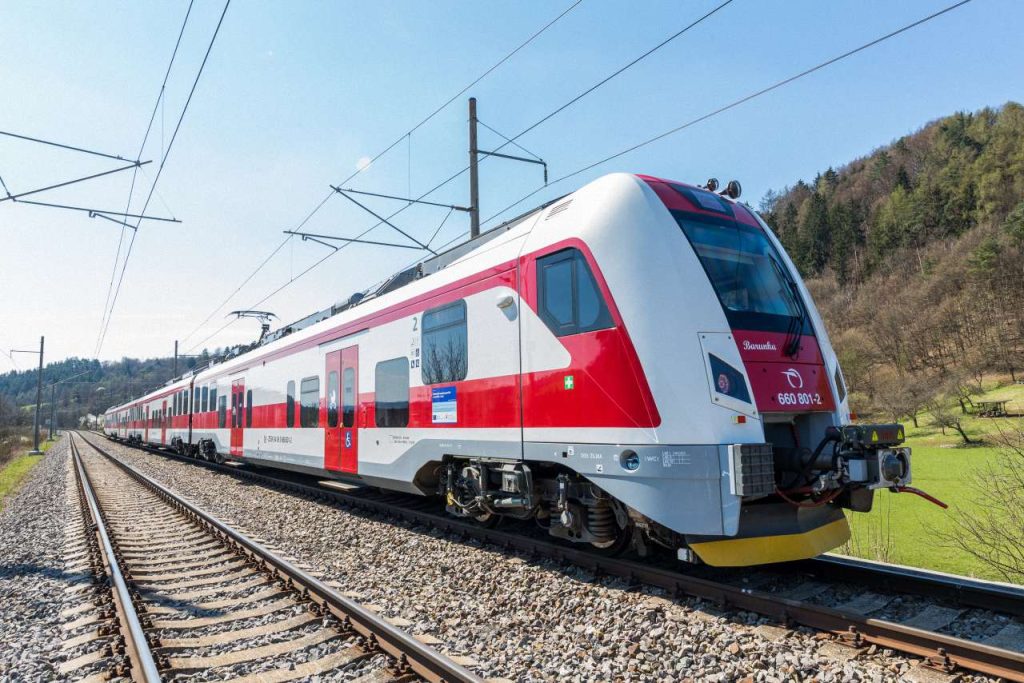
Slovakia’s ZSSK Invests EUR 332 Million in 36 Škoda Battery Trains
Slovakia will introduce battery-electric trains on key regional routes, replacing diesel units on lines that lack continuous electrification.
Slovakia’s First Battery Trains Set To Replace Diesel Units
Slovakia has placed its first order for battery-electric passenger trains, committing to a national rollout that will shift several regional corridors away from diesel traction.
The state operator, Železničná spoločnosť Slovensko (ZSSK), confirmed that deliveries will begin next year, with deployment focused on routes that mix electrified and non-electrified segments.
These dual-mode trains are designed to operate under overhead power where available and switch to onboard batteries on rural stretches that currently depend on diesel units.
The move matters because Slovakia, like many EU member states, faces rising pressure to modernise regional mobility while meeting climate obligations and managing the high cost of full network electrification.
Battery trains offer an interim solution that reduces emissions, supports EU transport-policy objectives and improves travel continuity for passengers on routes where infrastructure upgrades remain several years away.
Why Battery Trains Address Mixed-Infrastructure Gaps
Battery-electric units allow uninterrupted service across sections where electrification networks are incomplete.
They draw power from overhead wires on main lines and use stored energy for non-electrified branches, removing the need for additional transfers or diesel engines.
Countries such as Germany and Italy have adopted similar models to reduce emissions on shorter rural segments where installing overhead lines is not currently viable.
These trains typically support regional services that operate within predictable distances between electrified junctions.
How the Procurement Aligns With EU Transport Goals
The European Union encourages member states to lower transport-sector emissions by upgrading rolling stock and prioritising alternatives to diesel.
Battery trains qualify for multiple EU funding mechanisms aimed at accelerating cleaner mobility, reflecting the bloc’s broader rail-decarbonisation strategy.
Slovakia’s order aligns with this framework by prioritising zero-emission vehicles instead of renewing diesel stock.
The approach also supports EU objectives to improve service quality on regional lines, many of which provide essential connectivity for smaller municipalities.
Expected Impact on Passengers and Communities
Replacing older diesel units typically brings improvements in accessibility, reliability and noise reduction.
Battery trains run more quietly and can be equipped with low-floor boarding, digital passenger information systems and modern safety equipment common across newer European fleets.
Communities along regional corridors may benefit from reduced local air pollution and fewer disturbances from idling or accelerating diesel engines.
Such improvements are consistent with broader European rail-quality standards and ongoing adoption of the European Train Control System (ETCS).
The Role of Regional Lines in Slovakia’s Transport Network
Slovakia’s rail system includes several branch lines that connect towns to major hubs such as Bratislava, Žilina and Košice.
Many of these lines rely on diesel traction for relatively short sections, creating operational inefficiencies despite stable passenger demand.
Battery-electric trains are well suited to these corridors because they can maintain through-service without major infrastructure changes.
This approach mirrors European practice in regions where passenger density is steady but electrification upgrades would be cost-intensive.
How Slovakia Fits Into the Wider European Battery-Train Trend
Several manufacturers across Europe have launched battery-train platforms capable of regional operations, and multiple countries have conducted multi-year trials.
Germany introduced commercial routes using battery traction, while Austria and the UK have run pilot operations to evaluate performance and cost.
Slovakia’s adoption contributes to this growing market and expands Central Europe’s participation in alternative-traction technology.
It also reinforces EU-wide efforts to reduce diesel use in passenger rail before 2030.
What People Want To Know About Slovakia’s Battery Trains
Are battery-electric trains new to Europe?
No. Several EU countries already operate or test them on regional routes where full electrification is incomplete.
Will Slovakia still need diesel trains?
Yes, for now. Battery units will replace diesel on selected lines, but a full diesel phaseout depends on future investment and infrastructure planning.
How far can battery trains operate without overhead wires?
Most European regional models are designed for tens of kilometres on stored energy, enough for short non-electrified segments.
Do battery trains reduce the need for new infrastructure?
They reduce immediate reliance on diesel but do not replace long-term electrification plans where economically justified.
What This Development Means for Slovakia’s Rail Network
Slovakia’s adoption of battery trains marks a practical shift toward cleaner regional rail on routes that remain partly unelectrified.
The transition aligns with EU climate objectives and offers quieter, lower-emission service for affected communities.
As national rail planning continues, battery-electric traction is positioned to support broader efforts to modernise operations and reduce reliance on diesel across the network.