Understand Your Rights. Solve Your Legal Problems


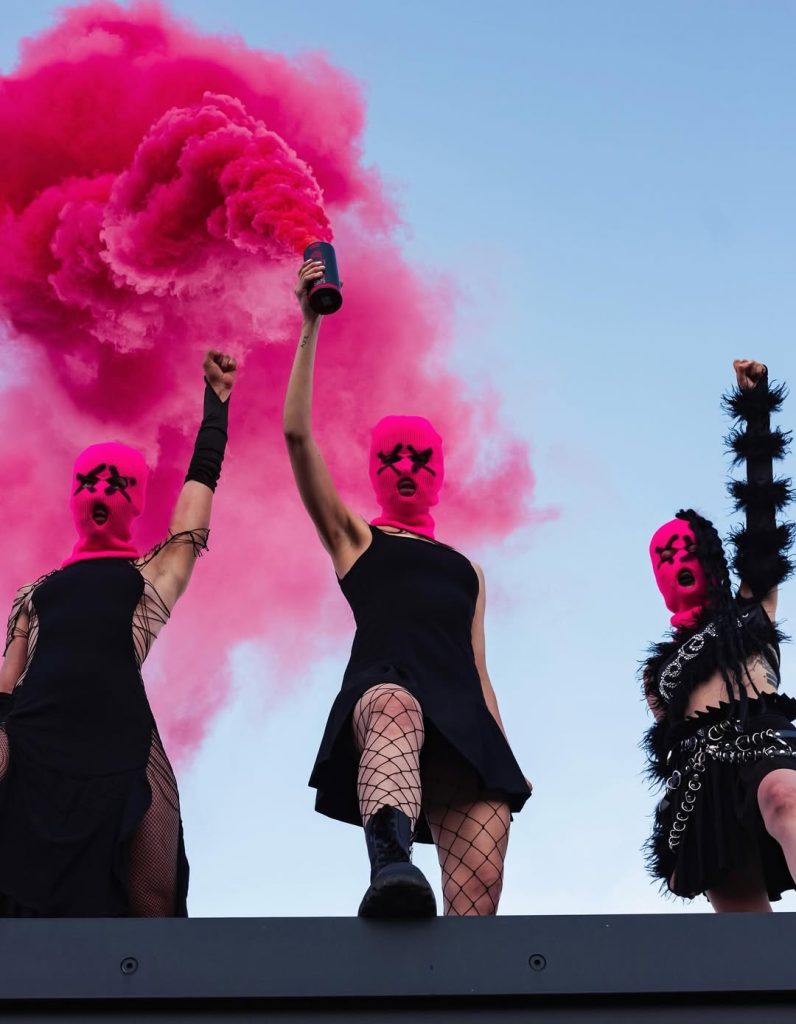
The ruling criminalises Pussy Riot’s activity in Russia, expanding legal exposure for supporters, artists, and distributors.
A Moscow court has designated Pussy Riot an extremist organisation, formally banning the feminist protest group from operating inside Russia.
The decision, issued on Monday following a request from the General Prosecutor’s Office, places the collective on Russia’s federal list of extremist entities, triggering criminal penalties for participation, promotion, or material support.
The ruling affects a group whose members are currently outside Russia but whose work remains accessible online and internationally.
The designation matters because Russia’s extremism laws are among the state’s most powerful legal tools, allowing authorities to restrict speech, freeze assets, and pursue criminal charges not only against members but also against those who associate with or amplify a banned organisation’s content.
The move comes amid intensified enforcement actions against critics of Russia’s military operations in Ukraine, highlighting how cultural and political dissent is increasingly addressed through national security legislation.
Under Russia’s federal law on combating extremist activity, organisations deemed extremist are prohibited from operating, publishing, fundraising, or organising events.
Any public display of symbols, redistribution of materials, or financial support linked to the group may constitute a criminal offence.
Penalties can include fines, confiscation of assets, and prison sentences, depending on the nature of the alleged involvement.
The designation follows earlier rulings in which several Pussy Riot members were convicted in absentia on charges related to disseminating false information about the Russian military, offences introduced or expanded after the start of the war in Ukraine.
Courts imposed lengthy prison sentences in those cases, citing wartime information laws.
By moving from individual convictions to an organisational ban, authorities have escalated enforcement from personal liability to collective prohibition.
Pussy Riot gained international recognition in 2012 after members were jailed for a protest performance inside Moscow’s Cathedral of Christ the Saviour that criticised President Vladimir Putin.
Since then, the group has operated primarily abroad, using music and performance art to oppose Kremlin policies.
Russian authorities have previously designated individual members as “foreign agents,” a separate legal status requiring disclosures but not outright bans.
Russia has increasingly applied extremism designations to political movements, media organisations, and activist groups that challenge state narratives.
Officials argue the measures protect public order, while international human rights bodies have warned they blur the line between violent extremism and peaceful dissent.
For artists and cultural institutions, the case signals heightened legal risk when expression intersects with political opposition.
The designation of Pussy Riot as an extremist organisation represents a sharp escalation in how Russian authorities are using national security law to address cultural and political opposition.
The ruling extends legal risk beyond the group’s members to supporters, online platforms, and distributors of related content, widening the scope of enforcement.
It also illustrates the growing reliance on extremism statutes to police dissent during wartime. The decision may set a precedent for similar actions against other cultural or activist groups viewed as politically oppositional.
Related coverage:👉 Reform UK’s Former Wales Leader Nathan Gill Locked Up for Taking Pro-Russian Bribes 👈