Prairie Farms milk recall prompts FDA review over potential contamination risk
Prairie Farms recalled select fat-free milk after detecting possible contamination with food-grade cleaning agents, triggering FDA oversight and renewed scrutiny of food-safety controls.
Prairie Farms has issued a voluntary recall of specific fat-free milk products after identifying potential contamination with food-grade cleaning agents during internal quality checks.
The affected milk was produced at the company’s Iowa facility and distributed to Woodman’s retail locations in Illinois and Wisconsin.
The issue surfaced on November 24, when routine monitoring flagged a deviation in production. The central legal concern involves whether the affected batch met federal food-safety and sanitation requirements before entering the retail supply chain.
The U.S. Food and Drug Administration is the authority overseeing the recall, providing public guidance and assessing compliance obligations. This matter carries public-safety significance because contaminated dairy products can expose consumers to avoidable health risks. It also underscores the importance of regulatory oversight, manufacturer duty-of-care and timely intervention when food-quality concerns arise within the production process.

What we know so far
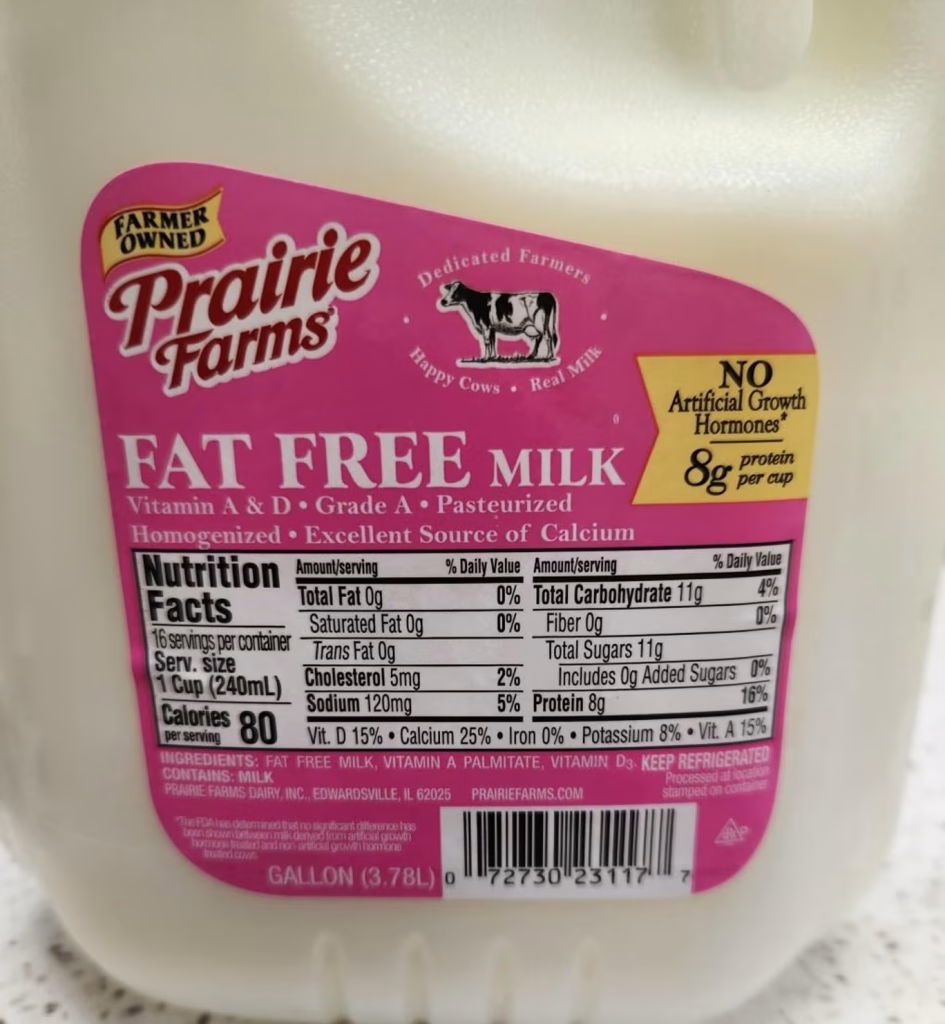
Prairie Farms confirmed that approximately 320 gallons of the affected fat-free milk were sold before the recall was issued. The product can be identified by the code date DEC08, plant code PLT19-145, production window 17:51–21:23 and UPC 7273023117.
The company reported that the potential contaminant was a food-grade sanitising agent used in cleaning equipment and food-contact surfaces. While intended for hygiene control, it is not suitable for consumption. No illnesses have been reported.
The recalled milk was distributed exclusively to Woodman’s stores in Illinois and Wisconsin. Consumers who purchased the product were advised to discard it or return it for a refund in accordance with standard FDA recall procedures.
The legal questions raised
Food-safety law requires manufacturers to prevent adulterated products from entering the marketplace. Under the Federal Food, Drug, and Cosmetic Act and Food Safety Modernization Act (FSMA), sanitation, preventive controls and quality-assurance checks must ensure that food is safe for human consumption.
Regulators typically evaluate whether production controls, cleaning cycles and hazard-prevention protocols aligned with federal standards at the time the batch was processed. When contaminants cannot be ruled out, agencies generally classify the affected product as potentially adulterated.
Retailers must also follow recall instructions, remove impacted items and implement consumer-notification procedures. These obligations form part of the wider regulatory framework governing the distribution of potentially unsafe food products.
👉👉 Can You Sue Over a Recalled Product? Know Your Rights 👈👈
Human rights, safety and public-interest context
WHO and Codex Alimentarius food-safety guidelines emphasise consumer protection and prevention of exposure to contaminated products. Even when contamination involves food-grade substances, the principle of avoiding avoidable risk remains central to public-health standards.
OSCE rule-of-law principles reinforce the need for transparent oversight mechanisms that mitigate harm and ensure accountability within supply chains. Timely recalls and regulatory monitoring demonstrate due diligence in preventing public exposure.
Food recalls can also influence community confidence in production standards. Ensuring that manufacturers promptly identify and address deviations is essential for maintaining trust in food-safety systems.
Role of law enforcement and regulators
The FDA oversees recall classification, determines the scope of affected batches and reviews production and sanitisation records. Its process typically includes examination of digital logs, batch data and sanitation documentation to verify compliance.
State agriculture or public-health departments may support distribution checks to ensure retailers remove affected products. Prosecutors become involved only when evidence indicates potential violations of federal food-safety law, which is not indicated in this case.
International coordination is not expected because the recalled products were distributed domestically.
Risks, implications and public impact
Potential ingestion of cleaning agents may cause gastrointestinal symptoms, prompting precautionary measures even where no illnesses are reported. Rapid recall action helps limit exposure and supports risk mitigation.
Incidents like this highlight the importance of strong preventive controls within food-production systems. Manufacturers and regulators typically use such events to reassess procedures, ensure corrective actions and reinforce compliance standards.
Public confidence in food-safety frameworks depends on transparent recalls and effective oversight. Ensuring that deviations are managed quickly helps safeguard consumers and maintain trust in regulatory processes.
Key questions people are asking
How can consumers identify the recalled Prairie Farms milk?
The affected product has the DEC08 code date, plant code PLT19-145, production window 17:51–21:23 and UPC 7273023117. Only these specified items are part of the recall.
What health risks are associated with food-grade cleaning agents?
These sanitising solutions are designed for equipment cleaning, not consumption. Ingestion can cause stomach upset or irritation, and regulators advise discarding affected products to avoid potential symptoms.
Why was the recall limited to certain states?
Distribution records show that the affected batch was shipped only to Woodman’s locations in Illinois and Wisconsin. Other states did not receive the impacted lot.
What triggers the FDA to review a recall?
Any contamination risk, even without confirmed illness, requires assessment of sanitation controls, preventive measures and compliance with federal food-safety protocols.
What happens next
Regulators typically continue reviewing batch records, sanitation logs and process-control data to determine if the issue was isolated. Prairie Farms may be required to document corrective actions or update preventive controls.
The FDA monitors for consumer reports of illness and may issue further updates if necessary. Retailers will complete removal of remaining stock and manage refunds in accordance with recall procedures.
Once compliance documentation is reviewed, regulators determine whether any additional steps are required to prevent recurrence.
The Prairie Farms recall FAQs
What is “food adulteration” under U.S. law?
A product is adulterated if it contains substances not intended for consumption or is produced under conditions that could make it unsafe.
Are digital production logs used in food-safety evaluations?
Yes. Batch data, timestamps and sanitation records are routinely examined during recall assessments.
How does FSMA influence recalls?
FSMA emphasises preventive controls and requires manufacturers to identify hazards and implement processes to minimise contamination risks.
Final legal takeaway
The Prairie Farms recall highlights how U.S. food-safety systems operate when potential contaminants are detected. Although no illnesses have been reported, the incident demonstrates the importance of preventive controls, rapid removal of affected products and coordinated regulatory oversight. Public safety depends on manufacturers identifying deviations early and regulators verifying that corrective measures meet federal standards. Ongoing diligence remains essential to maintaining trust in the food-supply chain.