Can Kristi Noem legally rely on the Alien Enemies Act for mass deportations?
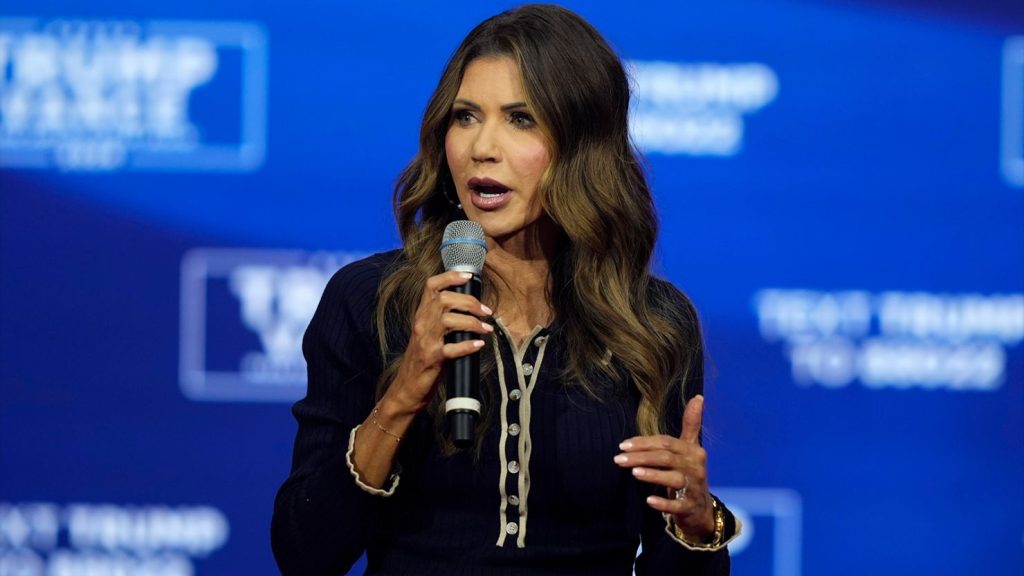
Homeland Security Secretary Kristi Noem’s latest appearance before the House Homeland Security Committee reignited debate over the administration’s use of the Alien Enemies Act, the 1798 statute now being invoked to deport more than 130 Venezuelan men to a Salvadoran megaprison. While the hearing produced sharp political exchanges and ended with Noem’s early departure, it offered little clarity about the deeper constitutional question now looming over the administration’s enforcement strategy: Can a wartime law from the 18th century form a lawful foundation for modern mass deportations in a world without a congressional declaration of war?
This article examines the legal, historical, and structural implications—issues that were largely absent from the congressional exchanges but will define the coming constitutional test.
WHAT YOU NEED TO KNOW
The administration’s use of the Alien Enemies Act sits at the center of a growing constitutional confrontation. Courts have already intervened, challenges are accelerating, and the outcome could significantly redefine presidential authority in immigration enforcement and national security policy.
Why this is the question the hearing never answered
Americans watching the hearing were not just reacting to the heated exchanges; they were trying to make sense of a far more consequential issue. The Alien Enemies Act—originally part of the Alien and Sedition Acts package—was designed for moments of declared war when Congress had formally identified an enemy state. In 2025, the United States is not at war with Venezuela, nor with any nation associated with the migrants transferred to El Salvador. That mismatch between statute and circumstance is what fuels public concern.
The public is instinctively asking whether the government can stretch “enemy” to cover migrants fleeing a collapsing state, whether wartime powers can substitute for modern immigration law, and what limits courts may impose. These questions feel immediate because the statute itself carries immense executive power. People want to know where that power ends—and who decides.
What the breaking news left unresolved
The hearing acknowledged controversy but never explained the legal mechanics underpinning the Salvadoran transfers. Members referenced injunctions, oversight authority and public safety, yet the statutory foundation remained unexplored. Without that grounding, the public was left to infer the stakes from political exchanges rather than clarified legal reasoning.
Below are the specific informational gaps that prevented a complete public understanding:
• The statutory basis DHS used to classify Venezuelan detainees as “alien enemies” under 50 U.S.C. §§21–24, despite the absence of a congressionally declared war.
• Whether the administration believes Article II national security powers allow continued deportation flights after a federal court ordered the planes returned.
• How the government reconciles the Alien Enemies Act with robust due process protections developed in cases like Boumediene v. Bush (2008) and Zadvydas v. Davis (2001).
• Whether this application of the statute could prompt the Supreme Court to reconsider its scope or even its constitutional validity in modern contexts.
These were the questions missing from the hearing—not because they were ignored, but because the format left little space for the deeper explanation the public now requires.
The deeper legal and historical context now shaping the dispute
The Alien Enemies Act, enacted in 1798 and amended in 1918, authorizes the president to regulate, detain or remove nationals of a hostile foreign government during a declared war. That last element is crucial. Its historical application has coincided with explicit congressional war declarations—for example, the detention of German, Italian and Japanese nationals during World War II.
In the modern era, immigration enforcement operates under an extensive framework created by Congress through the Immigration and Nationality Act (INA). These statutes require individualized assessments, procedural protections and oversight mechanisms. Using the Alien Enemies Act instead of INA procedures may be viewed by courts as bypassing the safeguards Congress intentionally enacted.
Judicial precedent also complicates executive reliance on wartime authority. In Boumediene, the Supreme Court held that individuals held in national security contexts retain access to habeas review. In Zadvydas, the Court limited indefinite detention of noncitizens, reinforcing constitutional constraints even in areas traditionally dominated by executive discretion.
The administration’s decision to continue deportation flights after a federal judge ordered them halted places this confrontation squarely before the courts. Historically, federal courts do not accept executive defiance lightly. If appellate judges conclude that DHS knowingly disregarded the injunction, the resulting opinion could broaden judicial oversight of immigration enforcement and narrow the reach of wartime statutes when applied domestically.
How experts typically analyze issues like this
Legal scholars often stress that wartime statutes should be interpreted in line with the conditions for which they were created. Analysts frequently note that Congress has not declared war on Venezuela, nor on any state associated with these migrants, making the classification of Venezuelan nationals as “enemies” legally tenuous. Immigration practitioners generally argue that using a wartime authority to conduct mass removals risks collapsing procedural protections the INA was built to preserve.
National security analysts also tend to caution that reviving dormant statutes can create precedents future administrations could apply more broadly, potentially altering the balance of power between Congress and the executive branch. Across these fields, a common theme emerges: deploying the Alien Enemies Act outside wartime may be legally permissible on paper but constitutionally vulnerable in practice.
What happens next in this constitutional clash
Litigation is the immediate next phase. Plaintiffs challenging the policy are expected to argue that the statute cannot apply without a congressionally declared war, and that Venezuela does not meet the statutory definition of a hostile power. Courts may also assess whether the administration’s interpretation effectively sidelines the INA, violating both congressional intent and constitutional guarantees.
If courts invalidate the current use of the Alien Enemies Act, DHS would be required to revert to standard immigration authorities—slowing the pace of mass deportations and limiting categorical removals. If courts uphold the administration’s reading of the law, the decision could mark the largest expansion of wartime executive power into domestic immigration enforcement in U.S. history.
Congress, too, appears poised for additional oversight, particularly if members believe DHS has withheld key legal analyses or violated court orders. Subpoenas, oversight reports and further hearings are likely as political and legal pressures converge.
Whatever path emerges, the result will influence the limits of presidential authority far beyond immigration. The Alien Enemies Act has rarely been tested in circumstances this detached from wartime conditions, and its survival in this context is no longer assured.
Key Questions Answered
Is the Alien Enemies Act still enforced today?
Yes. The statute remains active, though its use outside declared war has never been fully tested by the Supreme Court.
Can the Act apply without a formal declaration of war?
Historically, courts have applied the Act only during declared wars, which is why its use here is under challenge.
Did DHS violate a court order in the recent deportation flights?
That question is now part of ongoing litigation. Appellate courts will determine whether DHS acted outside lawful authority.
Do noncitizens have due process rights under wartime statutes?
Yes, though the exact scope is contested. Modern cases suggest courts will scrutinize any attempt to bypass procedural protections.
Could the Supreme Court review this issue?
Highly likely. The legal novelty, constitutional questions and national significance make Supreme Court review a strong possibility.
👉👉 RELATED: What an ICE Detention Really Means: Inside the Legal Process Most Americans Never See