New Jersey Twins Arrested After Online Threats Toward DHS Official
Federal and local authorities arrested two Absecon residents after online threats targeted a senior Department of Homeland Security official and called for violence against immigration officers.
New Jersey Brothers Charged After Threats Toward DHS Official Online
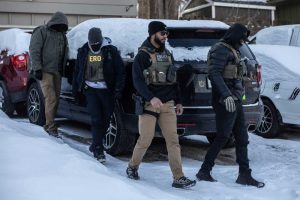
Federal agents and Absecon police arrested twin brothers on Thursday in connection with a series of online posts that allegedly threatened Department of Homeland Security (DHS) Assistant Secretary Tricia McLaughlin and urged violence against U.S. Immigration and Customs Enforcement (ICE) personnel.
The operation, carried out under a state search and arrest warrant, took place at a residence in Absecon, New Jersey, and involved support from a regional SWAT team.
Officers detained Ricardo Antonio Roman-Flores and Emilio Roman-Flores, both U.S. citizens.
Authorities say the case gained urgency because the posts targeted specific federal officials and were circulated across multiple social-media accounts.
Federal agencies have reported a steady increase in digital threats against government employees, reinforcing the need for rapid coordination with local police.
New Jersey’s terroristic-threats statute allows prosecution for credible threats conveyed electronically, a provision that has been applied in several recent state cases involving online threats to public officials.
Documented Charges and New Case Context
Emilio Roman-Flores faces several state charges, including unlawful possession of an assault weapon, possession of prohibited weapons, conspiracy to make terroristic threats, criminal coercion, threats, and cyber harassment.
New Jersey’s assault-weapon restrictions stem from the state’s 1990 Assault Firearms Act, which has been repeatedly upheld in state appellate rulings that affirm the law’s constitutionality.
His brother, Ricardo Antonio Roman-Flores, is charged with conspiracy to make terroristic threats. Both sets of charges were filed in Atlantic County, which regularly handles electronic-threat investigations alongside the New Jersey State Police Cyber Crimes Unit when digital evidence is involved.
Law enforcement officials say the investigation followed standard procedures under the Stored Communications Act, which requires a warrant to obtain non-public social-media account information.
Federal Statements and Local Community Response
DHS officials reiterated that threats against federal employees are treated as prosecutable offenses regardless of whether they occur online or offline.
Federal reports, including DHS’s 2024 Homeland Threat Assessment, have documented an increase in harassment directed at personnel involved in immigration enforcement and protective security roles.
Local police stated that the arrests did not involve an active threat to the broader community. Residents commenting in regional forums noted relief that no confrontation occurred and raised concerns about the rise of online hostility toward public officials.
Public safety agencies in New Jersey have repeatedly reminded residents that credible threats posted on social-media platforms are subject to criminal review.
Authorities emphasized that charging decisions are made after reviewing available evidence and are guided by state statutes governing threats and weapons possession.
How the Investigation Relates to Public Safety and Digital Conduct
The case underscores how online communications can trigger criminal investigations when they reference identifiable individuals and advocate violence.
New Jersey law treats digital threats in the same manner as in-person threats, provided prosecutors can show intent or reckless disregard for conveying a threatening message.
The incident also highlights the routine coordination between federal agencies, local police, and regional tactical units.
Similar multi-agency responses have occurred in New Jersey cases involving threats to judges and municipal officials, reflecting shared protocols for incidents involving public-office targets.
For the public, the case serves as a reminder that platforms regularly cooperate with lawful disclosure requests, and that threatening posts may be preserved and reviewed even after deletion.
National Trend Data on Threats to Government Personnel
Federal agencies have documented rising numbers of threats directed at public employees. The U.S. Department of Justice has reported increased caseloads involving threats to government officials, reflecting expanded online activity.
DHS’s 2024 threat assessment cited persistent targeting of immigration officials, noting that social-media platforms remain a common venue for hostile messages.
A 2023 Office of Personnel Management report found that federal agencies received more workplace-violence-related complaints compared with 2019, with digital harassment emerging as a significant category.
These trends provide context for why investigators treat online threats seriously and pursue warrants when posts target senior officials.
Practical Public Information for Reporting Threats or Unlawful Weapons
New Jersey residents can report online threats to local police or through the New Jersey Cybersecurity and Communications Integration Cell (NJCCIC), which accepts digital-threat submissions from the public.
The state also provides anonymous reporting options through its “See Something, Say Something” program.
For firearms concerns, the New Jersey State Police maintain publicly accessible guidance on prohibited weapons and offer a process for reporting unlawful possession.
Expected Procedural Steps in the Criminal Case
The case will move through New Jersey’s criminal-court process, beginning with initial appearances and the review of digital evidence seized under warrant.
Prosecutors will determine whether additional charges are appropriate based on forensic analysis of social-media records and devices. Any referral for federal review would occur only after state prosecutors complete their assessment.
The arrests underscore how digital communication can cross into criminal conduct when threats single out identifiable public officials.
The situation affects federal personnel, local communities, and anyone using online platforms, reinforcing the distinction between protected speech and unlawful threats.
It also reflects broader national concerns about safeguarding public workers and enforcing state and federal laws governing threatening behavior.
As the case progresses through the courts, it may provide additional clarity on how these laws are applied in the context of online activity.
👉 Afghan Man in Texas Charged Over Alleged Online Bomb, Suicide Threats 👈