Understand Your Rights. Solve Your Legal Problems


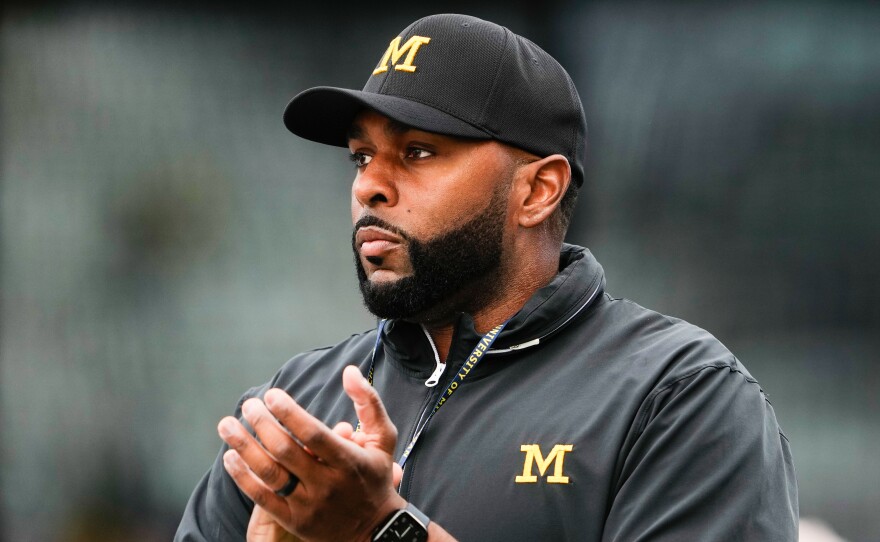
The University of Michigan removed head football coach Sherrone Moore as local police initiated a separate investigation involving his conduct with a staff member.
The University of Michigan dismissed head football coach Sherrone Moore on Dec. 10 after a university-led review concluded he violated institutional policy by maintaining an inappropriate relationship with an employee.
Hours later, police in Washtenaw County confirmed that Moore was detained in connection with a separate incident under investigation.
The situation surfaced publicly through coordinated statements from the City of Saline Police Department and the Pittsfield Township Police Department, both noting that officers responded to an address Wednesday afternoon and transferred a suspect to county authorities for potential charges.
The development carries implications for the football program, for university employment protocols, and for the broader campus community as it prepares for postseason play.
The case also adds a legal dimension, as any charging decisions will be reviewed by the Washtenaw County Prosecutor’s Office under standard Michigan procedures governing alleged assaultive or misconduct-related offenses.
Universities typically operate parallel internal processes focused on employment and policy compliance, which are legally distinct from criminal investigations.
The university confirmed that Moore’s termination followed an internal process overseen by the athletic department and central administration.
Officials stated that “credible evidence” indicated a violation of conduct and workplace relationship rules, which were last updated in 2023 to tighten restrictions on supervisor–subordinate interactions.
Michigan’s employee policy manual requires staff to disclose romantic relationships that could create conflicts of interest or power imbalances.
Moore, who joined the program in 2018 and became head coach after Jim Harbaugh’s departure for the NFL, had recently completed his second regular season with a 9–3 record.
His contract, signed in January 2024, included “with cause” termination provisions commonly found in NCAA Division I coaching agreements.
These clauses typically allow universities to end employment without buyout obligations for specific policy violations.
Police statements added a separate layer of timing: Saline officers located Moore earlier in the day and transferred him to Pittsfield Township police for an active investigation.
The suspect was booked at the Washtenaw County Jail pending prosecutorial review, a routine step before potential arraignment in Michigan.
Athletic Director Warde Manuel said the findings warranted immediate removal, noting the program’s responsibility to uphold workplace standards.
His statement referenced Michigan’s “zero tolerance” approach to policy breaches, consistent with guidance the university formalized after several high-profile Title IX compliance reforms in the late 2010s.
Local police departments emphasized that the ongoing investigation presents no broader safety risk and declined further comment, citing investigative integrity.
Such limited disclosures are consistent with Michigan law, which allows agencies to withhold details while gathering statements and evidence.
Public reaction has centered on the abrupt timing, given the upcoming bowl game and Moore’s role in stabilizing the program in the post-Harbaugh transition.
Alumni discussions on public forums referenced past NCAA scrutiny of the program, including Moore’s two-game suspension in 2024 tied to the university’s resolution of the sign-stealing investigation.
Michigan appointed associate head coach Biff Poggi as interim leader, a move that maintains short-term operational continuity.
Poggi previously served as an analyst and assistant before returning to Michigan from Charlotte’s head coaching job, bringing familiarity with the current roster and staff.
For student-athletes, NCAA rules ensure continuity in scholarship status and access to academic support regardless of coaching changes.
The situation also highlights how internal conduct policies intersect with the standards expected of employees who oversee students.
Universities often emphasize safeguarding obligations and workplace power dynamics, particularly in athletics departments where staff supervise large groups of young adults.
The announcement arrives as Michigan prepares for the Citrus Bowl on Dec. 31 against Texas.
Postseason participation is not affected by coaching changes, though interim arrangements can influence game preparation and recruiting operations.
The early signing period for college football, set for Dec. 18–20 under NCAA rules, is an additional factor for programs managing leadership transitions.
According to the NCAA’s 2022 Campus Sexual Violence Report, more than 90% of Division I institutions require annual training for athletics staff on workplace relationships, mandatory reporting, and conflict-of-interest rules.
Many campuses, including Michigan, strengthened supervisory relationship policies after federal Title IX reviews in the past decade.
Employment contracts for major college coaches also typically include “morals clauses” or conduct-based termination language.
USA Today’s annual review of FBS coaching contracts notes that nearly all contain provisions allowing termination for behavior that undermines institutional integrity or violates policy.
University employees can review Michigan’s Standard Practice Guide, which outlines expectations for professional conduct, reporting channels, and prohibited supervisor–employee relationships. Staff may contact the university’s Office for Institutional Equity for guidance on reporting or confidentiality.
Students seeking information about team operations or bowl-game arrangements can access updates through the athletics department website.
The NCAA also provides public scheduling and compliance guidelines for postseason play.
Police will submit investigative findings to the Washtenaw County Prosecutor’s Office, which will determine whether charges are warranted. If charges are authorized, arraignment would occur in district court under Michigan criminal procedure.
For the university, the athletic department will oversee program operations under interim leadership while longer-term decisions proceed through standard hiring processes.
These typically include background checks, compliance review, and approval by the university’s board or designated administrators.
The situation highlights how universities handle workplace conduct concerns in programs that operate with large budgets, public scrutiny, and extensive student contact.
It underscores the responsibilities institutions have when allegations involve supervisory dynamics, especially in athletics where staff hold significant authority over students.
Michigan’s response will influence the team’s leadership during a pivotal period and may guide how other schools review their own conduct policies.
Key developments to watch include any charging decisions from prosecutors and the university’s timeline for selecting a permanent head coach.