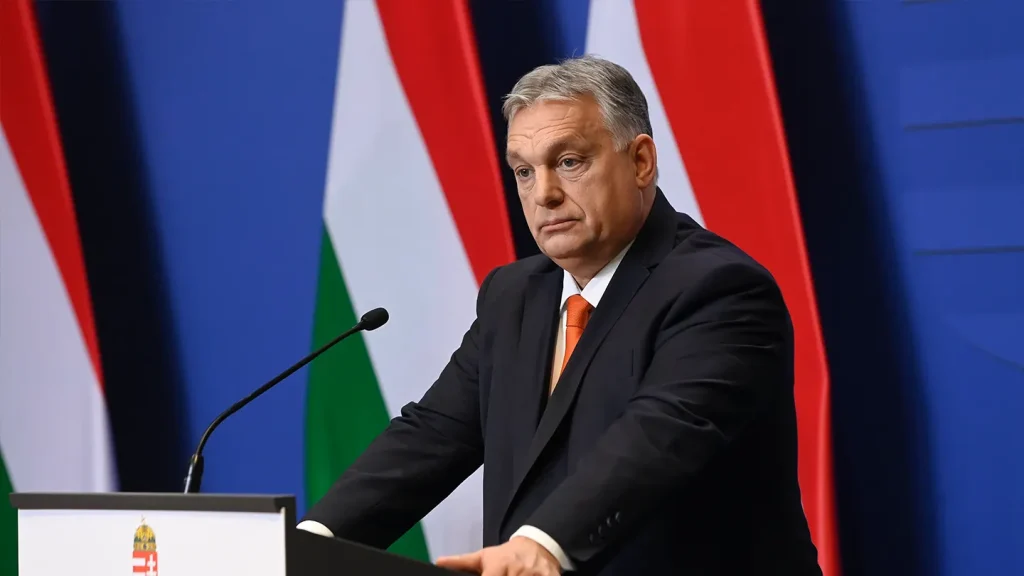
Hungary Under Viktor Orbán Resists the EU Migration Pact
The dispute concerns how EU asylum responsibilities are shared among member states and affects governments preparing for next year’s implementation deadlines.
Hungarian Prime Minister Viktor Orbán has restated his government’s opposition to the European Union’s migration pact, arguing that the bloc’s approach places new obligations on states that have long resisted mandatory relocation of asylum seekers.
Brussels has launched a new, absurd, and unjust attack against Hungary with yesterday’s migration decision.
The claim by the European Commission that Hungary is not affected by the migration crisis is outrageous in itself and completely detached from reality. Hungary is the most… pic.twitter.com/tNePLw2Xsp
— Orbán Viktor (@PM_ViktorOrban) December 9, 2025
His comments, made as EU institutions advance the operational phase of the pact, highlight an ongoing divide between national governments and Brussels over how to manage arrivals at Europe’s borders.
The renewed criticism comes as several member states prepare for the pact’s first major deadlines in 2025.
The system introduces a common screening process, updated border procedures, and a “solidarity mechanism” allowing states to contribute either personnel, financial support, or relocation capacity.
The issue carries public-interest significance across the Union because it affects border management, long-term asylum planning, and the operation of EU funding instruments tied to compliance.
How the EU Migration Pact Allocates Responsibilities
The migration pact, approved by EU lawmakers in 2024 after years of negotiations, creates a shared framework for processing asylum applications and distributing administrative burdens.
It replaces earlier systems that left frontline states managing most arrivals under the Dublin Regulation.
The approach allows countries to choose how they contribute through relocations, financial support, or operational assistance—while setting common standards for screening and detention at external borders.
Supporters say it offers predictability for governments and agencies responsible for asylum processing.
Why Hungary Remains a Consistent Outlier
Hungary has rejected mandatory relocation mechanisms since the 2015 migration crisis and has faced several infringement proceedings over its asylum procedures.
The Court of Justice of the European Union ruled in multiple cases that Hungary’s transit-zone practices and restrictions violated EU legislation governing access to asylum procedures.
Budapest’s position centres on the argument that external border protection should take precedence over relocation schemes.
The government maintains that its existing security measures meet domestic legal requirements, even when these conflict with EU interpretations.
What Orbán’s Latest Comments Signal for EU Policymaking
Viktor Orbán’s remarks come as the European Commission prepares guidance for implementing the pact’s screening and solidarity rules.
Non-compliance could lead to renewed legal action or financial penalties, depending on how national laws align with EU requirements.
The comments also land ahead of Hungary’s 2025 parliamentary election, a period when migration policy historically becomes a focal point of political debate.
Other member states, including Poland and Slovakia under recent governments, have raised comparable concerns, though none have announced plans to block implementation.
How This Dispute Fits Into Broader EU Migration Trends
The EU continues to experience mixed migration pressures, with fluctuating arrivals across the Mediterranean and Western Balkan routes.
Frontex, the EU border agency, has reported periodic increases on some pathways and declines on others, making burden-sharing a recurring point of negotiation.
The pact seeks to stabilise cooperation between countries receiving the largest number of asylum requests and those arguing for enhanced border enforcement.
Tensions between national sovereignty and EU-level coordination have shaped every major migration proposal since 2015.
What People Are Asking
Is Hungary required to accept asylum seekers under the migration pact?
Member states must contribute through relocation, financial support, or operational assistance. The pact allows governments to select the type of contribution.
Can an EU country refuse implementation of the pact?
EU regulations are binding. Non-compliance can trigger legal action from the European Commission and potential Court of Justice rulings.
When does the migration pact take effect?
Key provisions begin applying in 2025 after implementing legislation and operational guidelines are finalised.
How does this differ from previous EU asylum rules?
The pact introduces common screening procedures and a solidarity mechanism replacing older, more rigid relocation plans.
Why This Matters for EU Governance
The dispute over the EU migration pact reflects a broader question of how asylum responsibilities are distributed across member states, with Hungary’s resistance highlighting persistent tensions between national policies and EU-wide standards.
The outcome carries direct implications for border authorities, asylum agencies, and local administrations responsible for reception and screening.
As implementation deadlines draw closer, governments will be required to adjust domestic systems to meet the pact’s legal and operational demands.
How these obligations are applied and whether they are enforced consistently, will shape the direction of European migration policy over the next year.