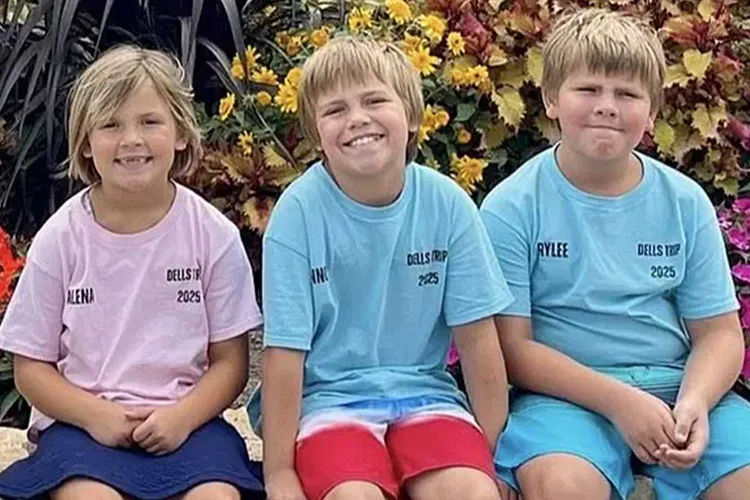
Father’s actions examined in Wisconsin fire that killed three children
A Thanksgiving night fire in a Kenosha rental home killed three young siblings, prompting questions about escape decisions, fire safety and how authorities investigate fatal blazes.
Father’s Account and Early Investigative Details Emerge
A Wisconsin father told police he left his burning home to get help while his three children remained inside, according to a search warrant released after the Thanksgiving night fire.
The blaze occurred around 10:30 p.m. on Nov. 27 in a two-story rental unit in Kenosha, where the father, 39-year-old Joshua Kannin, was staying with his children: Rylee, 10; Connor, 9; and Alena, 7.
First responders found the children with fatal injuries, while Kannin was treated for smoke inhalation and released the next morning.
The warrant’s release is significant because it provides the first public description of how the fire was discovered and explains why investigators outlined potential criminal charges when seeking permission to search Kannin’s phone — a procedural requirement under Wisconsin law during death investigations.
The cause of the fire has not yet been determined, and no charges have been announced, keeping attention on investigative standards and broader concerns about fire safety in multi-unit housing.
Timeline Described in Newly Released Investigative Records
According to the warrant, Kannin told investigators he awoke to irritation in his eyes, walked downstairs and saw flames on the kitchen floor.
He said his two sons had gone to bed shortly after 9 p.m., and his daughter was awake upstairs when he lay down later that evening.
Local reporting also confirms the fire occurred inside a rented townhome unit.
Kannin told officers he “panicked,” left through the front door and attempted to alert neighbors while calling for his children to come downstairs.
He said he then tried to go back inside but retreated because smoke had filled the entrance, making conditions impassable.
Investigators noted he had smoked a cigarette in the kitchen before bed, documenting it as one of several possible ignition sources, though they have not identified a definitive cause.
Firefighters found the two boys in the kitchen-dining area and Alena either upstairs or near the stairwell.
That placement information aligns with procedures followed in fatal-fire investigations, where officials document where victims are found to understand how heat and smoke spread.
Officials Explain Investigative Steps Amid Public Scrutiny
Police later clarified that the inclusion of possible arson or homicide in the warrant reflected a statutory requirement to demonstrate probable cause during a search request, not a determination that a crime occurred.
A review of the phone revealed no evidence of wrongdoing related to the fire.
Kenosha police say the department is working with the city’s fire investigators to rule out electrical failures, heating sources, discarded smoking materials and appliance malfunctions.
Officials describe the case as complex due to the structure’s layout, the timing of the fire and the severity of the smoke conditions.
Community reaction has been strong. Local vigils, prayer gatherings and school-based memorials have brought residents together to support the family.
A verified GoFundMe campaign has been created to help cover funeral expenses.
How the Tragedy Underscores Risks for Families in Multi-Level Housing
The Kenosha fire highlights how quickly conditions in multi-story rental units can become life-threatening, especially when smoke spreads upward and blocks the only interior stairway.
Fire-safety agencies consistently report that most home-fire deaths occur at night and are related to smoke inhalation, not flames, because occupants may be disoriented when awakened.
The incident also renews questions about safety protections in rental housing, including smoke alarms on each level, accessible exits and the difficulty of evacuating children from upper floors during fast-developing fires.
National guidance identifies kitchens as the most common origin point for residential fires, making nighttime hazards particularly acute.
For families living in similar housing, the case serves as a reminder of the practical challenges of escape planning, especially in compact units with limited exit routes.
National Fire Data and Longstanding Thanksgiving-Day Risks
Federal fire-safety data shows Thanksgiving consistently has the highest number of home cooking fires in the United States each year.
Kitchen activity increases sharply on the holiday, and unattended cooking remains a major national contributor to residential fire starts.
Seasonal reports from national fire-safety organizations further show that Thanksgiving-related fires commonly occur in one- and two-family dwellings and multifamily buildings, reflecting widespread holiday cooking across various housing types.
Residential structure fires during this period often involve smoke-alarm activations, rapid development of kitchen flames and limited visibility within minutes.
While investigators have not identified a cause in the Kenosha case, these broader patterns explain why they are examining all kitchen-related ignition sources alongside other possibilities.
Guidance and Support Available to Households
Families seeking fire-safety information can access free public resources from fire departments, the U.S. Fire Administration and the National Fire Protection Association.
These include guides on testing smoke alarms, planning two ways out of each room, and minimizing cooking risks.
Local fire departments often offer smoke-alarm installation programs, safety inspections and school-based education.
In the aftermath of a residential fire, families may receive help from community organizations and disaster-relief groups that provide temporary housing, clothing and case-management support.
Next Steps in the Investigation
Kenosha police and fire investigators will continue to analyze debris, evaluate potential ignition sources and review autopsy findings.
Laboratory testing of materials from the suspected origin area is standard procedure and may take several weeks.
A formal determination of cause will be issued once all findings are reviewed. Any prosecutorial review would occur only after the cause is finalized.