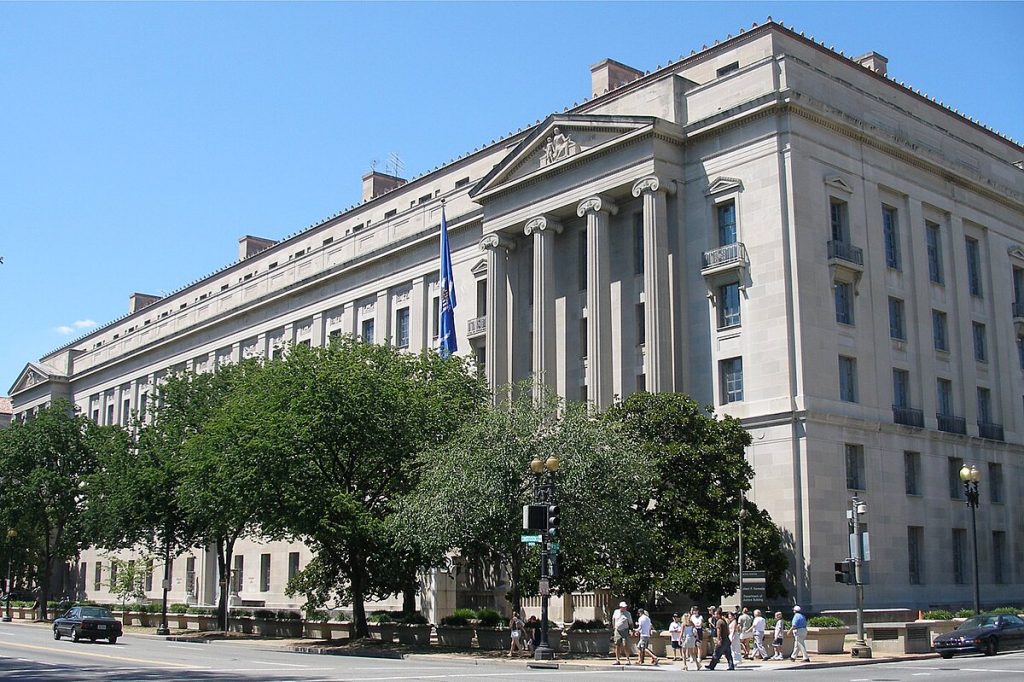
Under US law, the Department of Justice may release investigative materials — including photographs and documents — without making findings of criminal wrongdoing against the individuals depicted.
Many people assume that appearing in DOJ-released files means criminal guilt, but US law does not work that way. That legal process has drawn intense public scrutiny following the release of Epstein-related files that include images of Bill Clinton. The disclosure of such material does not determine guilt, imply criminal conduct, or establish legal liability.
What happened
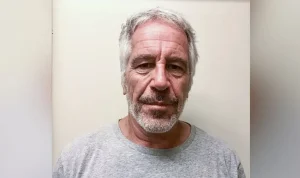
The Justice Department released a large, heavily redacted cache of materials connected to investigations involving Jeffrey Epstein, who died in federal custody in 2019 while awaiting trial on sex-trafficking charges. Epstein had previously pleaded guilty in Florida state court in 2008 to soliciting a minor for prostitution and later faced federal charges alleging sex trafficking of minors.
The newly released materials include photographs and travel records showing Epstein with a number of prominent figures, including former President Clinton. Some images depict Clinton in social settings with unidentified women. Clinton has not been charged in connection with Epstein’s crimes and has denied wrongdoing.
What You Need to Know
DOJ document releases may include unproven, unadjudicated, or purely contextual materials gathered during investigations. Disclosure can be required by court order, statute, or congressional mandate. Release does not equal accusation, and inclusion does not equal guilt.
What the public often misunderstands
-
Disclosure is not a finding of criminal responsibility
-
Photographs and social association are not evidence of a crime
-
Redactions protect victims, witnesses, and privacy interests — not specific individuals
-
Investigative files often include people who were never suspects
How DOJ document releases work in practice
In practice, federal agencies may be compelled to release investigative records even when no charges were filed or when investigations are closed. Courts and Congress can require disclosure in the interest of transparency, particularly in historically significant or high-profile matters.
Legally, this means materials can become public without the government asserting that a crime occurred, let alone that a particular person committed one. The evidentiary standard for disclosure is far lower than the standard required to bring criminal charges.
Association is not liability
US criminal law does not impose liability based on proximity, travel, or social interaction alone. To charge someone with a crime, prosecutors must establish specific unlawful acts, intent, and jurisdictional elements — none of which can be inferred solely from photographs or presence.
This is why individuals may appear repeatedly in investigative files without ever being charged or formally accused.
Procedure does not equal outcome
This release is procedural, not adjudicative. It does not predict future charges, imply misconduct, or alter the legal status of anyone depicted. Courts routinely stress that investigative disclosures should not be mistaken for findings of fact or determinations of guilt.
Failing to separate procedure from outcome is one of the most common sources of public misunderstanding in high-profile cases.
What This Means for Everyone Else
For public figures, business leaders, and private individuals alike, appearing in disclosed investigative materials does not create criminal exposure on its own. Employers, institutions, and the public should understand that legal responsibility is established in court — not through document dumps or photo releases.
More broadly, these cases illustrate how transparency mechanisms can clash with public assumptions about guilt, particularly when serious crimes are involved.
FAQ
Can someone be criminally liable just for appearing in DOJ files?
No. Criminal liability requires proof of specific unlawful conduct, not mere inclusion in investigative materials.
Why does the DOJ release files if no charges were filed?
Releases may be required by law, court order, or congressional mandate, even when investigations do not result in prosecution.
Do redactions mean the government is hiding evidence?
Not necessarily. Redactions often protect victims, witnesses, privacy rights, or sensitive investigative methods.
Does association with a criminal prove wrongdoing?
No. Association alone is not a crime under US law.
Could charges still be filed in the future?
Only if prosecutors obtain admissible evidence meeting the legal threshold for prosecution. Disclosure alone does not change that standard.
The legal principles discussed here apply broadly under US criminal and constitutional law and are not limited to any individual named in released materials.