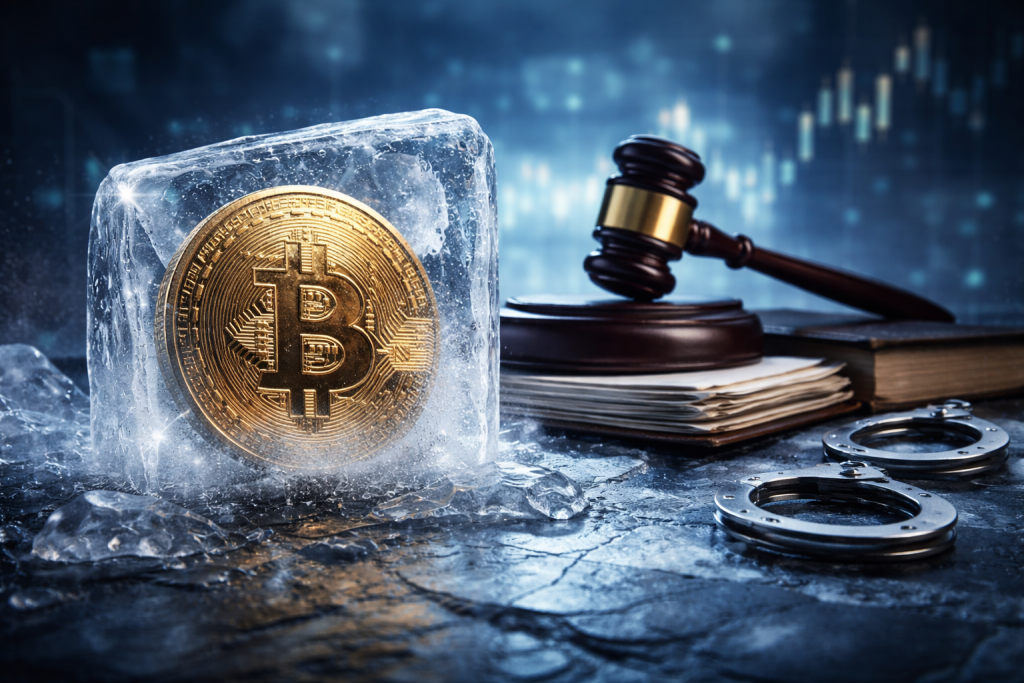
Frozen Crypto Funds: The Day Liquidity Vanishes and Leverage Tips the Other Way
A crypto account freeze can feel instantaneous and catastrophic, because in practice it is. One moment, a user has full control of their balance.
The next, capital is immobilised, payments stall, and commercial leverage evaporates — all before the user has gathered the language to respond.
Unlike conventional banking delays, where questionable transfers may take days to settle, crypto-linked restrictions occur in a world where value moves quickly and evidence is expected even faster.
For consumers and businesses alike, frozen balances can interrupt rent obligations, salary windows, supplier payments, and pending settlement discussions that depend on verified source-of-funds clarity. The stakes are high not because the law assumes wrongdoing, but because silence leaves the institution holding procedural leverage while the user absorbs the commercial friction.
The Instant Power Shift
Under AML regulation, freezes are protective actions, not errors. In the United States, financial institutions operating under the Bank Secrecy Act have a legal duty to monitor for activity that could involve structuring, illicit fund flows, or sanctions exposure.
When risk is suspected, platforms can restrict or freeze accounts, provided their rationale is documented internally. Crucially, Suspicious Activity Reports (SARs) filed under the BSA are legally confidential and cannot be disclosed to the account holder. This creates a timing and information imbalance that hands institutions procedural control, while the frozen party temporarily loses negotiation pressure and financial optionality.
What Happens When Payments Stop
For the party affected by a freeze, the consequences land in uneven but predictable ways. Salary cycles can miss clearance windows, not because payroll was fraudulent, but because liquidity has been suspended pending explanation.
Property transactions stall when counterparties require assurance that funds are clean, a requirement that becomes commercially consequential when one side cannot demonstrate proof of access.
Settlement negotiations slow dramatically because momentum depends on optionality, and optionality disappears when assets are frozen. Commercial contracts awaiting onboarding approval may sit unapproved, not because guilt is established, but because evidentiary uncertainty has not yet been replaced with a defensible response. In these situations, obligations can become legally unmet before the user has worked out how to rebalance their position.
Legal Latitude vs. User Exposure
In HSBC Bank USA, N.A. v. Commonwealth (Virginia, 2021), the court confirmed that banks may restrict or close accounts when complying with federal AML duties, provided their actions align with regulatory frameworks and internal documentation standards.
The ruling reinforced institutional discretion over timing and escalation but imposed no requirement to disclose investigative reasoning to the frozen party. The legal facts deliver an important consumer takeaway: leverage is not restored by waiting, it is restored by response.
The Real Cost of Delay
From the institution’s perspective, time reduces regulatory risk. From the frozen party’s perspective, time increases commercial cost. Delay can intensify approvals friction, prolong frozen-asset exposure, weaken settlement positioning, and introduce counterparty hesitation that looks less like patience and more like unresolved risk. Institutions pause accounts to reduce exposure. Users who pause engagement tend to increase theirs.
Restoring Leverage the Right Way
The strategic objective for the frozen side is not to rebut the freeze, but to replace uncertainty with documentation that carries evidentiary weight.
The most effective responses do three things well: they provide clear commercial reasoning for the transaction pattern, they carry enforceability through recognised legal document structure, and they rebalance dispute channels without sounding improvised or emotional. Successful resolution paths look less like protest and more like risk decisions themselves — calm, structured, defensible, and commercially fluent.
Affiliate-linked legal platforms perform strongly here because they provide credibility scaffolding at the moment the user has none to spare. They deliver recognised document structure and procedural weight while accelerating approvals, reducing settlement disadvantage, and restoring optionality by shifting analytical burden to a credible intermediary.
The Leverage Balance Sheet
| Position | After Freeze | Commercial Reality if Unresolved |
|---|---|---|
| Institution/Platform | Gains leverage | Controls timing, holds file basis, governs approvals |
| Consumer/User | Loses leverage | Assets frozen, payments stalled, approvals delayed, leverage reduced until resolved |
FAQs
Q: Can a bank or exchange legally freeze my crypto-linked account?
A: Yes. Regulated institutions can restrict accounts when AML exposure or compliance risk is suspected, provided the basis is documented internally.
Q: Can an institution tell me if a SAR was filed about my account?
A: No. SAR filings in the U.S. are confidential by law and cannot be disclosed to the subject of the report.
Q: Does a freeze mean I’m guilty of a financial crime?
A: No. A freeze is a compliance action, not a legal finding or proof of wrongdoing.
Q: Who holds leverage during a freeze?
A: The institution holds leverage because it controls timing, information, and approvals. The frozen party loses liquidity leverage until documentation replaces uncertainty.
Q: Will my funds automatically unfreeze if I wait?
A: Rarely. Most AML-linked freezes require active, documented engagement to satisfy compliance thresholds.
Q: What happens if payments remain stalled for too long?
A: Obligations may become legally unmet, settlement momentum can collapse, and counterparties may reassess commercial trust while waiting for verification.
Q: What restores leverage fastest?
A: Clear commercial reasoning, enforceable documentation, and credible legal intermediaries that provide recognised structure and dispute channels.
Q: Are crypto freezes only a crypto problem?
A: No. They are leverage-imbalance disputes triggered by crypto activity. The same dynamics apply to employment, contracts, settlement pressure, and approvals friction.
Q: Can frozen funds affect commercial approvals like property transfers or contracts?
A: Yes. Many commercial processes depend on demonstrable access and clean source-of-funds verification. A freeze stalls both.
Q: Why do affiliate legal platforms work well for freeze disputes?
A: They provide recognised document structure, enforceability weight, and third-party credibility when the user temporarily lacks liquidity or leverage.