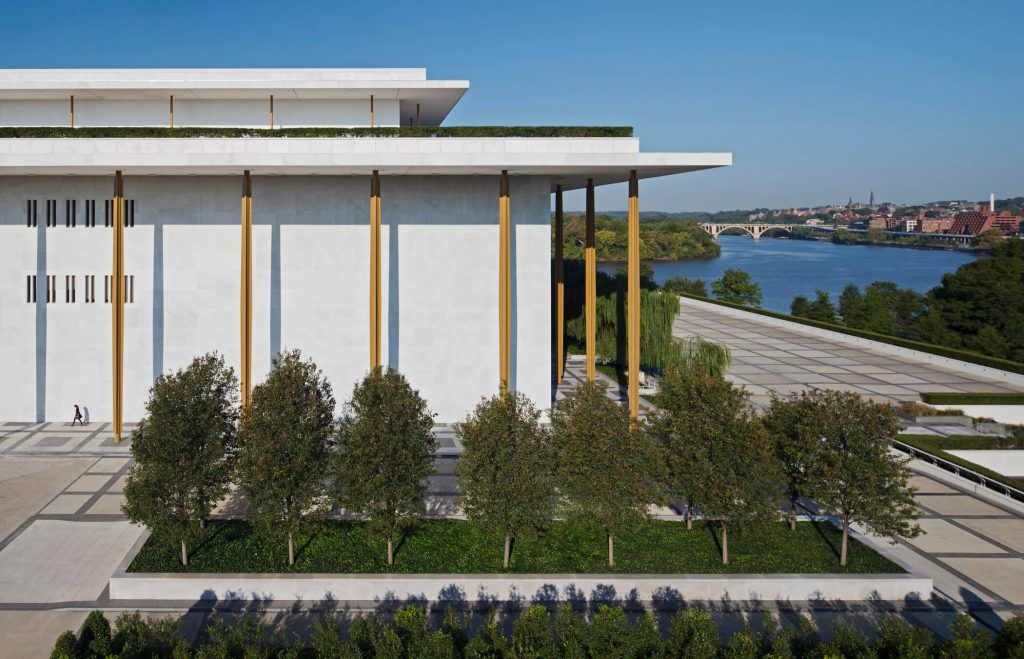
Under US federal law, Congress retains authority over national memorials created by statute, including how they are named or altered.
That legal framework is now under scrutiny following public objections to a decision by the Kennedy Center board to add President Donald Trump’s name to the John F. Kennedy Center for the Performing Arts. The dispute does not determine whether the renaming will ultimately stand, but it raises clear legal questions about statutory limits, board authority, and whether federal law permits such changes without congressional action.
What you need to know
Summary: The Kennedy Center was established by federal statute as a living memorial to President John F. Kennedy. While its board has operational authority, federal law places limits on adding new memorial designations, potentially requiring congressional approval for renaming decisions.
Why this legal question matters now
The controversy intensified after the White House announced that the Kennedy Center board had voted unanimously to rename the institution the “Trump–Kennedy Center.” That claim was quickly challenged by multiple participants in the process, including Kennedy’s grandson, Jack Schlossberg, and Rep. Joyce Beatty, an ex officio board member.
Their objections are not merely political. They point to a legal tension that often arises with federally created cultural institutions: where the line sits between board governance and congressional control.
What the initial reporting did not explain
Much of the public coverage focused on the political symbolism of the renaming and the dispute over whether the vote was unanimous. Less attention was given to the statutory framework that governs the Kennedy Center itself.
-
The Kennedy Center was created by an act of Congress, not as a private nonprofit
-
Federal law describes it as a memorial with specific restrictions on additional memorial designations
-
Board authority does not automatically override statutory limits
-
Renaming decisions may implicate congressional intent rather than internal governance alone
These legal constraints shape what is permissible regardless of political support or opposition.
The federal law governing the Kennedy Center
The John F. Kennedy Center for the Performing Arts was designated a living memorial following President Kennedy’s assassination, with its status governed by Public Law 88-260 and subsequent amendments. The statute establishes the Center’s purpose, governance structure, and memorial character.
In 1983, Congress added language stating that no additional memorials or plaques “in the nature of memorials” may be designated or installed in public areas of the Center. While the law does not explicitly address naming conventions in modern political contexts, it reflects congressional intent to preserve the memorial’s singular dedication.
This is why Schlossberg cited the statute directly in objecting to the renaming, arguing that a plain reading of the law bars such changes without congressional approval.
Board authority versus congressional power
Boards of federally chartered institutions typically have wide discretion over programming, management, and operations. Naming rights and memorial status, however, sit in a more legally sensitive category.
Courts generally look to statutory text and legislative intent when disputes arise over federally created memorials. If a change is deemed to alter the memorial character established by Congress, lawmakers — not boards — may have the final say.
This does not automatically invalidate the board’s action, but it creates legal uncertainty that could invite congressional review or litigation.
What legal experts generally note in disputes like this
Legal analysts often point out that conflicts involving federal memorials rarely turn on politics alone. Instead, they hinge on statutory interpretation, administrative authority, and whether actions exceed the scope of delegated power.
In practice, institutions created by Congress operate with autonomy only up to the point where their founding statutes draw firm boundaries. When naming or memorial status is involved, those boundaries tend to be scrutinised more closely.
What this means beyond this controversy
For the public, this dispute illustrates how federal law can quietly limit high-profile decisions. Cultural institutions that appear independent may still be constrained by decades-old statutes written with specific historical purposes in mind.
For lawmakers, the episode underscores Congress’s continuing role in shaping national memorials — even long after their creation.
What happens next
As a matter of fact, the renaming announcement stands, but so do the legal questions. If Congress chooses to intervene, it could clarify, reverse, or formally authorise the change through legislation. Alternatively, the issue could remain unresolved, functioning more as a symbolic designation than a legally tested one.
At this stage, the dispute is about statutory authority and process, not judicial findings or legal violations.
Frequently asked questions
Can the Kennedy Center be renamed without Congress?
Possibly, but only if the change does not conflict with the statutory limits set by Congress. That question has not been formally tested.
Does federal law ban adding Trump’s name outright?
The law restricts additional memorial designations, but whether a name change qualifies as one is legally debatable.
Was the board vote legally valid?
Questions have been raised about the process, but no court has ruled on the vote’s validity.
Could Congress reverse the decision?
Yes. Congress has the authority to clarify or amend the law governing the Kennedy Center.
Editor’s note
This article analyses federal law and governance principles using publicly reported statements and statutes. It does not assess political motives or predict legal outcomes.