Understand Your Rights. Solve Your Legal Problems


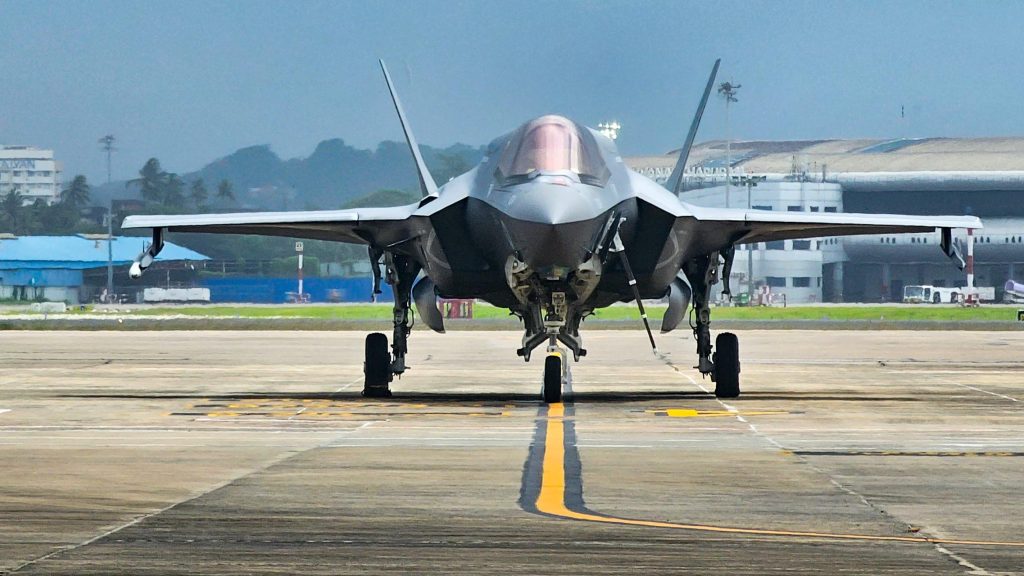
Donald Trump’s meeting with Saudi crown prince Mohammed bin Salman contained two unusually consequential signals: a willingness to sell F-35 fighter jets to Riyadh and an openness to transferring civilian nuclear technology. These ideas were floated in passing — almost casually — during public remarks. Yet their implications are anything but casual.
This analysis explores the deeper strategic question the breaking news did not answer: Would these moves fundamentally alter long-standing U.S. security doctrine in the Middle East — and are they even legally possible?
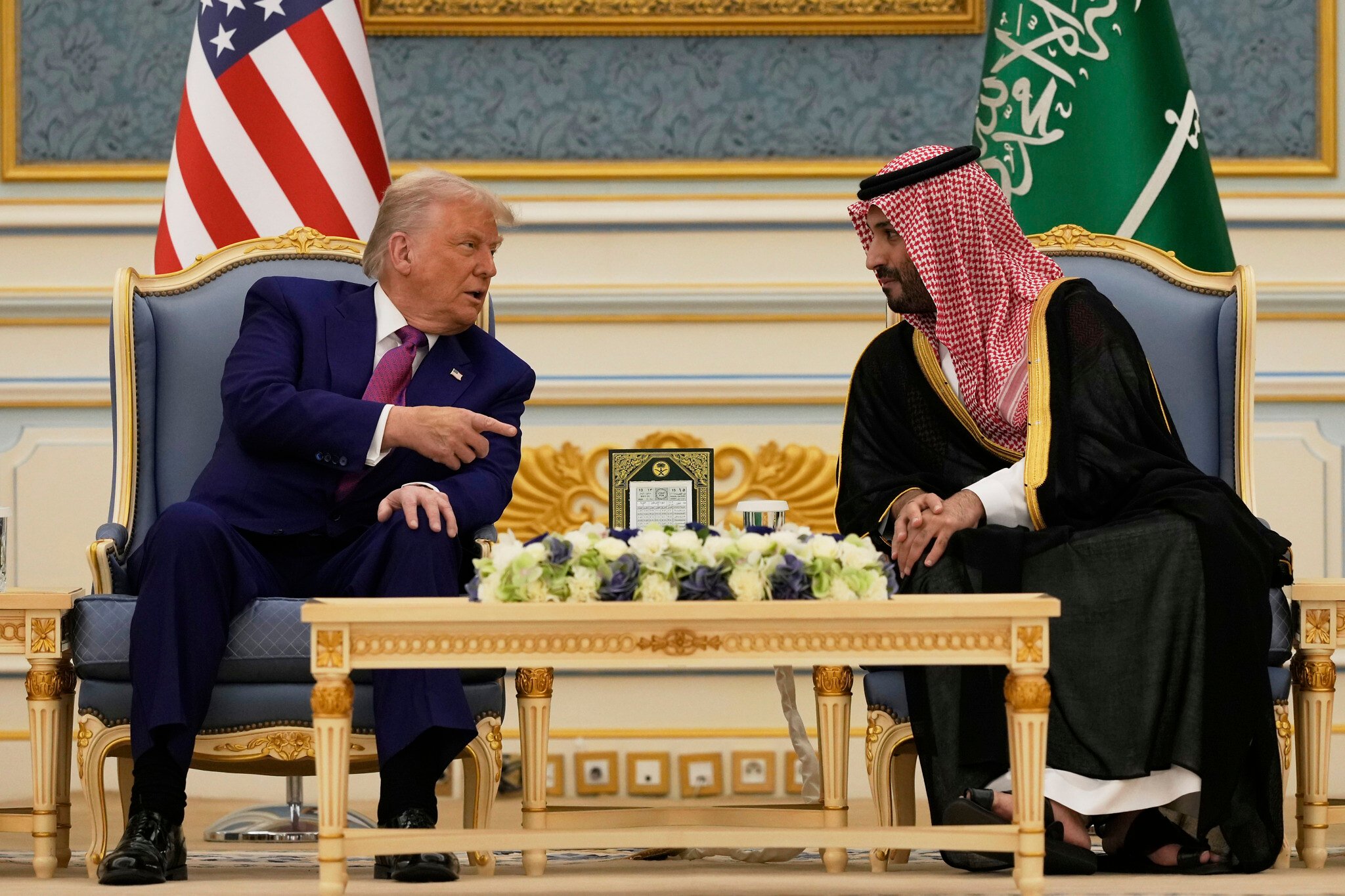
Trump met Saudi Crown Prince Mohammed bin Salman to discuss a proposed F-35 sale and ongoing efforts to advance Israel–Saudi normalization
Most readers instinctively picked up on the tension: you don’t just hand out America’s most advanced stealth aircraft or nuclear know-how without a detailed regulatory, security, and geopolitical framework. For decades, U.S. policy has revolved around carefully managing the military balance among Israel, Saudi Arabia, Iran, Turkey, and the UAE.
So when a president suggests that Saudi Arabia could join Israel as the only Middle Eastern nation with F-35s — and potentially enter a U.S.-backed nuclear cooperation program — the natural reaction is, Wait… how would that even work?
This isn’t just about one meeting or one statement. It cuts straight to the long-standing architecture of U.S. Middle East policy — an architecture that has relied on strict legal guardrails and careful technological controls.
The live blog conveyed the moment, but it didn’t explore several critical gaps:
1. The legal barriers are enormous.
Selling an F-35 or transferring nuclear technology isn’t a handshake deal; both require extensive congressional review, statutory compliance, and interagency sign-off. None of this was discussed publicly.
2. Israel’s “Qualitative Military Edge” (QME) is legally protected.
For decades, U.S. law has prevented Washington from providing more advanced weaponry to Arab states than it provides to Israel. The news report referenced the arrangement with Israel but didn’t explain what safeguards would be required — or whether Israel would object.
3. Nuclear cooperation triggers a different legal regime altogether.
Any transfer of nuclear technology to a foreign country requires a formal “123 Agreement” under the Atomic Energy Act. This was not mentioned, despite the fact that previous attempts to negotiate such an agreement with Saudi Arabia faced bipartisan concern.
4. China hovers in the background.
Several U.S. agencies have warned for years about Saudi Arabia’s growing technological ties with Beijing — especially in computing and infrastructure. The risk of sensitive U.S. technology leaking through those channels did not get explored in the reporting.
5. No context was offered on regional reactions.
Iran, Israel, Turkey, and the UAE would all have strong — and very different — responses to Saudi Arabia obtaining F-35s or advanced nuclear technology. That layer remains unexplored.
Readers were left with a high-stakes headline and very little of the framework that makes sense of it.
Under the Arms Export Control Act and the Naval Vessel Transfer Act of 2008, the U.S. must ensure that Israel maintains a QME — meaning Israel must retain superior military capabilities relative to neighboring states.
Any sale of F-35s to Saudi Arabia would therefore require:
A formal QME review by the Department of Defense
A certification to Congress that the sale does not erode Israel’s advantage
Congressional non-objection
Historically, this process has been contentious even for close partners like the UAE.
The Atomic Energy Act mandates that nuclear technology transfers can only occur under a Section 123 agreement. These agreements require:
Strict monitoring
Assurances that nuclear material will not be enriched or reprocessed
Congressional review (up to 90 days of continuous session)
Saudi Arabia previously resisted a “gold standard” 123 Agreement that would prohibit domestic enrichment — a sticking point for years.
U.S.–Saudi relations have long been shaped by security cooperation, but Washington has historically avoided providing Riyadh with the most sophisticated platforms, partly due to:
Human rights concerns
Regional stability calculations
The Kingdom’s mixed record on technology security
The F-15C and Patriot missile deals of the 1980s both sparked enormous congressional fights — and those platforms were far less sensitive than the F-35.
The U.S. has tightened export rules under the Export Control Reform Act and related Commerce Department and Defense Department regulations. Saudi Arabia’s cooperation with Chinese tech firms complicates any transfer of advanced systems, including both F-35 components and AI chips.
Analysts generally emphasize that an F-35 sale is never merely a bilateral commercial transaction — it’s a strategic reordering of the region. Defense scholars often note that stealth aircraft can shift deterrence dynamics overnight, particularly against adversaries like Iran that lack sophisticated detection systems.
Nuclear policy experts usually stress that civil nuclear cooperation is one of the most heavily regulated areas of U.S. foreign policy, precisely because civilian programs can create pathways to weaponization if safeguards break down.
Middle East specialists often argue that giving Saudi Arabia access to fifth-generation aircraft or nuclear capabilities could:
Prompt Iran to accelerate its nuclear and missile programs
Trigger a parallel arms race with Turkey or the UAE
Force Israel to demand additional U.S. security guarantees
Legal scholars frequently point out that Congress, not the president alone, is the primary gatekeeper for both F-35 sales and nuclear cooperation agreements — and historically, Congress has blocked or delayed such moves.
If the administration truly intends to move forward, the next steps would involve formal notifications to Congress. Expect congressional committees to request intelligence assessments, human rights reviews, and security briefings.
Israel’s security establishment will evaluate whether a Saudi F-35 fleet erodes its QME. If the conclusion is yes, Israel will lobby Washington — typically behind closed doors — to either block the sale or require significant modifications.
Tehran is likely to cite the prospect of Saudi stealth capability as justification for advancing its own missile and nuclear programs. Historically, Iranian hardliners use developments like this to argue that diplomacy is futile.
Saudi Arabia would need substantial training, infrastructure, and long-term U.S. maintenance contracts to operate the F-35 effectively. This makes the timeline long, expensive, and politically sensitive.
Even under the most optimistic scenario, negotiating a 123 Agreement takes months to years. Most analysts expect Congress to insist on ironclad safeguards — the same ones Riyadh previously resisted.
Any tightening of U.S.–Saudi defense ties could reduce China’s access to Saudi infrastructure — or, conversely, spur Beijing to deepen alternative military cooperation.
(Useful for readers who want structure)
Step 1 — Presidential intent or announcement
Step 2 — Interagency review (State, DoD, DOE, NSC)
Step 3 — Security assessment & QME review
Step 4 — Congressional notification
Step 5 — Congressional review (30–90 days depending on category)
Step 6 — Potential resolutions of disapproval
Step 7 — Final agreements, contracts, and delivery schedules
Step 8 — Long-term monitoring and compliance
Even under ideal conditions, F-35 transfers take years; nuclear cooperation takes longer.
👉 Further Reading: Can Bangladesh Enforce Sheikh Hasina’s Death Sentence Abroad?
Extradition rules, international human rights obligations, and what happens next.
Yes, but only if the sale passes a formal congressional review and the U.S. certifies that the transfer will not undermine Israel’s Qualitative Military Edge. Congress can block or delay the sale.
It’s a legal requirement under U.S. law that ensures Israel must maintain superior military capabilities compared to any neighboring country. All major weapons sales in the region are reviewed against this standard.
Only under a Section 123 Agreement of the Atomic Energy Act. These agreements require strict safeguards, monitoring, and congressional approval. No such agreement currently exists with Saudi Arabia.
That depends on how they’re structured. Many analysts believe they would shift the regional balance, prompting reactions from Israel, Iran, Turkey, and the UAE.
U.S. officials have raised concerns in the past due to Saudi Arabia’s partnerships with Chinese tech companies. Any transfer of advanced U.S. systems would require assurance that China cannot access or service the technology.
Even if approved immediately, procurement, training, and infrastructure development mean the process would likely take several years.