Understand Your Rights. Solve Your Legal Problems


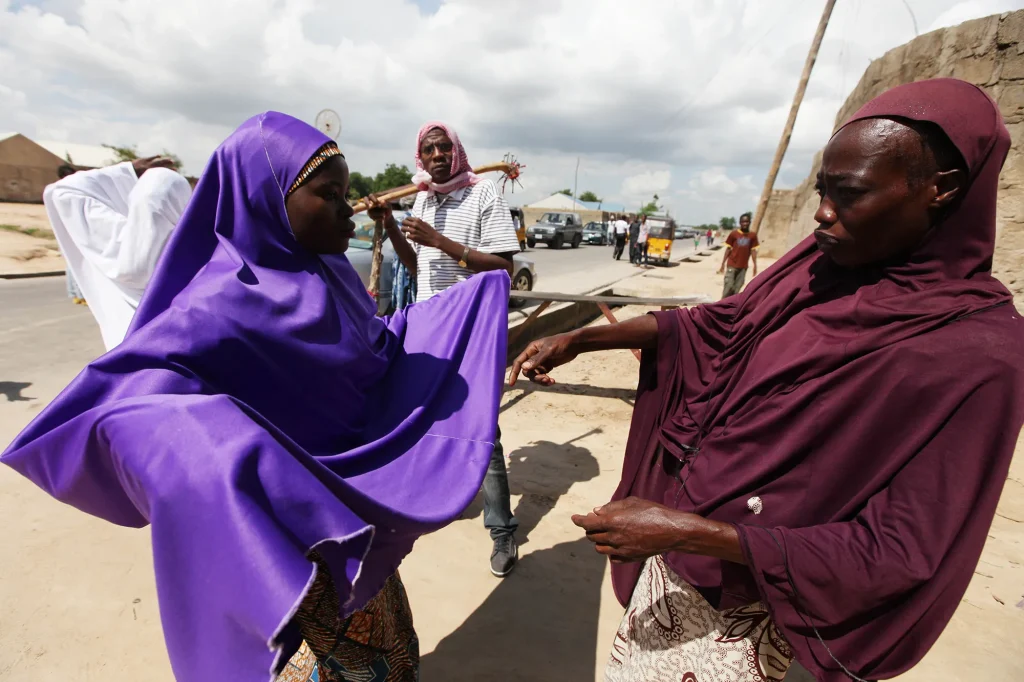
U.S. President Donald Trump has ordered the Pentagon to prepare for “possible action” in Nigeria, accusing the government of failing to protect Christians from what he called “mass killings.” His post on Truth Social over the weekend — warning that he may send U.S. forces “guns-a-blazing” and cut all aid to Nigeria — instantly went viral and reignited global debate over whether Nigeria is facing a Christian genocide.
“If we attack, it will be fast, vicious, and sweet — just like the terrorist thugs attack our cherished Christians,” Trump wrote.
The claim has divided opinion across diplomatic, religious, and human rights circles — with Nigerian officials strongly rejecting the “genocide” label and urging caution.

Trump Threatens Military Action in Nigeria Over Protections for Christians
Nigerian President Bola Tinubu said that while his government welcomes international cooperation, “Nigeria is a sovereign nation” and any foreign military intervention must respect its territorial integrity. Officials acknowledged widespread insecurity but denied it is religiously targeted.
“The killings are not restricted to Christians alone,” said Kimiebi Imomotimi Ebienfa, a spokesman for the Ministry of Foreign Affairs. “Muslims are being killed. Traditional worshippers are being killed… The majority is not the Christian population.”
Tinubu added that the characterization of Nigeria as “religiously intolerant” does not reflect the country’s national reality — pointing instead to years of attacks from Boko Haram, Islamic State West Africa Province (ISWAP), and Fulani extremist militias, which have targeted civilians of all faiths.
While analysts agree the violence is multifaceted and not purely sectarian, the scale of Christian persecution in northern and central Nigeria is undeniably staggering.
According to the International Society for Civil Liberties and Rule of Law (Intersociety), an April 2023 report found that at least 52,250 Nigerian Christians have been killed for their faith since 2009, when Boko Haram began its deadly insurgency. In addition, the report estimated over 18,000 churches and Christian schools have been destroyed or burned, with four million people displaced, most of them Christian farmers fleeing jihadist and Fulani militia attacks.
“Nigeria has tragically become the world’s center of Christian martyrs,” the Intersociety report concluded, noting that in a typical year, the number of Christians killed in Nigeria “is rarely less than 4,000 — often more than the rest of the world combined.”
Violence has increasingly spread beyond the 12 northern states that adopted Sharia law in 1999, pushing into the Middle Belt — especially Benue, Plateau, Nasarawa, and Taraba States — where Fulani militants have targeted Christian farming villages in raids described by witnesses as “ethnic cleansing.”
Groups such as ACLED (Armed Conflict Location & Event Data Project) and Christian Solidarity Worldwide agree that Nigeria’s violence is driven by multiple overlapping crises — religious extremism, ethnic rivalry, land scarcity, and government weakness.
ACLED data shows that between 2020 and 2025, over 1,900 civilian attacks occurred nationwide, many indiscriminate. Analysts caution that while Christian communities are disproportionately affected in some regions, the term “genocide” oversimplifies what is a nationwide security collapse.
Nevertheless, the Christian Association of Nigeria (CAN) insists that the pain of Christian families “torn apart by violence must never be treated as mere statistics,” calling for urgent government protection and international support.
The central issue is one of sovereignty and law:
Can the United States legally send troops or launch strikes inside Nigeria without its government’s consent?
Under Article 2(4) of the United Nations Charter, nations are prohibited from using force against another state’s territorial integrity except in three narrow situations:
With the host nation’s consent.
With United Nations Security Council authorization.
In self-defense following an armed attack.
Because none of these apply to Nigeria, unilateral U.S. military action would be illegal under international law — and could be condemned as aggression.
Domestically, Trump cannot legally deploy troops to Nigeria without Congressional approval under the War Powers Resolution of 1973. The President may order short-term strikes only if the U.S. is under imminent threat — a condition clearly absent here.
Furthermore, the International Religious Freedom Act of 1998, which allows the U.S. to designate a nation as a “Country of Particular Concern,” permits sanctions, not armed intervention.
Humanitarian risk: Airstrikes or ground operations would likely kill civilians and worsen the refugee crisis, which already exceeds 4 million displaced Nigerians, mostly Christians.
Economic fallout: Escalation could disrupt oil production, trade, and regional markets — affecting global prices and U.S. economic interests.
Legal precedent: Acting outside UN or Congressional approval would weaken international law and set a dangerous example for other world powers.
Dr. Bulama Bukarti, a Nigerian human rights lawyer, told Al Jazeera:
“All the data reveals there is no organized Christian genocide. The violence is real and devastating — but the narrative that one faith is exclusively targeted is dangerously simplistic.”
Legal scholars add that even if persecution is proven, the U.S. must act through the UN or by invitation, not unilateral force. Otherwise, any intervention risks violating the same human rights norms it claims to defend.
Stay informed with credible data from ACLED, Intersociety, and CAN — not viral social posts.
Contact legislators (if in the U.S.) to demand Congressional oversight before any overseas military action.
Support verified NGOs offering aid to Nigerian Christian refugees — humanitarian relief remains the only legal and moral intervention path today.
Watch for key signals: If Nigeria formally invites U.S. support or the UN Security Council votes on a peacekeeping mission, that could change the legal landscape.
The persecution of Nigerian Christians is real and severe — with over 50,000 lives lost, millions displaced, and entire communities living in fear. But Trump’s threat of unilateral U.S. military action crosses clear legal red lines under both international and domestic law.
For now, the lawful path forward is through sanctions, diplomacy, and humanitarian support, not invasion.
How many Christians have been killed in Nigeria?
According to the International Society for Civil Liberties and Rule of Law (Intersociety, April 2023), over 52,250 Christians have been killed since 2009, and more than 18,000 churches have been destroyed.
Why are Christians targeted in Nigeria?
Extremist groups like Boko Haram and ISWAP aim to eradicate Christianity in the north and Middle Belt, where Sharia law and ethnic land conflicts fuel religious tension.
Can Trump legally intervene militarily?
No. Without Nigeria’s consent, U.N. approval, or Congressional authorization, such an action would be illegal under the U.N. Charter and U.S. law.
Is Nigeria’s government complicit?
There’s no evidence of direct state complicity, but critics say successive governments have failed to act decisively, allowing extremist networks to spread.
Nigeria is fighting for its soul — against extremists, disinformation, and political posturing from abroad. The suffering of its Christian population is undeniable, but the solution lies in law, truth, and accountability, not unilateral military threats.