Speaking in the Oval Office on Monday, President Donald Trump said that moderate-income Americans may receive $2,000 tariff dividend checks by mid-2026.
The message landed like a lightning bolt: a fresh promise, a new date, and millions wondering whether a windfall might actually be coming.
The surprise update immediately rippled through financial circles, political groups, and online betting markets. Supporters cheered at the possibility of a cash boost during a stubbornly expensive economic climate.
Critics, meanwhile, questioned both the math and the law behind the plan, especially after Treasury Secretary Scott Bessent publicly cautioned that the administration would “need legislation” before anything could move forward.
And with tariff revenue still far below what analysts say would be required to issue checks of this size nationwide, the debate has only intensified.
What Trump Says Will Happen and Why the Math Still Falls Short
The president has repeatedly floated the idea of using tariff revenue to fund payments for low- and middle-income households.
The pitch is simple: tariffs generate cash, and part of that money would be returned to working Americans.
But tariff revenue remains nowhere near the level such a program would require.
Budget analysts say current collections total around $100 billion, far below the roughly $600 billion needed to cover $2,000 payments to eligible households.
Some economists argue that the proposal highlights a broader reality often missed in political messaging: tariffs are ultimately paid by American consumers and businesses through higher prices.
For that reason, a rebate tied to tariff revenue is essentially returning money people already paid indirectly.
That concern has helped fuel skepticism not just among economists, but also across online prediction markets closely watched by traders and policy watchers.
Betting Markets Don’t Expect the Checks to Materialize
Two of the most active forecasting platforms, Polymarket and Kalshi, show strong pessimism about whether the checks will ever be issued.
Polymarket traders assign only a slim chance that tariff revenue will reach the levels needed in 2025.
On Kalshi, users are also questioning whether the Supreme Court will uphold the administration’s tariff authority, with odds of a favorable ruling dropping sharply after recent oral arguments.
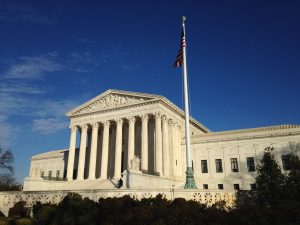
That decline mirrors the atmosphere inside the Supreme Court chamber earlier this month, where several justices voiced concerns over whether the executive branch can impose broad tariffs without clear approval from Congress.
A ruling against the administration would significantly affect the revenue base the proposal relies on.
What Must Happen Before Any Payments Can Go Out
1. Congress Must Approve Any Payment Program
Federal agencies cannot distribute new cash benefits unless Congress passes a law authorizing them.
This includes setting the size of the payments, who qualifies, how the money will be delivered, and how it will be funded.
Until Congress votes on a specific bill, the Treasury Department has no authority to issue checks, even if the administration supports the idea.
2. Tariff Legality Is Under Review
The Supreme Court is currently reviewing whether the administration used its tariff powers appropriately.
The justices are looking at whether the government followed the limits set by existing trade laws.
If the Court narrows or overturns any of those powers, tariff revenue could decline, which would directly affect the funds available for a dividend-style program.
3. Treasury Must Confirm a Stable Funding Source
If Congress signs off, the Treasury Department must ensure that the money is actually there.
That means verifying how much tariff revenue is coming in, how consistent the revenue is, and whether using it for payments would conflict with existing obligations like debt repayment.
Treasury also has to confirm it can manage the distribution process—either through IRS systems, direct deposits, or mailed checks—without creating financial risk.
4. Timelines Are Controlled by Law, Not Announcements
Even after approval, federal payments take time to implement.
Agencies must build eligibility systems, coordinate with the IRS, set up fraud protections, notify the public, and test payment channels before anything goes out.
This means any estimated date depends entirely on the government completing those steps under the law, not on public comments or projections.
Why the Announcement Still Hit a Nerve Amid Cost-of-Living Pressure
Americans are still dealing with high grocery costs, elevated rent, and stubborn price pressures. The idea of a $2,000 relief payment — even one tied to tariffs — resonates strongly with families feeling the strain.
Supporters view the proposal as overdue recognition for households absorbing the higher prices that follow tariff increases. Opponents question both the feasibility and the legal foundation of the plan.
Either way, the future of the proposal depends on decisions from Congress, Treasury, and the Supreme Court — not on public comments alone.
👉 Trump Orders Nationwide SNAP Benefits Reapplication Review 👈