Understand Your Rights. Solve Your Legal Problems


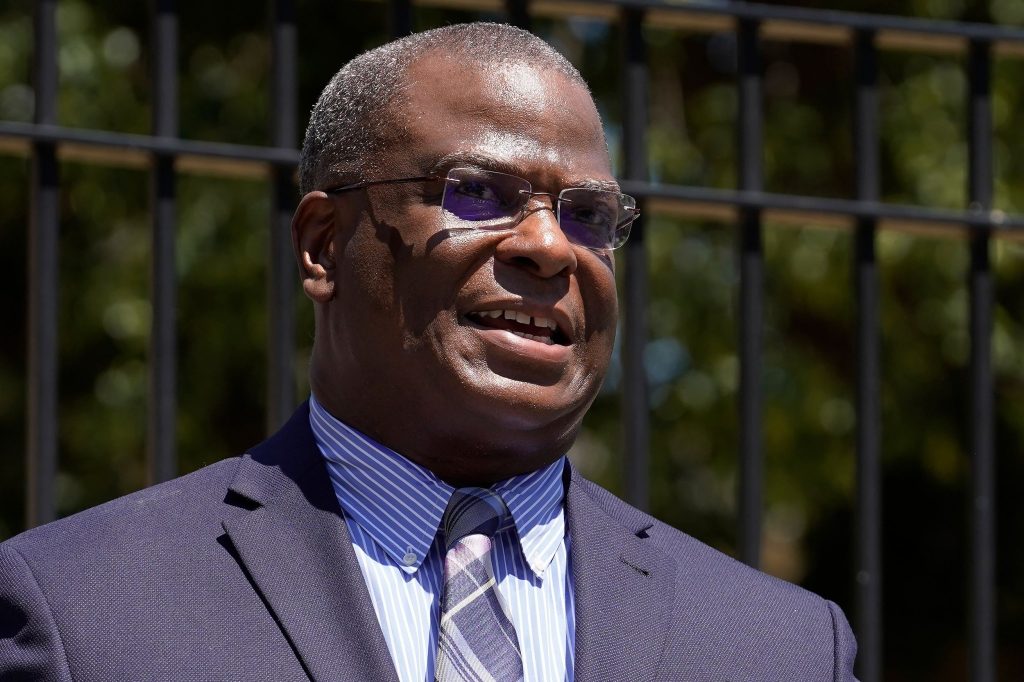
The state panel overseeing police conduct has rejected a push to discipline Boston Police Commissioner Michael Cox, ruling he’s exempt from oversight — a decision that infuriated attorney Alan Jackson, who accused Cox of lying publicly about a key witness in the Karen Read case.
In a sharply worded response Thursday, the Massachusetts Peace Officer Standards and Training (POST) Commission said the state’s top cop cannot be investigated at all because he isn’t actually a cop under Massachusetts law.
Cox, POST Executive Director Enrique A. Zuniga wrote, is a “civilian executive, not a sworn law enforcement officer.”
For Jackson — who represents Read — the ruling amounts to a shield that protects the one official he claims misled the public during one of the most explosive cases Massachusetts has seen in years.
The clash erupted over Cox’s July comments regarding Kelly Dever, a former Boston Police officer whose contentious testimony made headlines during Read’s second trial.
Cox told reporters he never pressured Dever to adjust her testimony and claimed he didn’t even know she was connected to the Read case.
Jackson fired back in a blistering letter accusing Cox of “a bald-faced lie” and demanding he be referred to the Brady list, which tracks officers with credibility issues.
Dever later confirmed she did speak with Cox before testifying, though she insisted he did not attempt to influence her and “just wanted me to tell the truth.”
POST’s decision exposes a striking accountability vacuum:
the highest-ranking police official in Boston cannot be investigated by the police oversight board at all.
The reason?
Cox doesn’t carry a gun or badge in his role and isn’t required to hold law enforcement certification — the very credential POST exists to regulate.
Zuniga acknowledged the disconnect and admitted Cox’s situation has prompted internal review:
“Your comments have been influential… the Commission is re-examining its policies concerning the treatment of civilian authorities.”
Critics say the exemption leaves Boston’s most powerful police official effectively unreachable by the state’s accountability apparatus, even when accused of dishonesty about a high-profile case that shook Massachusetts for two years.
Cox has repeatedly tried to distance himself from the Read case, insisting the matter “has nothing to do with us.”
Earlier this month, when pressed again about Jackson’s accusations, Cox snapped:
“What I need… is not to be asked this question ever again.”
He offered condolences to Officer John O’Keefe’s family but maintained he would not revisit the topic.
Read was acquitted of murder and manslaughter in June after jurors rejected prosecutors’ claim she drunkenly hit O’Keefe with her SUV outside a fellow officer’s home. She was convicted only of a drunk driving misdemeanor after arguing she had been framed in a massive police coverup.
The Massachusetts Peace Officer Standards and Training (POST) Commission’s refusal to investigate Commissioner Michael Cox hinges on a narrow but consequential provision of state law. Under M.G.L. c. 6E, POST has authority only over “certified law enforcement officers”—individuals who are sworn, carry police powers, and hold state-issued certification.
Cox, despite leading the Boston Police Department, does not hold law enforcement certification in his role as commissioner. POST therefore concluded it has no statutory jurisdiction to discipline, investigate, or decertify him. The Commission emphasized that its oversight powers apply exclusively to sworn officers, not to civilian executives, even if they oversee a sworn department.
This legal distinction created what critics call a structural loophole: the state’s top police official is outside the very accountability system designed to police officer misconduct. While POST acknowledged the discrepancy and said it is re-examining its policies, current law does not provide a mechanism to review civilian police leaders.
In effect, the ruling underscores a broader reality in Massachusetts:
police oversight laws were not written with civilian police commissioners in mind—leaving a significant gap in accountability during high-profile controversies like the Karen Read case.
👉 In Focus: Encore Slams Online Gambling Bill as a ‘Bad Bet,’ Warning Mass. Lawmakers It Will Cost Jobs and Gut Casinos 👈