Brace for Impact: Solar Storm Could Knock Out Phones, Power, and GPS Within Hours
The Sun just sent a shot across Earth’s bow.
NASA and NOAA have confirmed that two colossal coronal mass ejections (CMEs) are racing toward our planet — a merged “cannibal CME” packing enough charged plasma to rattle satellites, disrupt phone networks, and bend power grids to their knees.
Officials have issued a G4 geomagnetic storm alert — the second-highest warning possible. In plain English: by Wednesday, the planet’s magnetic shield will be tested by one of the most powerful solar assaults in modern history.
This isn’t sci-fi. It’s happening right now. And the first signs could reach Earth by dawn.
The Storm That Could Silence the Modern World
If the NOAA forecast holds, Earth will take a direct hit.
When it does, mobile phones may go dark. GPS could freeze mid-route. Power grids may trip without warning.
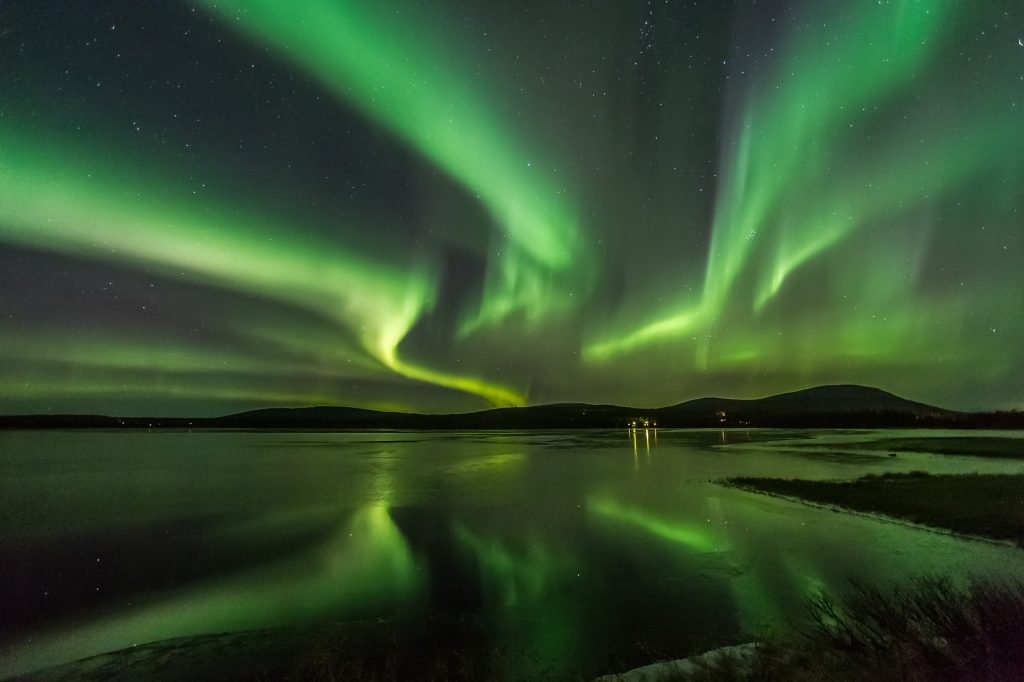
Northern skies may ignite with auroras tonight — beautiful, yes, but also a visual sign of chaos above the clouds.
For everyone else, the effects could feel like sudden silence. The hum of Wi-Fi, the steady GPS lock, the tap of contactless payments — all at risk of glitching in unison.
Why This One’s Different
This storm isn’t an isolated flare. It’s the culmination of Solar Cycle 25’s most violent week.
Sunspot AR4274 — a roiling black scar on the solar surface — has been firing eruptions like cannon fire. On Tuesday morning, it unleashed the largest flare of 2025, knocking out radio over Europe and Africa for nearly an hour.
And now, two CMEs from that same region have fused in deep space — the dreaded “cannibal” effect — forming a plasma monster tens of millions of miles wide.
Scientists expect geomagnetically induced currents (GICs) to surge through high-latitude grids by Wednesday night, with the strongest impacts across Canada, Alaska, Scandinavia, and northern Europe.
But don’t think you’re safe if you live farther south.
The 1989 Quebec blackout proved one truth: when the Sun lashes Earth, borders mean nothing.
What You’ll Feel First
-
Dropped calls, sluggish data, or complete mobile blackouts
-
GPS errors — your location dot wandering miles off
-
Voltage flickers — lights dimming for seconds, transformers heating abnormally
-
Satellite drift — navigation, weather, and military systems may lose orientation
-
Airline reroutes — especially on polar routes to avoid radiation exposure
It starts small. Then, like dominoes, digital systems fail in waves.
And yet — the storm’s first sign could be beauty itself: curtains of neon-green light across skies from Edinburgh to Minnesota.
The Legal Fallout: Who’s Accountable When the Sun Breaks the Grid?
In the calm before impact, governments and corporations are quietly bracing for the next question:
If the lights go out — who’s legally responsible?
Under the UK’s Network and Information Systems Regulations 2018, energy and communications operators must safeguard essential services against foreseeable risks. Space weather is now officially on that list.
Across the Atlantic, the Federal Energy Regulatory Commission (FERC) has issued similar guidance after past storms triggered nationwide warnings.
It’s a shifting frontier. As forecasting improves, foreseeability increases — and so does accountability.
What this means for you:
-
Outages lasting hours? Providers may not owe compensation.
-
Outages lasting days due to ignored warnings? That’s another story.
-
Insurance policies increasingly exclude “space-weather” — check yours now.
The takeaway: when cosmic weather hits Earth, the legal storm follows close behind.
| ☀️ NASA Solar Storm Fact File (Updated November 2025) | |
|---|---|
| Definition | A solar storm is a sudden burst of charged particles, energy, and magnetic fields released from the Sun that can impact Earth's magnetic field and technology. |
| Main Causes | Solar storms begin when twisted magnetic fields on the Sun snap and reconnect — a process called magnetic reconnection — unleashing massive energy and plasma. |
| Types of Solar Events |
|
| Earth Impacts |
|
| Protection Factors | Earth’s magnetic field and atmosphere block most harmful radiation, shielding humans on the surface. |
| NASA Missions Monitoring the Sun | SOHO, SDO, Parker Solar Probe, STEREO, MMS, THEMIS, GOLD, and AWE — each studying the Sun’s activity, magnetic field, and impact on Earth's atmosphere. |
| Solar Cycle | Solar activity follows an 11-year cycle. Storms intensify during solar maximum, marked by more sunspots and magnetic eruptions. |
| Key NASA Note | Due to the lapse in federal government funding, NASA is not currently updating some web pages, but core solar monitoring remains active. |
| Source | NASA / ESA / Solar Dynamics Observatory / SOHO (Updated June 24, 2025) |
Why It Matters — and What Happens Next
This is bigger than dropped calls.
It’s a wake-up call for a civilization tethered to invisible threads of electricity and signal.
The Sun has always ruled our climate and crops — but in 2025, it rules our technology. A single flare can now freeze ATMs, delay surgeries, or stop trains. The same light that sustains us can dismantle our digital heartbeat.
If this G4 storm lands as forecast, it could cost billions. But if it inspires overdue investment in space-weather protection, it might save trillions.
What to Do Right Now
-
Stay updated via NOAA SWPC alerts.
-
Keep devices charged and store emergency powerbanks.
-
Download offline maps — GPS could vanish for hours.
-
Air travelers: expect reroutes on long-haul or polar flights.
-
Critical operators: test backup systems before the CME arrives.
G4 geomagnetic storm FAQ's
Q: How rare is a G4 geomagnetic storm?
A: Extremely. NOAA has recorded only a few per solar cycle. The last major one hit in April 2025.
Q: Could this cause a global blackout?
A: A full blackout is unlikely, but regional grid failures are possible — especially in northern regions.
Q: Can I see the Northern Lights tonight?
A: Almost certainly if you live north of 45° latitude. Check aurora forecasts — they may reach as far south as the Midlands or New York.
Q: Who pays for damage if satellites fail?
A: Liability depends on contracts, insurance, and whether operators took “reasonable preventive action.” In extreme cases, governments may invoke emergency protections.
The Final Thought
Some storms hit cities. Others hit systems.
This one hits the soul of modern civilization — our belief that technology makes us untouchable.
In the next 24 hours, the Sun will remind us how fragile that illusion is.
And when your phone freezes, your signal dies, or the sky burns green over your house — remember: you’re witnessing the heartbeat of the universe, roaring through the wires we built to contain it.
Stay alert. Stay human.
And look up — because the storm is coming.