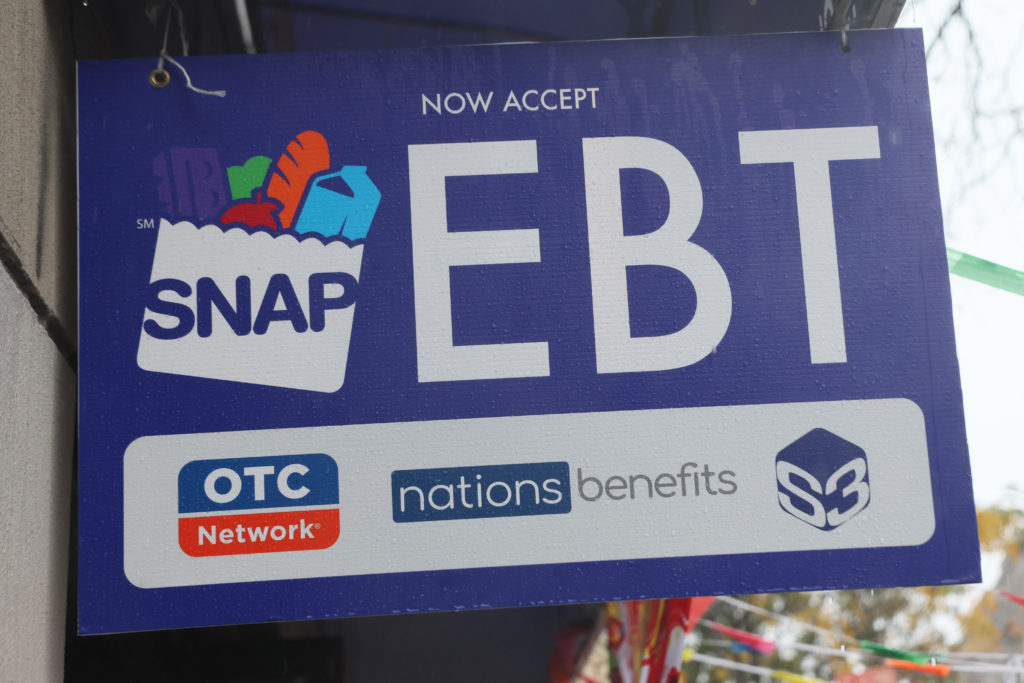
Most people don’t think twice once their SNAP benefits appear on an EBT card. The deposit arrives, groceries are bought, and life moves forward. So when discussions during a national funding dispute once raised the possibility that certain payments might have to be reversed—something touched on by officials like Patrick Penn at the USDA—ordinary families were startled by an unfamiliar phrase: benefit clawbacks. Judges such as John McConnell briefly entered the conversation too, underscoring how deeply legal questions can shape something as everyday as a grocery budget.
That moment passed, but the underlying issue remained. It revealed a quiet truth that rarely reaches the public: public benefits are governed by a complex blend of federal statute, state administration, and court oversight—and sometimes, those systems collide. What feels like a simple deposit on a plastic card is actually the final step in a carefully layered legal process.
This article explores the rules behind benefit reversals: what they are, why they exist, and why understanding them matters. No political drama, no crisis narration—just clear, timeless insight into a topic that affects millions.
Why a “Clawback” Sounds Scary—And Why It Exists
The idea that a government agency could reclaim benefits is unsettling. People rely on SNAP for basic nutrition, and uncertainty about whether money can be taken back creates a very real, human anxiety. But in administrative law, clawbacks aren’t built around punishment. They’re built around error correction, a concept woven into nearly every federal benefits program.
SNAP is governed by the Food and Nutrition Act of 2008 and guided by the USDA’s Food and Nutrition Service (FNS). These rules require states to issue accurate benefits and to fix mistakes when overpayments happen. The intention is consistency between states, protection against misuse of funds, and fairness within the program.
But in practice? The process can feel murky. And when systems are stressed—whether by outdated technology, shifting federal guidance, or court rulings—the public sees only the symptoms, not the structure.
What a SNAP “Clawback” Actually Means
A clawback happens when benefits were issued in an incorrect amount and must be recalculated. It can stem from:
-
outdated income information
-
a delayed eligibility review
-
software malfunctions
-
incorrect household size data
-
misinterpretation of a federal rule
Most overpayments originate in state systems, not individual households. The Government Accountability Office (GAO) has reported for years that administrative errors cause the majority of SNAP payment inaccuracies.
A clawback doesn’t always involve the government “taking back” funds immediately. Sometimes it means a future month’s allotment is reduced. Sometimes states create long-term repayment plans. And sometimes, especially when the overpayment resulted from a state mistake, households may never have to repay at all. The rules are detailed, and states must follow the federally approved SNAP State Options Report when deciding how to proceed.
Why SNAP Is Especially Prone to Administrative Tension
Behind the scenes, SNAP operates through a three-part structure. Understanding it helps explain why disruptions—even small ones—can ripple outward.
1. Federal law establishes the entitlement
SNAP is legally guaranteed to eligible households, which means states cannot create waiting lists or turn families away once criteria are met. But entitlement status doesn’t mean payments are immune to:
-
processing delays
-
implementation errors
-
data mismatches
-
technology failures
The law guarantees the right to assistance, not the perfection of an administrative system.
2. States operate the machinery
Each state runs its own SNAP office, with its own software vendors, data-transfer systems, payment calendars, and error-correction procedures. Federal law may be uniform, but state implementation is anything but. For example:
-
Some states issue benefits on the 1st.
-
Others stagger dates across a full month.
-
Some states still rely on decades-old systems that struggle with sudden rule changes.
As a result, two families in two different states may experience the same federal rule in very different ways.
3. Courts act as the legal referee
When agencies disagree—federal vs. state, state vs. contractor, or agency vs. administrative court—judges sometimes intervene. Cases involving SNAP often reach federal district courts, and occasionally appellate courts, when interpretations of federal law are unclear.
Judicial oversight is one of the reasons clawbacks rarely happen without documented justification. Courts are sensitive to due-process violations, especially when essential benefits are involved.
How a Benefit Can Be Reversed Without Anyone Being at Fault
One of the most confusing aspects of the SNAP system is the idea that benefits can be corrected even when recipients did nothing wrong. But this is how many entitlement programs operate, not just SNAP. Social Security and Medicare both have similar error-recovery mechanisms.
SNAP overpayments fall into three broad categories:
1. Agency error overpayments
These occur when a state miscalculates benefits or processes information incorrectly. According to USDA guidance, states must attempt recovery, but they also must follow strict limits on how aggressively they pursue it.
2. Inadvertent household errors
This might include a missed income update or an unreported change in household size. These situations are usually unintentional and handled through structured repayment plans.
3. Intentional program violations
These are less common and involve clear misuse or fraud. They follow their own investigative and administrative hearing process.
Clawbacks most often fall into the first category—agency error—which is why they tend to feel confusing. When a system causes the mistake, the correction can feel unfair. But the legal theory is that federal funds must be reconciled properly, even if no individual caused the issue.
What Rights People Have When Benefits Change Suddenly
Even though agencies can issue corrections, households aren’t powerless. SNAP’s legal design includes multiple protections that reflect decades of court rulings on due process.
1. You must receive written notice
Every state is required to provide a clear explanation if benefits change. The notice must include:
-
the reason for the adjustment
-
the calculation method
-
when the change takes effect
-
how to challenge the decision
This rule comes from long-standing due-process principles reaffirmed in federal benefit cases since the 1970s.
2. You can request a fair hearing
SNAP’s appeal process has been part of the program since its earliest days. A fair hearing allows an independent reviewer to examine:
-
whether an overpayment actually occurred
-
whether the calculation was correct
-
whether the household is responsible
-
whether the state followed federal rules
It is not a courtroom trial—just a structured administrative review meant to keep the system honest.
3. States must follow federal recovery limits
The USDA sets caps on how much can be recovered each month and under what conditions repayment can be reduced or waived. Recovery is not unlimited.
4. Emergency circumstances do not erase oversight
Even during challenging periods, including funding uncertainty, states must still follow due-process rules. Courts can stop improper recovery attempts, pause instructions, or require additional justification before action is taken.
These protections don’t remove the emotional strain of a disrupted payment, but they do ensure the system cannot operate in the shadows.
Why Clawbacks Reveal a Bigger, Long-Term Challenge
SNAP has grown into one of the nation’s most widely used support programs. According to the USDA, more than 40 million people receive benefits at some point each year. That scale creates both resilience and vulnerability.
Several structural issues shape the experience households have when payments are corrected:
Aging state technology
Many states still rely on software first built in the 1980s or early 1990s. These systems weren’t designed for rapid federal-rule changes, large-scale updates, or sudden recalculations—making errors more likely when pressure increases.
Uneven administrative capacity
Some states have robust case-management staff. Others have high turnover, limited training resources, or understaffed call centres. The quality of administration varies widely.
Complex eligibility rules
Mobile work hours, gig income, fluctuating pay cycles, shared housing arrangements—all of these complicate eligibility calculations. Even small errors at intake or recertification can create future discrepancies.
Shifting federal guidance
Whenever a court ruling or statutory interpretation changes, states must adjust. Those adjustments don’t always happen smoothly.
Clawbacks sit at the intersection of all these forces. They’re less a standalone phenomenon and more a symptom of a system that works well overall but struggles when placed under stress.
Understanding SNAP Helps Reduce Fear—Not Because the System Is Perfect, But Because It’s Predictable
When families first hear about clawbacks, the reaction is almost always the same: Can that really happen? It’s a fair question, and it reflects how little visibility the public has into the mechanics of SNAP. But the more people understand the structure, the easier it becomes to navigate moments of uncertainty.
Knowledge doesn’t eliminate stress, but it can soften it. And long-tail questions people often ask—What does this mean for my rights? What happens if a payment is late? Could a past error show up months later?—become easier to understand when the legal architecture comes into focus.
At its core, SNAP is designed not just to distribute benefits, but to preserve fairness, accuracy, and due process. Those values make the system imperfect at times, but they also make it dependable in the long run.
Looking Ahead: The Future of SNAP and System Integrity
SNAP has undergone multiple reforms over the decades, and the program continues to evolve. Federal agencies, independent researchers, and oversight bodies such as the GAO frequently encourage improvements in:
-
clearer communication with households
-
updates to outdated computer systems
-
faster error detection
-
more consistent national standards
-
stronger resilience during administrative disruptions
Improvements like these reduce the conditions that create clawbacks in the first place. They protect households from confusing experiences, strengthen public trust, and ensure benefits remain steady even when the administrative system experiences stress.
Clawbacks will likely remain a built-in feature of SNAP’s design—not because the system is unfair, but because accuracy is central to federal entitlement programs. The goal is not to take benefits away, but to keep the system reliable for everyone who depends on it.
SNAP Clawbacks: Common Questions Answered
1. Can SNAP benefits be reversed after they’re already on an EBT card?
Yes, but only under specific circumstances such as overpayments caused by administrative or data errors. States must follow federal rules, provide written notice, and offer an appeal process before adjusting benefits.
2. Does a clawback mean the recipient did something wrong?
No. The majority of SNAP overpayments stem from agency or system errors, not household actions. Federal reports—including GAO audits—confirm this pattern.
3. Why do different states handle SNAP changes differently?
SNAP is federally governed but state administered. Each state uses its own technology, staffing, and payment systems, which results in variation even though all states follow the same federal statute.
4. Do courts ever get involved in SNAP disputes?
Yes. When agency decisions create legal uncertainty or conflict with statutory requirements, federal courts can temporarily block instructions, require full payments, or order clarification. This oversight helps maintain due process.
5. Can a clawback affect future benefits?
Sometimes. States may adjust future payments rather than require immediate repayment, depending on federal recovery limits and the type of overpayment involved.