Understand Your Rights. Solve Your Legal Problems


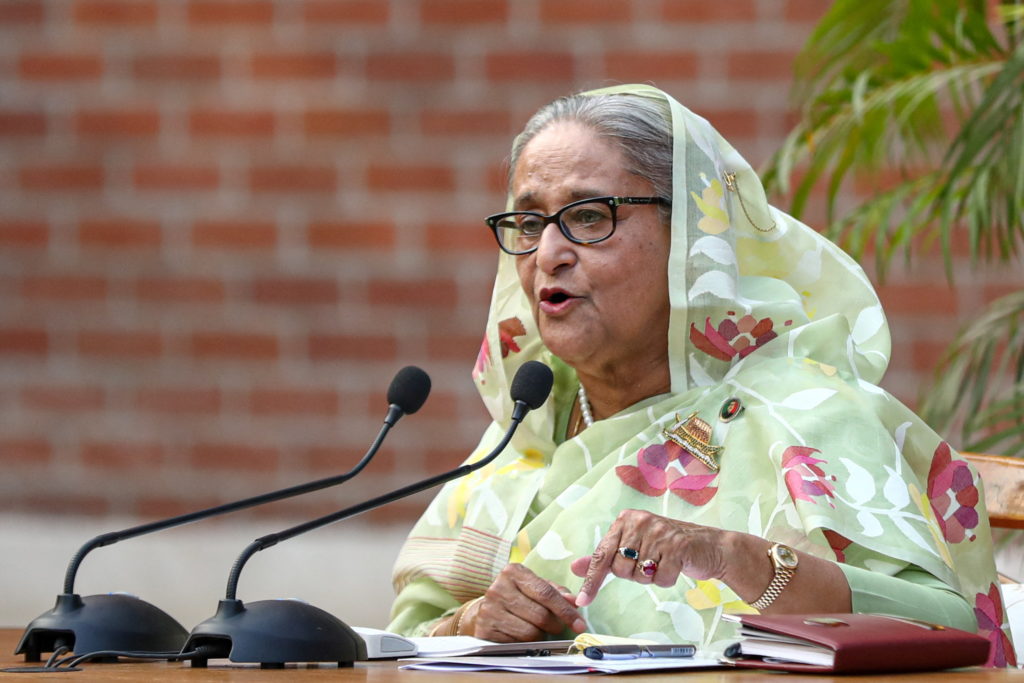
News that former Bangladesh Prime Minister Sheikh Hasina has been sentenced to death by a domestic war-crimes tribunal sparked global attention, but the verdict also highlights a deeper legal question: how do courts handle serious international-style charges when the accused is outside the country and refuses to appear?
For the general public, the idea of a political leader being tried in absentia feels unusual and dramatic. In reality, these cases sit at the intersection of constitutional law, human-rights protections, and transitional justice.
They raise tough questions about due process and how far domestic courts can go when dealing with allegations of mass violence.
This article moves beyond the headlines to unpack the legal structures behind in-absentia trials and crimes against humanity—two areas where public understanding is often limited.
Trials in absentia are permitted in several legal systems, but they remain controversial because they test the boundaries of a fair hearing. The central concern is straightforward: can a trial be fair if the defendant is not physically there to hear evidence, question witnesses, or provide instructions to counsel?
International bodies—such as the UN Human Rights Committee and the European Court of Human Rights—regularly cite three core safeguards:
The accused must have been properly informed that the case was taking place. Without notification, a trial cannot meet basic fairness standards.
This includes the ability to appear voluntarily or appoint legal representation. Some jurisdictions require physical presence for specific stages, while others allow counsel to act fully on the defendant’s behalf.
Many human-rights norms view a full retrial as the key corrective mechanism. It ensures the accused can challenge evidence in person if they later choose to come back.
These principles are not binding rules for every country, but they shape how the international community evaluates trials where the defendant is absent—particularly when the charges are serious and politically sensitive.
Crimes against humanity are often associated with global tribunals, yet many countries incorporate the concept directly into national law. This allows domestic courts to prosecute mass-violence cases without involving institutions such as the International Criminal Court.
In general terms, crimes against humanity refer to widespread or systematic attacks against civilians. They can include killings, torture, enforced disappearances, or persecution, and unlike war crimes, they do not require an armed conflict.
A public-friendly breakdown of key features:
International law treats these offences as too serious to expire over time.
Individuals in command roles may be held accountable for ordering, encouraging, or failing to prevent unlawful acts committed by forces under their control.
Domestic prosecutions of crimes against humanity often attract monitoring from human-rights organisations and UN bodies, which assess whether the proceedings align with recognised fair-trial standards.
This external scrutiny does not determine the outcome of a case, but it does influence how such trials are perceived globally.
👉 For a deeper analysis of whether Bangladesh can actually enforce the sentence abroad — including the limits of extradition, human-rights barriers, and the legal effect of an in-absentia conviction — see our full breakdown: Can Bangladesh Enforce Sheikh Hasina’s Death Sentence Abroad? 👈
Prosecuting a former head of government inevitably raises questions about independence and legitimacy. This dynamic is not unique to Bangladesh; around the world, major political transitions often bring renewed scrutiny of past state actions.
When those actions involve allegations of mass violence or abuses of power, the line between accountability and political rivalry can become difficult for the public to interpret.
In these situations, people tend to look beyond the verdict and examine the process itself. They want to know whether justice is genuinely being served or whether the courtroom has become an extension of political conflict.
Several recurring areas of concern emerge whenever a high-profile leader is tried after leaving office:
Were judges structurally and practically insulated from political pressure? Independence is not only about legal frameworks—it includes whether judges had the freedom to manage proceedings without interference, especially in a tense political climate.
A fair process depends on whether defence lawyers had the ability to review evidence, speak freely with their client (even if abroad), and investigate alternative accounts. Restrictions in any of these areas can raise questions about balance and equality of arms.
Public hearings, written judgments, and accessible court records help citizens understand how decisions were reached. When transparency is limited, it becomes harder for the public to distinguish between a fair trial and a politically driven one.
International human-rights law does not prevent states from prosecuting political figures, but it does require that trials meet procedural safeguards—such as the presumption of innocence, the right to counsel, and the ability to challenge evidence.
None of these considerations predetermine whether a particular trial is fair or flawed. Instead, they represent the kinds of questions that typically arise when justice is administered in a politically charged environment.
The credibility of the process often matters as much as the outcome, especially when the case involves a former national leader and allegations of large-scale harm.
👉 What Happens When a Former Leader Is Tried in Absentia? The Global Legal Rules Explained 👈
A conviction against a political figure living abroad raises another major legal dimension: extradition is governed by treaties and is highly conditional.
A few key factors shape whether one country will hand over a defendant to another:
Many treaties allow states to refuse extradition if the charges are seen as linked to political conflict.
Countries must consider whether the individual could face torture, inadequate trial protections, or capital punishment—factors that can bar extradition unless specific assurances are provided.
Some states require a guarantee of a full retrial before agreeing to return someone who was tried while absent.
Governments weigh treaty obligations alongside broader public-policy, humanitarian, and diplomatic factors.
Importantly, international law generally does not force a country to extradite someone to face the death penalty, even in high-profile cases. Each request is assessed case by case.
Beyond the immediate controversy, the Hasina ruling underscores the broader tensions that arise when states confront allegations of large-scale violence after a change of leadership.
It illustrates:
the challenges of maintaining fair-trial guarantees during political upheaval
the complexities of applying international criminal concepts in domestic courts
the ongoing debate over the legitimacy of in-absentia proceedings
the importance of transparency and strong procedural safeguards
As the case continues through potential appeals and international scrutiny, it may become a reference point for debates about transitional justice and accountability across South Asia and beyond.