Understand Your Rights. Solve Your Legal Problems



Wednesday 12 November 2025, 11:28 UK
A major independent review into the UK’s counter-terrorism and repatriation policy has made a radical recommendation: British nationals and former nationals detained in camps in northeast Syria — including high-profile case Shamima Begum — should be brought back home. The report warns, however, that Britain’s current policy of leaving such individuals in limbo is “unsustainable” and risks creating “Britain’s Guantanamo.”
The Independent Commission on UK Counterterrorism found that conditions at camps such as Al Hol camp and Al Roj camp amount to “inhuman and degrading treatment”, putting the UK in breach of its international human rights obligations.
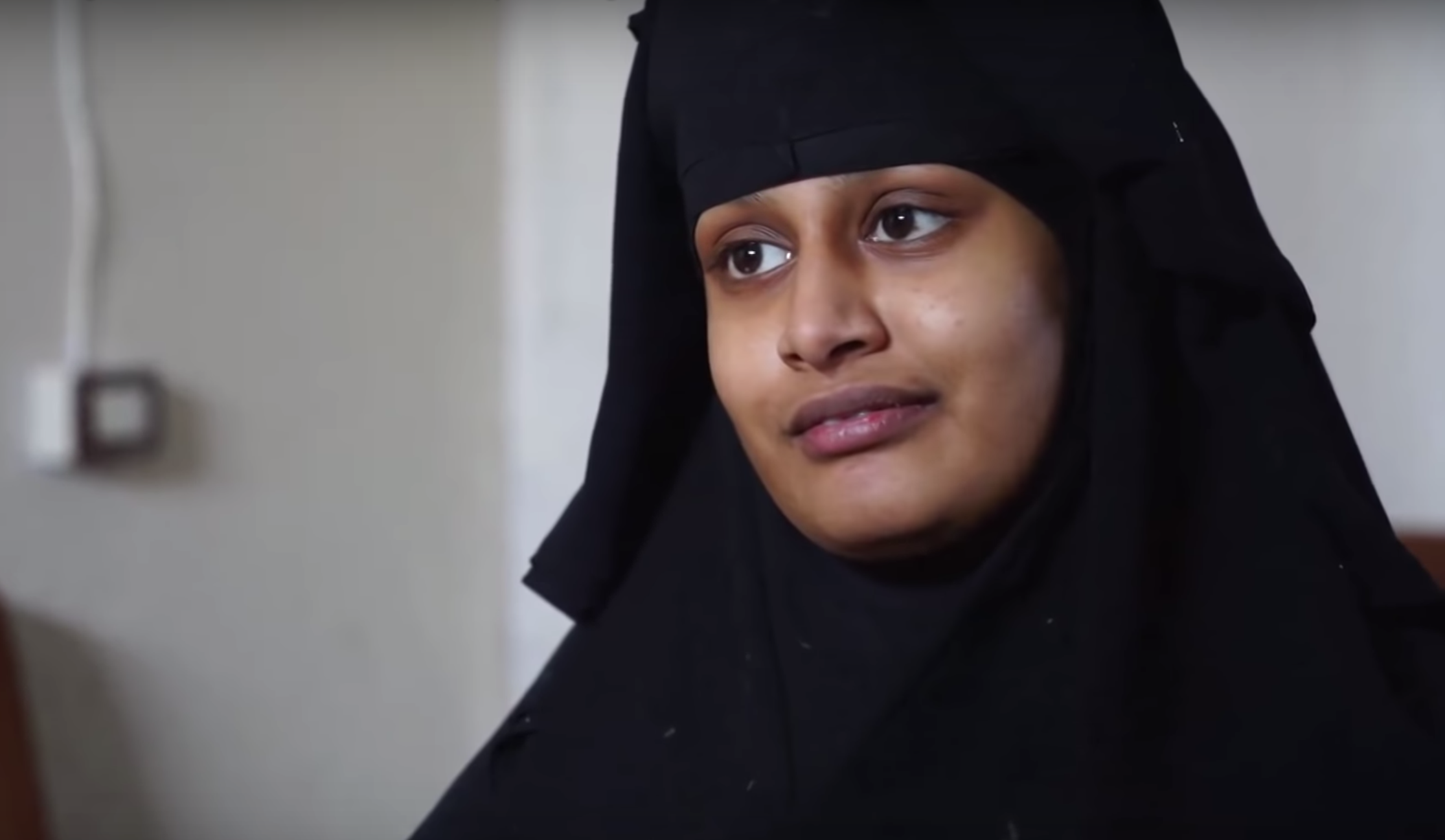
Shamima Begum Lost Initial Appeal Over Stripped British Citizenship
The commission estimates between 50 and 70 British-linked people remain stranded in Syria, mostly women, and 12–30 children, around half of whom are under age 10. The review emphasises that Britain has a special obligation to protect minors.
Unlike the US, Canada, France, Germany and other European countries which have repatriated nationals who joined or supported IS, the UK follows a “strategic distance” policy: citizenship revocations, restricted consular support and outsourcing detention to Kurdish-run facilities. This approach, the review says, erodes allied trust and weakens UK counter-terrorism credibility.
Legally, the UK government can use the British Nationality Act 1981 (Section 40) to deprive citizenship where it is “conducive to the public good”, provided the person is not made stateless. This was applied in the case of Shamima Begum.
At the same time, Britain remains bound by the Human Rights Act 1998 and the European Convention on Human Rights (ECHR), which prohibits sending someone to a place where they face inhuman or degrading treatment (Article 3).
Legal scholar Professor Clive Walker explains:
“The UK must strike a delicate balance between safeguarding national security and upholding its obligations under international human-rights law.”
In short: the UK does not have an absolute duty to repatriate every citizen who joined a terrorist organisation—but it cannot wholly outsource or ignore the responsibility either.
While precise figures for repatriating individuals from Syria are not public, comparable programmes give a sense of scale. For example, the UK’s Syrian Vulnerable Persons Resettlement Programme estimated lifetime costs of up to £1.7 billion for resettling refugees.
Repatriating former IS members is far more complex — involving secure transport, prosecution, monitoring, rehabilitation, potential incarceration and long-term surveillance. Conservative estimates place £200,000 to £500,000 per individual at the lower end. At 50-70 individuals, that translates into £10–£35 million or more. And that is before including indefinite monitoring or possible prison costs.
Who pays? The taxpayer. Who monitors them? Agencies like MI5, the Home Office, probation services — all under pressure already.
Experts say leaving British nationals indefinitely in Syrian camps may intensify security risks rather than mitigate them. The commission states:
“As escapes from camps are likely to lead to some returns to the UK, an organised programme of return, rehabilitation and integration is the best long-term option for managing risk.”
But the report warns: if the UK delays, these camps become propaganda incubators, breeding grounds for the next wave of extremists. The risk of escape, radicalisation, and terrorism returns is not hypothetical.
Shamima Begum, now 26, travelled from East London in 2015 aged 15 with two school friends to Syria and joined Islamic State (IS). She lost her appeal last year against the revocation of her British citizenship. Her three children died in infancy. Her case encapsulates the tension between national security and state responsibility.
Let’s be painfully honest: those who travelled to Syria to join or support IS made a choice. They took sides against the UK, the West, and democracy. That choice withdrew many of the protections citizenship affords.
Yes, human rights matter. Yes, children are vulnerable and deserve protection. But the blanket assumption that the UK should pay for their return, monitor them indefinitely, rehabilitate them and assume the risk is increasingly untenable.
Every returnee costs hundreds of thousands of pounds. Every one requires lifelong monitoring. Every one carries the risk of re-offending and committing terror acts. Who picks up the tab? The British taxpayer. Who bears the danger? The British public.
If they come back, it must be on our terms: strict legal consequences, lifetime surveillance, transparent costs, strong rehabilitation but zero tolerance for relapse. Without that, repatriation becomes irresponsible.
My firm view: for those who voluntarily joined a terrorist organisation, repatriation should not be the default. You went there, you joined, you chose. Stay where you are — and let the state set the price, the monitor and the terms. Because if we bring them home on anything less, we are implicitly underwriting terrorism with public money.
Shamima Begum — once a schoolgirl from East London — has lost multiple legal appeals to overturn the UK government’s decision to strip her of British citizenship. Now 24, she remains barred from returning to the UK and continues to live in a guarded camp in northern Syria.
Who is Shamima Begum?
Begum was born in 1999 in London to parents of Bangladeshi heritage. At 15, she travelled to Syria in 2015 with two classmates to join the Islamic State (IS). She married an IS fighter and had three children, none of whom survived. Her British citizenship was revoked in 2019 on national security grounds.
What does citizenship mean?
Citizenship gives a person the legal right to live in the UK and access key services such as healthcare, education, and voting. It also forms part of a person’s identity and legal belonging to the state. Some non-citizens have “settled status” or “leave to remain,” granting similar rights without full citizenship.
When can the UK remove citizenship?
Under the British Nationality Act 1981, the government can revoke citizenship if it is deemed “for the public good,” as long as the person is not rendered stateless. Grounds include:
Membership or support of a banned organisation such as ISIS or al-Qaeda.
Fraudulent acquisition of citizenship.
Actions deemed harmful to UK interests.
The Nationality and Borders Act 2022 further expanded powers, allowing citizenship removal without prior notice in some national security cases.
What happened in Begum’s case?
A tribunal ruled in 2020 that Begum was technically a citizen of Bangladesh by descent, so removing her British nationality did not make her stateless — though Bangladesh later said she would not be allowed entry. In 2021, the Supreme Court decided she could not return to the UK to appeal.
In 2023, the Special Immigration Appeals Commission (SIAC) acknowledged a “credible suspicion” that Begum was a victim of trafficking and sexual exploitation but maintained that the Home Secretary’s decision was lawful.
The Court of Appeal upheld that ruling in February 2024, saying she “may have been influenced and manipulated but still made a calculated decision to join Islamic State.” On 25 March 2024, Begum lost her bid to take the case to the Supreme Court.
How many people have lost UK citizenship?
According to the Home Office, 220 people were stripped of British citizenship for the public good between 2010 and 2022, mostly on national security grounds. The peak was in 2017, when 104 people lost citizenship; in 2022, only three did.
How do other countries handle this?
United States: Birthright citizenship cannot be revoked. Naturalised citizens may lose it if obtained by fraud or for joining proscribed groups.
Australia: Dual citizens can lose citizenship for terrorism-related offences or threats to national security.
EU states: Around 14 EU countries, including France, Greece, and Romania, allow citizenship removal on national security grounds. The Netherlands can do so without prior notice.
Q1: Can Shamima Begum legally return to the UK?
A: Her citizenship was legally revoked under the British Nationality Act 1981; unless reversed, she lacks entitlement to a British passport and must address her legal status abroad.
Q2: What laws govern the UK’s power to deprive citizenship for terrorism?
A: Section 40 of the British Nationality Act 1981 allows deprivation if “conducive to the public good” and non-statelessness is maintained. The ECHR (Article 3) continues to bind the UK regarding rights against inhuman treatment.
Q3: How many British nationals are still held in Syrian camps?
A: The review estimates roughly 50-70 British-linked individuals and 12-30 children remain in northeast Syrian camps.
Q4: How much might repatriation cost UK taxpayers per person?
A: Conservative estimates start at £200,000–£500,000 per individual, with total costs of £10-35 million+ depending on numbers and monitoring needs.
Q5: Who monitors returnees and what happens if they commit terrorism again?
A: Returnees would fall under MI5, the Home Office, probation and criminal justice systems. If they commit further offences, the state is exposed to public safety risk and fiscal liability—and the taxpayer bears follow-up costs and consequences.
Exclusive Read: UNSAFE BRITAIN: The Failures That FREED a Killer. Why Officials Get PROMOTED When Innocents Die