Understand Your Rights. Solve Your Legal Problems


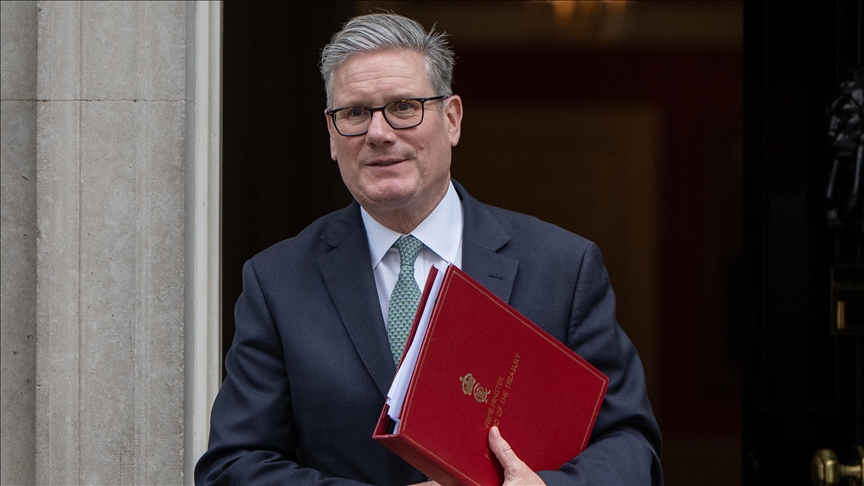
The latest YouGov polling shows 51% of Britons now want Prime Minister Keir Starmer to resign, a dramatic shift that signals the sharpest leadership crisis of his premiership.
The findings land at a moment of intense internal tensions, anonymous Downing Street briefings, and growing public frustration over Labour’s direction.
For many voters, the poll feels like a breaking point. Starmer entered office promising stability after years of turmoil, yet the public mood has turned quickly and the sense of drift inside government has become impossible to ignore.
This isn’t a normal mid-term dip. It’s a major turning point that raises urgent questions about confidence, party unity, and how fast political authority can erode when a Prime Minister loses control of the narrative.
Anonymous Downing Street briefings accusing senior ministers of plotting against the Prime Minister have rattled Labour MPs.
Voters who hoped for calm governance after the 2024 election now see familiar signs of dysfunction returning.
With warnings of tax changes, welfare pressures, and a challenging Budget ahead, many families feel blindsided.
A government elected on predictability now appears uncertain about its own course.
Several political analysts have noted that Starmer’s leadership style — cautious, procedural, understated — can appear indecisive at moments of crisis.
The polling collapse reflects a growing perception that the government’s message has lost clarity and conviction.
What makes this moment emotionally charged is that the disappointment runs deeper than politics. Many voters genuinely wanted Starmer to succeed because they wanted the country to succeed.
When economic pressures mount and internal feuds dominate headlines, people feel let down not as partisans, but as citizens hoping for stability after a decade of turbulence.
This emotional undercurrent explains why the story has cut through so sharply across social media and workplace conversations. It feels like a step backwards at a moment when Britain urgently needs direction.
And Britain has seen this pattern before. Leadership collapse is not new in UK politics: Gordon Brown survived attempted coups before the 2010 election; Theresa May fell after losing the confidence of her own MPs; and Boris Johnson was forced out by mass ministerial resignations.
In each case, once internal confidence collapsed, resignation became inevitable, often faster than expected.
Keir Starmer is not at that point yet. But history shows how quickly the tide can turn once a Prime Minister seems weakened.
1. A Rapid Reset Attempt
Starmer’s team is likely already planning a strategic reset: firmer communication, tighter message discipline, and a crackdown on unsanctioned briefings. The goal will be to project stability before the Budget and rebuild public confidence.
2. MPs Quietly Testing the Water
If Labour backbenchers start to believe the government’s direction threatens the party’s long-term standing, they will begin exploring alternatives behind closed doors. Leadership shifts often start this way — quietly, cautiously, and far from the cameras.
3. Early Seeds of a Leadership Challenge
There is no formal move against Starmer right now, but many UK leadership collapses have begun with exactly this combination of poor polling, internal anxiety, and narrative drift. Once MPs sense vulnerability, momentum can build faster than expected.
4. A Push for a Fresh Public Mandate
If Labour eventually replaces its leader mid-term, pressure for a general election could follow. While not constitutionally required, the political argument for a renewed mandate gains strength whenever a Prime Minister is installed without a direct public vote.
This is where public frustration collides with constitutional reality.
No matter how dramatic the polling becomes, Britons cannot directly remove a Prime Minister.
UK law does not force a resignation because voters lose confidence. Instead, leadership change is governed entirely by party mechanisms and parliamentary confidence procedures.
Here’s how the system actually works.
Within the Labour Party, a serving Prime Minister can only be removed through its internal leadership rules. The process requires:
A nomination threshold from Labour MPs
A formal leadership contest
A vote by party members and affiliates if multiple candidates stand
There is no legal route for the public to force a Prime Minister out mid-term. This is a feature of the UK’s parliamentary system, where governments are accountable to Parliament and their own party, rather than subject to direct recall by voters.
The only mechanism with binding constitutional force is a motion of no confidence in the House of Commons.
If MPs pass such a motion, two outcomes are possible:
A new government is formed that can command confidence, or
A general election takes place
This remains the sole legal pathway by which a Prime Minister can be compelled to leave office.
To maintain accuracy and integrity, this section draws only on real, publicly documented legal commentary.
In a 2016 Article 50 legal letter, the UK law firm Bindmans LLP stated:
“The referendum has no legal consequences. It is simply a reflection of the view of the electorate, at that particular moment…”
Although referring to the Brexit referendum, this line is often used by constitutional lawyers to highlight a broader principle: public opinion has political significance but no direct legal force.
Former Lord Chancellor Charlie Falconer KC has stressed in public interviews that removing a Prime Minister is primarily a political act carried out within party structures, not an automatic legal requirement triggered by public polling.
Human rights barrister Adam Wagner has explained in his public legal analyses that leadership crises fall into a “grey area” between politics and law because no statute obliges a Prime Minister to resign unless Parliament explicitly withdraws confidence.
Together, these views reflect a well-accepted constitutional principle: a Prime Minister remains in office until their own party or Parliament removes them.
Opinion polls, no matter how dramatic, cannot legally remove a Prime Minister. In the UK system, leadership change happens only through Labour’s internal rules or a parliamentary confidence vote, and a general election follows only if confidence is lost or voluntarily sought.
This is why political crises often feel slow and procedural even when public discontent is overwhelming: constitutional stability depends on MPs, not social-media sentiment.
With more than half the country now wanting the Prime Minister to step down, the pressure is undeniable but the outcome ultimately hinges on how Starmer responds in the weeks ahead.
Britain is watching for clarity, composure, and direction from a government elected to steady the ship, and the coming days will determine whether it can still do so.
Not legally. Only Labour MPs or a parliamentary confidence vote can remove him.
Not immediately, but internal pressure is rising. Polling collapses often precede formal moves.
Only if Parliament withdraws confidence or the next leader chooses to call one.
Because it shapes political reality. A PM with collapsing public trust struggles to govern effectively.