Understand Your Rights. Solve Your Legal Problems


A major shift in global AI power dynamics unfolded on Wednesday as the United States formally cleared the export of Nvidia’s most advanced artificial intelligence chips to Saudi Arabia and the United Arab Emirates, paving the way for one of the largest government-backed AI infrastructure builds anywhere in the world.
The approval arrived during a week already packed with high-stakes negotiations in Washington, where Crown Prince Mohammed bin Salman secured a long-anticipated F-35 fighter jet purchase, finalized a civil nuclear cooperation agreement, and saw Saudi Arabia designated a major non-NATO ally.
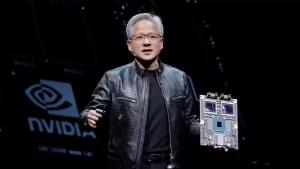
Hours later, Saudi Arabia’s state-backed AI firm Humain unveiled a sweeping new technology partnership with Nvidia, outlining plans to deploy up to 600,000 of the company’s latest AI accelerators across data centers in both Saudi Arabia and the United States over the next three years.
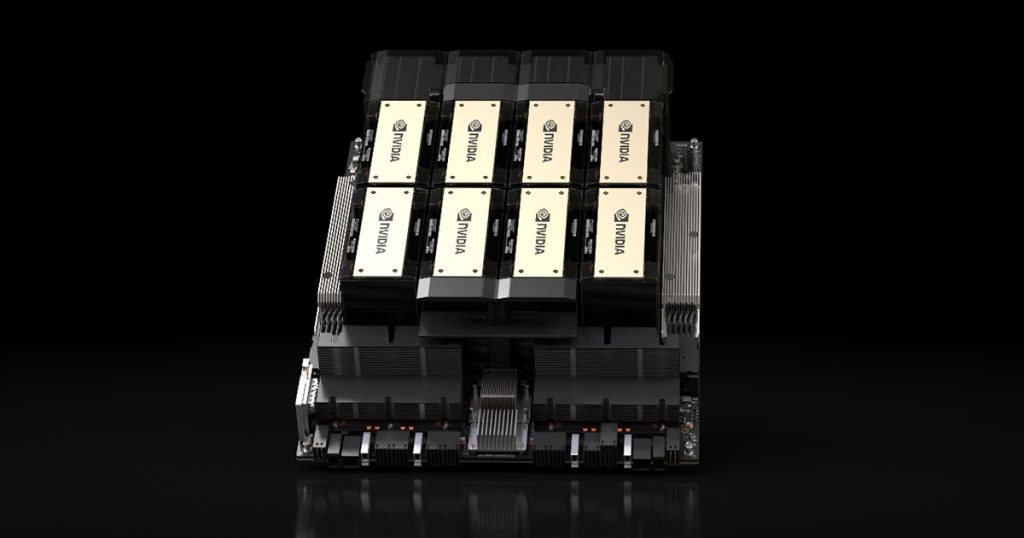
The U.S. Commerce Department confirmed that both Humain and the UAE’s G42 are now approved to acquire the equivalent of 35,000 Nvidia Blackwell-class processors, chips typically subject to strict export controls due to their potential military and strategic value.
The clearance gives the Gulf unprecedented access to cutting-edge silicon at a moment when every major nation is racing to secure advanced computing capacity.
Below is a clear breakdown of what the approval means and how it fits into the U.S. export-control system that governs the global AI arms race.
The U.S. Commerce Department authorized Humain and G42 to purchase Nvidia’s most advanced AI accelerators that fall under controlled-export rules.
These processors power the kind of large-scale generative-AI systems, robotics platforms, cybersecurity tools, health-tech models, and sovereign AI projects that require enormous computational capacity.
For Saudi Arabia, the approval marks a significant step in its drive to become a major global AI hub.
For the United States, it ensures that rapid AI expansion in the Gulf remains tied to American technology rather than alternative suppliers.
Humain - launched in May and backed by the Public Investment Fund plans to deploy the approved Nvidia hardware across new data centers in Saudi Arabia’s large “gigaproject” zones while also building AI campuses in the United States.
G42 is simultaneously developing a one-gigawatt AI data center in the UAE for OpenAI, working with top U.S. tech partners including Oracle, Cisco, SoftBank, and Nvidia itself. The newly authorized chips are expected to form the core compute layer of these facilities.
Together, Humain and G42 are now positioned among the largest non-U.S. operators of Nvidia’s newest generation of AI hardware.
The United States has regulated the sale of Nvidia’s most advanced chips since late 2023 to ensure that sensitive hardware does not end up in unauthorized destinations.
These rules form part of the broader export-control framework that governs high-performance computing equipment.
Under this system, companies can apply for case-by-case approval when operating in jurisdictions that meet U.S. oversight and compliance requirements. Humain and G42 were authorized through this process, providing details about how the chips will be used, where they will be housed, and the measures in place to prevent re-export.
The decision reflects the need to balance two U.S. priorities:
Protecting strict controls on high-end AI hardware, and
Supporting approved international partners that are building regulated AI infrastructure.
AI chip exports are regulated under the U.S. Export Administration Regulations (EAR) - a framework that governs how sensitive technologies can be transferred internationally, especially hardware with potential military, surveillance, or high-end strategic uses.
Here is the simplified, real-world breakdown:
Before any advanced chip can be exported, officials evaluate:
The chip’s performance level
Whether the hardware can be altered or upgraded
The location and security of the data centers where it will be installed
Whether the buyer operates in a jurisdiction subject to enhanced compliance checks
These requirements ensure that only authorized partners receive high-performance processors capable of training large AI models.
Once approved, companies like Humain and G42 must comply with legally binding conditions, including:
Storing EAR-regulated chips only at approved sites
Maintaining full supply-chain documentation
Preventing any re-export to non-authorized destinations
Allowing U.S. officials to confirm compliance when required
Violations can lead to penalties, loss of export privileges, or other enforcement actions.
The chips approved for Humain and G42 fall into the category of controlled but permitted exports, meaning they are below the performance limits that would place them in a prohibited tier.
This makes them legal to export under an EAR license to vetted international partners.
The U.S. approval lands at a moment when demand for high-end AI chips is exploding, reflected in Nvidia’s latest earnings surge.
As Gulf nations pour billions into sovereign AI infrastructure, Saudi Arabia and the UAE are quickly positioning themselves as major global computing centers at a time when access to advanced processors is limited worldwide.
For the United States, the decision keeps emerging AI super-clusters tied to American-regulated technology, reinforcing oversight and long-term standards.
For Saudi Arabia and the UAE, the clearance opens the door to AI capabilities that only a handful of countries can currently build, pushing the region into the top tier of global compute power.