Tom Brady’s Card Shop Incident Highlights How Modern Retail Theft Is Really Prosecuted
When news broke that Tom Brady’s New York sports-card shop had been targeted by a thief who allegedly left with thousands of dollars in collectible cards, the headlines focused on the celebrity angle. But the more useful takeaway is what this kind of case reveals about how New York handles high-value retail theft—particularly when the property is small, easy to resell, and taken through quick payment-system deception rather than force.
Incidents like this often prompt the same public questions: How does a retail theft case actually move through the legal system? And what turns something tiny in size into a felony-level offense?
This article uses the Brady story as an entry point, but the analysis applies to retail theft cases across New York City.

Inside Tom Brady’s CardVault shop, where high-value sports and trading cards are prepared for sale and authenticated before reaching collectors.
1. High-Value Theft and Why Dollar Amount Drives the Charges
Under New York law, the classification of a theft hinges largely on the value of the property. Once stolen goods exceed $1,000, prosecutors may pursue Grand Larceny in the Fourth Degree—a Class E felony.
Other thresholds—$3,000, $50,000, $1 million—determine whether higher felony categories apply. Even at the lowest felony tier, potential penalties may include probation or incarceration, depending on the circumstances and any prior criminal history.
This is why items like trading cards, jewelry, luxury cosmetics, or electronics frequently end up in felony cases despite their size. For legal purposes, value—not bulk—drives the severity.
2. Payment-System Deception and “Larceny by Trick”
Many modern theft cases involve a suspect who does not flee the store but instead creates the appearance of paying. Declined cards, fake tap-to-pay motions, and intentional distractions fall into a category often referred to as deceptive-payment theft.
New York law does not require physical concealment for a theft charge. If someone knowingly obtains goods through deception, prosecutors may consider charges such as:
-
Larceny by Trick, when property is handed over because of false representations
-
Criminal Possession of Stolen Property, if the individual knowingly retains the goods
-
Scheme to Defraud, if evidence shows repeated or coordinated deception
These concepts are long-established and apply regardless of whether the payment technology involved is new.
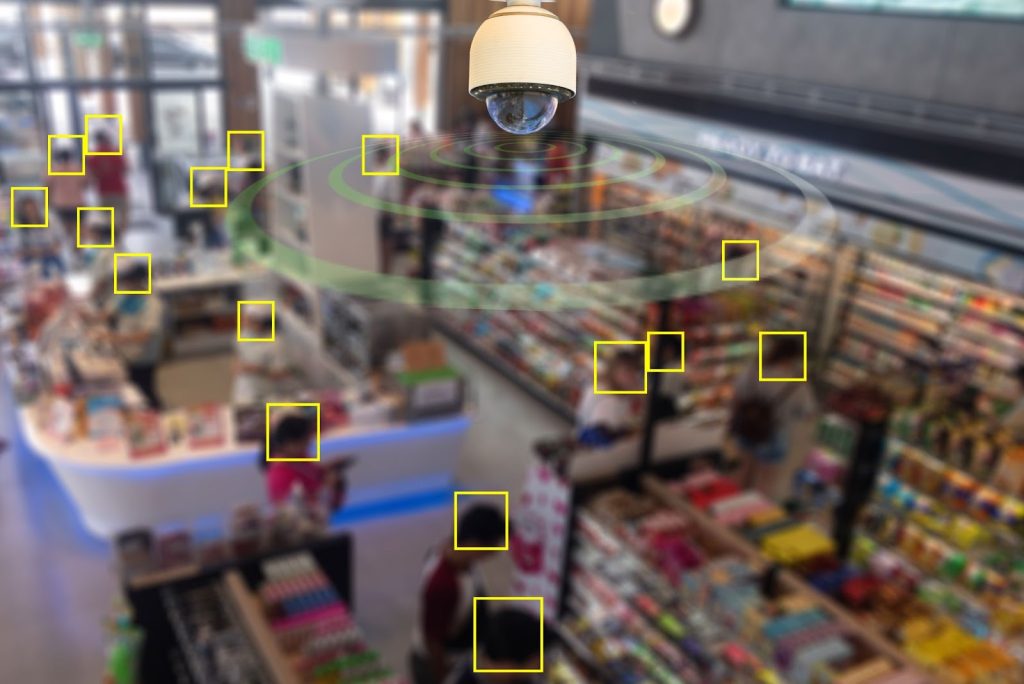
3. Why Surveillance Footage Matters So Much
Retailers rely heavily on surveillance because it establishes details that are often contested later: timing, sequence of events, and a clear visual record of who was present.
In practice, footage is used by:
-
NYPD investigators to identify potential suspects
-
Prosecutors when determining whether evidence meets charging standards
-
Defense teams assessing credibility and building their response
-
Courts evaluating motions related to evidence admissibility
While video alone cannot guarantee a prosecution, consistent, high-quality footage often strengthens a case at each stage.
4. Why Businesses Commonly Decline Public Comment
It may seem unusual when stores decline to speak publicly after a theft, but there are well-established reasons:
-
Protecting the integrity of the investigation by avoiding premature conclusions
-
Avoiding statements that could later be challenged if facts evolve
-
Insurer requirements, which often encourage minimal public commentary while a claim is being reviewed
-
Reducing civil-liability exposure, especially when describing unidentified individuals
This approach is standard practice across retail sectors, not a celebrity-specific choice.
5. How a Retail Theft Case Typically Progresses in NYC
While every case is fact-specific, most follow a similar early sequence:
-
Report and Documentation – Police collect statements, footage, and inventory records.
-
Identification Phase – Detectives review still images, conduct canvassing, and evaluate public tips.
-
Arrest or Warrant – If probable cause exists, police may make an arrest or apply for a warrant.
-
Prosecutorial Review – Prosecutors determine appropriate charges based on value, conduct, and evidence.
-
Court Proceedings – The case may involve arraignment, discovery, negotiations, or trial.
Many cases conclude through negotiated outcomes, particularly when the defendant has no prior record or when the value of the goods is clearly documented.
Looking Ahead: What This Says About Retail Crime in 2025
Tom Brady’s business interests make the incident newsworthy, but the underlying issues reflect broader trends: compact, high-value merchandise, quick-movement thefts, and increasingly common attempts to manipulate modern payment systems.
For businesses, these cases underscore the importance of accurate inventory tracking, employee training, and clear procedures for verifying payment. For the public, they highlight that the legal consequences of theft often hinge on value thresholds that many consumers may not realize exist.
Retail theft investigations continue to evolve, but the legal framework governing these cases remains robust—and well-equipped to handle incidents involving high-value, easily transferable goods.
FAQs: Understanding Retail Theft Charges in New York
Does pretending to pay change how the law treats the offense?
Not typically. If property is obtained through intentional deception, it can be treated as a form of larceny, similar to physically removing items without paying.
Does celebrity involvement affect how charges are determined?
No. Charges are based on the conduct, the value of the property, and the available evidence—not on the identity of the business owner.
Why is the value of stolen goods so central to the case?
New York’s theft statutes rely on dollar thresholds to determine misdemeanor versus felony levels, which is why even small items can lead to higher-level charges if they are valuable.