Understand Your Rights. Solve Your Legal Problems


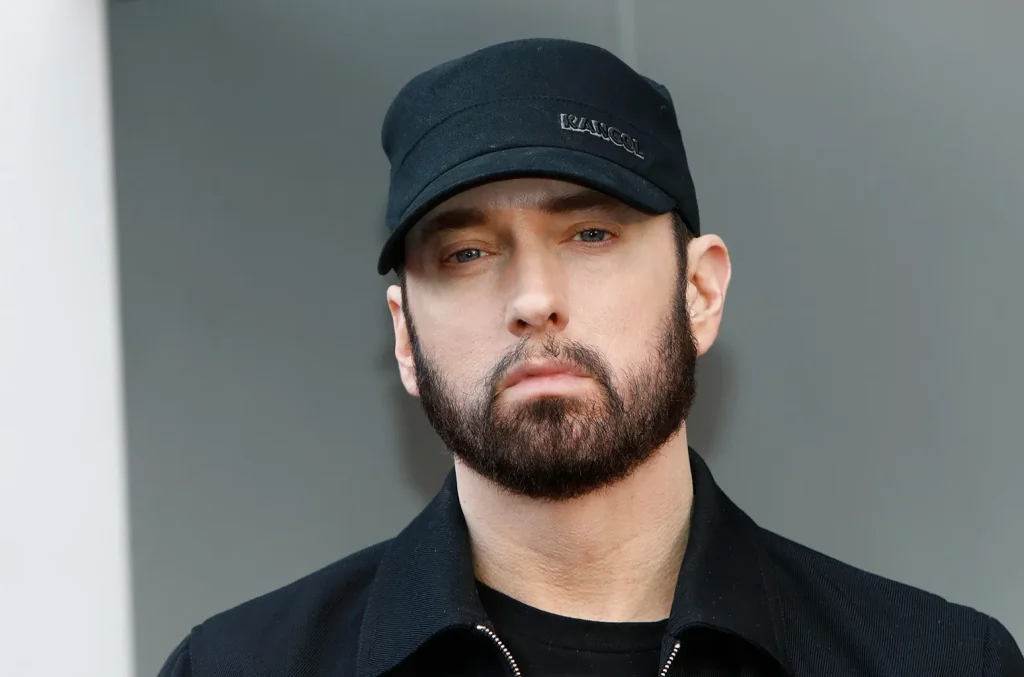
Eminem has filed a trademark petition with the U.S. Patent and Trademark Office alleging that Australian beachwear company Swim Shady is infringing and diluting his long-established “Shady” trademarks. In a TTAB filing dated September 29, 2025, the rapper argues that “Swim Shady” risks consumer confusion and falsely suggests an association with his Slim Shady persona, protected in the U.S. since 2001. Public records from IP Australia show the company previously registered a similar mark before launching its brand. This dispute highlights how U.S. and Australian trademark law handle celebrity names, dilution, and cross-border IP conflicts.
Last updated: November 2025
Eminem has launched one of the most-discussed celebrity trademark fights of the year, taking aim at Australian beachwear brand Swim Shady. His filing argues the company is capitalizing on his globally recognised Slim Shady identity, creating confusion and diluting a mark he has protected for more than two decades. It’s a legal standoff that has captured headlines in the U.S., Australia and beyond, raising broader questions about how far trademark protection extends in the age of global branding.

A Swim Shady beach tote bag photographed on the sand. The Australian company behind the brand is currently facing a trademark challenge filed by Eminem in 2025.
2001 – Trademark Registration
Eminem secures U.S. trademarks for “Shady” and “Slim Shady”.
USPTO record: https://tsdr.uspto.gov/
2023 – Early Australian Filing
The Australian company behind Swim Shady registers “Slim Shade” with IP Australia.
IP Australia search: https://search.ipaustralia.gov.au/trademarks/
2024 – Brand Launch
The company begins selling swimwear and beach gear under the name Swim Shady.
January 2025 – Eminem Files in Australia
The rapper seeks additional trademark protection for “Slim Shady” in the Australian market.
Early 2025 – U.S. Filing by Swim Shady
The company submits a U.S. trademark application for “Swim Shady.”
September 29, 2025 – Eminem’s U.S. Petition
Eminem files a petition with the USPTO’s Trademark Trial and Appeal Board (TTAB) seeking cancellation of the Swim Shady filing.
TTAB docket: https://ttabvue.uspto.gov/ttabvue/
November 28, 2025 – Deadline Approaches
Swim Shady must file its response by this date.
The company has stated it intends to “defend our valuable intellectual property.”
This dispute involves trademark infringement, false association, and dilution — the claim that a newer brand weakens or blurs a famous mark.
In the U.S.: The Lanham Act, addressing confusion, false endorsement, and dilution.
In Australia: The Trade Marks Act 1995, which includes protections for well-known marks.
Trademark examiners and courts look at:
Similarity in sound, appearance, and meaning
Whether ordinary consumers could assume a connection
Whether the original mark is “famous”
Whether the later mark dilutes or harms its reputation
Celebrity names commonly receive broader protection because they function as commercial assets.
Not usually. Courts assess overall commercial impression, not spelling alone.
Yes. When used commercially — as “Slim Shady” has been for decades — they qualify for protection.
For dilution, no. A famous mark can be protected from blurring even without proven confusion.
No. They’re territorial. That’s why Eminem filed in both the U.S. and Australia.
In some cases, yes. Timing, first use and enforcement all matter in trademark disputes.
This case underscores practical lessons for any creator or business owner:
Conduct extensive name searches before launching a brand.
Register trademarks early and in every region you intend to operate.
Do not rely on parody or wordplay as legal protection.
Even unintentional similarity can trigger a dispute.
Celebrity or not, brand identity is a legally enforceable asset.
The outcome of this dispute could subtly influence how regulators approach future trademark conflicts, particularly those involving celebrity personas used as commercial brands.
It may affect how cross-border disputes are assessed when a globally recognised identity is involved, and could shape the threshold for dilution in cases where branding leans into parody, wordplay or pop-culture references. While the case is unlikely to revolutionise trademark law, it may refine how intellectual property offices evaluate famous marks being used in unrelated industries.
Cancellation of Swim Shady’s trademarks in both jurisdictions
A required rebrand
Strengthened exclusivity over the “Shady” identity
Determination that no likely confusion exists
Retention of U.S. and Australian trademarks
Minimal disruption to commercial activity
Trademark battles involving celebrities often end in settlement, potentially including:
A phased rebrand
A coexistence agreement
Territorial restrictions
Licensing terms
Given the fame of the Shady mark, the brand faces an uphill challenge.
Lawyers commonly note that when a mark is globally recognised, similarity in sound or meaning is often enough to trigger dilution concerns. Slight changes in spelling rarely overcome the risk of confusion if the overall impression evokes the original. Commentators also point out that brand names built on parody, puns or pop-culture references require careful legal vetting before commercial use.
💡 From Big Macs to Big Brands 🍔➡️® — 5 Cases That Redefined the Rules
In most disputes, yes — unless a court orders an injunction. But the company risks a forced rebrand if it loses.
He owns multiple national registrations, but rights are territorial. That’s why he pursued new filings in Australia and challenges in the U.S.
They look at sight, sound, meaning and context — not just spelling.
Yes. Fame alone doesn’t determine the outcome. Evidence, timing, and the mark’s actual use all matter.
The dispute between Eminem and Swim Shady demonstrates how powerful — and legally sensitive — celebrity trademarks have become. When a brand name closely echoes a globally known persona, trademark offices quickly scrutinize whether the connection is misleading or dilutive. The case reinforces the need for early registration, international filings, and careful brand strategy. As the filing deadline approaches, agencies in both countries will focus on how closely the two marks align in consumer perception.