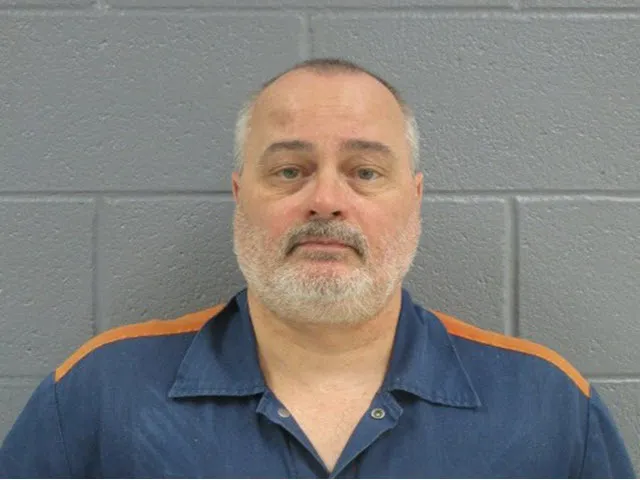
John Skelton has now been charged with murder, a development that activates the legal framework Michigan uses when a long-running disappearance case moves into a homicide prosecution.
Skelton’s current charges arise as he approaches the end of a lengthy prison term connected to earlier offenses in the same investigation, with the listed dates of offense corresponding to November 2010—the last confirmed date his three children were known to be alive.
The case remains under the authority of the Michigan State Police, and the new filings follow a judicial determination earlier this year that declared the children deceased but did not assign legal responsibility for their deaths.
These procedural facts shape the posture of the current case as it enters Michigan’s standard process for reviewing evidence in a homicide prosecution.
What the Charges Mean
Michigan’s “open murder” format allows prosecutors to start a homicide case without selecting a specific degree of murder.
-
First-degree murder requires proof of intent and premeditation or specific felony circumstances.
-
Second-degree murder requires proof of malice but not premeditation.
Keeping the charge open preserves flexibility as the case develops. It also creates a broader range of possible outcomes for the defense to prepare for.
The accompanying evidence tampering count focuses on whether a person knowingly concealed, altered, or destroyed material that would be relevant to the investigation.
Michigan law permits both direct and circumstantial evidence to support a tampering charge, depending on the strength and reliability of what investigators present.
How the Process Works After Arraignment
Michigan felony cases move through a structured sequence designed to determine whether the evidence is strong enough to advance to trial.
The first step is the Probable Cause Conference (PCC), where both sides exchange initial information, address procedural issues, and decide whether to move forward with a preliminary examination.
It is an administrative checkpoint, not a forum for deciding guilt.
The next stage is the Preliminary Examination, where prosecutors must present evidence showing probable cause that a crime occurred and that the defendant may be connected to it.
This is a lower standard than what is required at trial. The judge’s task is to determine whether the case should be “bound over” to circuit court for further proceedings.
A defendant charged with open murder has several constitutional protections that shape these early steps, including the right to counsel, the right to remain silent, the right to a preliminary examination, and the ability to challenge how evidence is being presented.
In cases where many years have passed, defense attorneys often scrutinize the reliability and handling of evidence, which can later be addressed through motions, suppression hearings, or expert analysis.
Michigan law also permits a homicide case to proceed even if physical remains have not been recovered. Courts evaluate all available forms of evidence—digital, testimonial, circumstantial, or behavioral—to determine whether the legal elements of homicide can ultimately be proven.
“No-body” cases have been upheld across the country when the totality of the evidence meets the standard of proof beyond a reasonable doubt.
👉 How Criminal Law Really Works: Inside the Principles That Shape Justice in America
How Sentencing Works When the Degree of Murder Is Determined at Verdict
Open murder creates a rare situation where the exact punishment is not known until the jury delivers its verdict.
Instead of the state committing to first- or second-degree murder from the start, the jury decides which level of homicide has been proven, and that determination controls the sentencing path.
If jurors find the elements of first-degree murder, Michigan law requires a sentence of life imprisonment without the possibility of parole.
There is no judicial discretion and no sentencing range for the court to debate. This mandatory life rule applies whether the conviction rests on premeditated murder or falls within the felony-murder category.
A conviction for second-degree murder, by contrast, gives the judge substantial discretion.
Sentences can span decades and may approach life depending on aggravating or mitigating factors, such as the defendant’s criminal history, the circumstances surrounding the offense, and how the judge interprets the Michigan sentencing guidelines.
Judges typically consult a scoring system that weighs elements like intent, the severity of the harm, and the defendant’s prior record to determine a recommended range.
Because the gap between the two outcomes is so wide, mandatory life without parole versus a flexible term of years — the legal fight over how jurors are instructed becomes crucial.
Both sides focus heavily on the wording of instructions related to intent, malice, and premeditation, because even small differences in phrasing can influence how jurors classify the offense.
The distinction between acting with malice and acting with premeditation often becomes a central point of litigation, shaping both trial strategy and post-verdict sentencing options.
Common Public Misconceptions
Historic or high-profile cases often spark recurring misunderstandings:
“A prior conviction prevents new charges.”
Double jeopardy applies only to being tried twice for the same offense, not to new allegations.
“Old evidence can’t be used.”
Michigan courts rely on both new and historical evidence, provided it meets admissibility standards.
“No physical remains means no murder charge.”
The law does not require physical remains if other evidence can satisfy the required burden of proof.
Next Steps in the Legal Process
Michigan law requires a probable cause conference and a preliminary examination before a felony case like this can advance.
At the examination, the judge will decide whether the evidence is strong enough to bind the case over for trial in circuit court.
If that happens, both sides will begin a fuller round of discovery, motions, and evidentiary hearings that determine what information the jury may eventually see.
These steps form the core of the state’s homicide process and lay the groundwork for how the case is litigated.
Key Legal Questions About Michigan’s Open Murder Charges in the Skelton Case
Can Michigan prosecutors bring a homicide case without a body?
Yes. Homicide cases can proceed based on circumstantial and testimonial evidence.
Why are defendants in murder cases often held without bond?
In life-maximum cases, courts frequently deny bond because of the seriousness of the charge and the associated flight-risk concerns.
What is the difference between probable cause and proof beyond a reasonable doubt?
Probable cause is a preliminary threshold used at early hearings. Proof beyond a reasonable doubt is the much higher standard required at trial.