Understand Your Rights. Solve Your Legal Problems


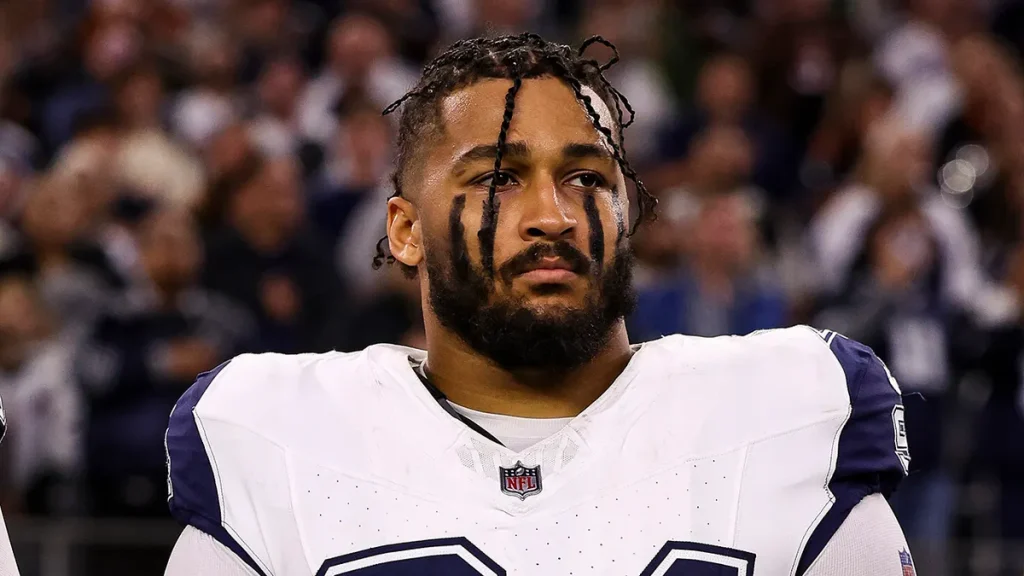
The body of Marshawn Kneeland, 24, was discovered early Thursday, November 6, 2025, in Frisco, Texas, from what authorities described as a self-inflicted gunshot wound. Just hours earlier, the Dallas Cowboys defensive end had led police on a late-night chase through North Texas — fleeing into darkness after reportedly sending his family a haunting final message: “goodbye.”
According to the Texas Department of Public Safety, the pursuit ended in tragedy, but the question lingers: what pushed a young athlete, fresh off the biggest moment of his career, to the edge? Police dispatch recordings obtained by PEOPLE reveal that Kneeland’s girlfriend warned officers he was armed, distraught, and “may end it all.” Only days before, the Michigan-born player had celebrated his first NFL touchdown — a dream realized, now forever shadowed by its devastating aftermath.
At approximately 10:33 p.m. on November 5, Texas DPS troopers attempted to pull Kneeland over for a traffic violation in Addison, north of Dallas. Instead, he fled, prompting a pursuit that was later called off when troopers lost sight of his vehicle.
At 1:31 a.m. Thursday, his car was found crashed on the Dallas Parkway, just minutes from the Cowboys’ headquarters in Frisco. His body was discovered nearby, along with a firearm.
Dispatch audio later revealed the chilling timeline:
“They just received a text from him, a group text from him saying goodbye,” an officer said. “They’re concerned for his welfare.”
Within minutes, the NFL, Cowboys staff, and local police agencies were in communication, aware that one of their players was in crisis — but by the time they arrived, it was too late.
Kneeland’s story resonates far beyond football. It highlights the silent epidemic of mental health crises in professional sports, where players are celebrated for strength but often unsupported in vulnerability.
His teammates, including quarterback Dak Prescott, shared messages of grief and disbelief online. “I hurt for his family,” Prescott wrote, adding that the locker room felt “broken.”
For many readers, this moment lands personally. It reminds us that even visible success can conceal invisible suffering. Behind the highlight reels are human beings — sons, partners, teammates — whose struggles often go unseen until they become irreversible.
Born in Grand Rapids, Michigan, in 2001, Kneeland’s path from Western Michigan University to the Dallas Cowboys was the culmination of a childhood dream. His mother, Wendy Kneeland, had nurtured that dream until her sudden death in February 2024 — less than two years before his own.
“She helped me a lot in my younger years getting into football,” he told The Dallas Morning News last year. “I always told her, ‘I’m going to the NFL,’ and I made it.” After her passing, he wore her ashes in a necklace during every game.
The emotional weight of grief, fame, and pressure to perform now appears to have collided in his final days. The contrast is haunting: a national television touchdown on Monday Night Football, followed by a frantic police chase and a desperate text to his loved ones by Wednesday night.
Under U.S. employment law, a “duty of care” means organizations must take reasonable steps to prevent foreseeable harm. In sports, that now includes mental health support, not just physical safety.
Police follow state pursuit and wellness-check rules. In Texas, officers can end a chase if risks outweigh benefits or issue an emergency detention order when someone is suicidal or armed.
When mental health crises cross into law enforcement, the fallout can be deadly. Families can request wellness checks, but response quality varies — and employers risk negligence claims if they ignore warning signs.
Investigations by the Frisco Police Department and Texas DPS are ongoing. The Cowboys are expected to conduct an internal review, while the NFL faces renewed scrutiny over mental health programs for players under 30.
More broadly, Kneeland’s death underscores the urgent need for mental health literacy within high-pressure industries. It also raises questions about firearm access, confidentiality between agents and teams, and how crisis communication unfolds when fame magnifies the stakes.
In the end, Marshawn Kneeland’s life is not just a story of lost potential — it’s a legal and human mirror reflecting how fragile success can be.
His legacy, short as it was, might help shift how teams, police, and society respond to those silent cries for help that too often go unanswered.
Marshawn Kneeland (July 8, 2001 – November 5, 2025) was a Dallas Cowboys defensive end whose rapid rise in the NFL ended in heartbreaking tragedy.
Born in Grand Rapids, Michigan, he built his reputation at Western Michigan University, earning Second-Team All-MAC honors before being drafted 56th overall by the Cowboys in 2024. Teammates described him as focused, humble, and relentless — a player who turned quiet determination into impact on the field.
Kneeland’s first season was cut short by injury, but he fought back to become a breakout prospect in 2025. His defining moment came just two days before his death, when he recovered a blocked punt for his first NFL touchdown, celebrating a dream realized.
Behind that triumph, however, was the silent weight of loss and pressure. Following the death of his mother in 2024, he carried her ashes in a necklace during every game — a small act that spoke volumes about loyalty, faith, and grief.
Kneeland’s brief career spanned 18 games, but his story endures as a reminder that even the strongest athletes can struggle beneath the expectations of fame and the absence of support.
What legal responsibility do sports teams have for players’ mental health?
Under employment law, teams must provide reasonable support and safe working conditions, which now increasingly include access to mental health resources and counseling.
Can law enforcement stop a chase if the suspect is suicidal?
Yes. Most U.S. states, including Texas, allow officers to terminate pursuits if risks to life outweigh the objective. They can instead initiate a wellness check or emergency detention.
What rights do families have when someone is in a mental health crisis?
Families may request police wellness checks, emergency protective orders, or firearm removal under state mental health statutes.
Could the Cowboys or NFL face liability?
Unlikely unless evidence shows clear negligence. However, this case may prompt policy reviews and reforms across professional sports leagues.