Inside the Linda Sun Scandal: How Power, Money, and Allegiance Collided in New York’s Hidden China Connection
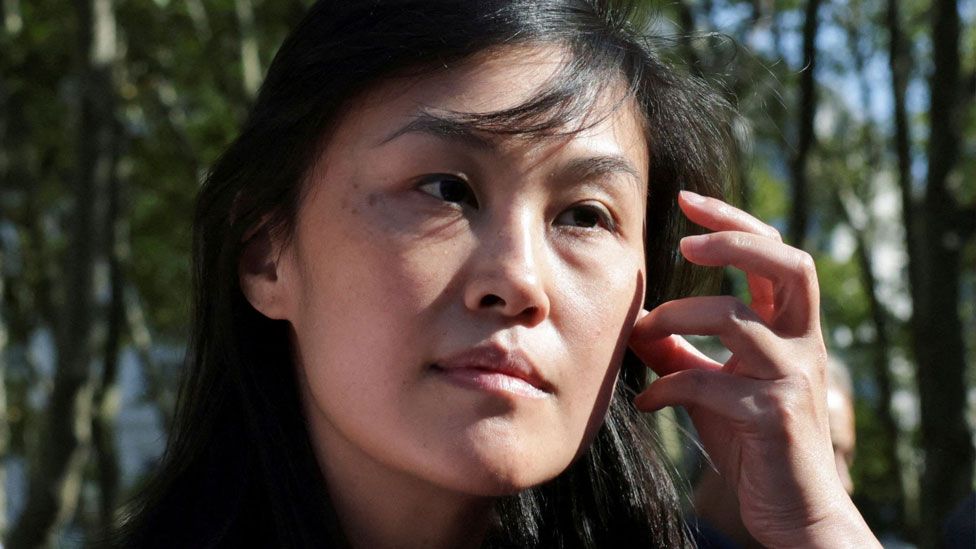
The case of Linda Sun, a once-rising political aide in New York state, has exploded into one of the most shocking foreign-influence scandals in recent memory.
According to federal prosecutors, Sun — who served under both Governor Kathy Hochul and former Governor Andrew Cuomo — lived a life far beyond her $145,000 public salary. At the center of their allegations: that she secretly acted as an unregistered agent of the Chinese Communist Party, channeling influence and cash through a network of business fronts tied to her husband, Chris Hu.
Prosecutors allege that millions of dollars flowed from China into U.S. accounts linked to the couple — money later spent on luxury properties, designer travel, and even a $243,000 Ferrari Roma.
The indictment, unsealed in Brooklyn federal court, paints a portrait of quiet power, hidden loyalties, and a state government blindsided by international intrigue.

Prosecutors allege that millions of dollars flowed from China into U.S. accounts linked to Linda Sun and her husband — money later spent on luxury properties, international travel, and a 2024 Ferrari Roma valued at more than $243,000.
A life of access, privilege — and secrets
For years, Linda Sun appeared to be a model public servant.
Born in China and raised in Queens, she built a reputation for bridging New York’s Asian-American communities with Albany’s political establishment. She joined Cuomo’s staff in 2012, later becoming Chief Diversity Officer and, under Hochul, Deputy Chief of Staff.
Behind the scenes, prosecutors claim, her connections ran much deeper. Court filings allege Sun cultivated personal relationships with Chinese consular officials, attended CCP anniversary celebrations in Beijing, and privately advanced messaging favorable to the Chinese government — all while holding high-level U.S. state office.
Her husband, Chris Hu, allegedly acted as the financial conduit.
Together, they reportedly purchased a $3.6 million mansion in Manhasset, a $1.9 million condo in Honolulu, and luxury vehicles, all through shell accounts and wire transfers traced back to China. During the COVID-19 pandemic, the couple allegedly reaped $2.3 million in PPE kickbacks — profits prosecutors say were disguised as consulting fees.

The moment the mask slipped
The investigation began quietly.
In late 2022, after internal auditors flagged irregularities in Sun’s travel reimbursements and unexplained financial disclosures, the New York Department of Labor forwarded evidence to federal authorities. Hochul’s office soon confirmed Sun had been terminated for “misconduct,” though the details were withheld pending the probe.
By 2024, federal agents had uncovered what they described as “systematic influence operations” — attempts by Sun to shape New York’s economic and cultural policies in ways that benefitted Beijing.
She allegedly blocked Taiwanese diplomats from official access, provided a Chinese official with a private conference call link to state COVID briefings, and accepted gifts including performances, dinners, and “business assistance” for her husband’s China-based ventures.
Sun has pleaded not guilty to all charges, including violating the Foreign Agents Registration Act (FARA), bank fraud, visa fraud, and money laundering.
Her defense insists her outreach work “aligned with U.S. interests” and that prosecutors are “politicizing diplomacy.”

The courtroom showdown begins
As jury selection opened this week in Brooklyn federal court, Judge Brian Cogan — who famously presided over the trial of drug lord Joaquín “El Chapo” Guzmán — reminded jurors that “foreign agent” cases often hinge not on espionage, but on intent and concealment.
Potential jurors were asked whether they held “strong opinions” about China or Taiwan — a sign of just how politically charged this trial has become.
Sun sat stone-faced beside her husband, her lawyers emphasizing she had “no formal direction” from any foreign government.
Yet prosecutors have produced dozens of photos, travel records, and email exchanges showing Sun’s proximity to Chinese diplomats, including one image of her being honored at a Chinese consulate event — evidence they say reveals her “dual allegiance.”
“When public officials conceal ties to a foreign state, it undermines the very transparency our democracy relies on,”
said U.S. Attorney Breon Peace in a statement announcing the indictment.
How did this happen? A pattern of quiet infiltration
To many observers, the Sun case is not an isolated scandal but part of a broader pattern of foreign influence creeping into state and local government.
Over the past five years, U.S. intelligence officials have warned that China has shifted its strategy from traditional espionage toward cultivating relationships with mid-level bureaucrats, business associations, and community liaisons — people like Linda Sun, who can open doors quietly without triggering alarms.
An internal FBI counterintelligence memo from 2024 described such relationships as “soft power infiltration” — less spy thriller, more bureaucratic manipulation.
Sun’s alleged conduct, prosecutors say, demonstrates how vulnerable the U.S. political system can be when local access meets global ambition.
Legal Spotlight: The Foreign Agents Registration Act (FARA)
What the law covers
Enacted in 1938, FARA requires anyone acting “at the order, request, or under the direction or control of a foreign principal” — and engaging in political or public influence — to register with the U.S. Department of Justice.
It’s not illegal to represent a foreign government, but it is a crime to hide it.
Why this case matters
Legal experts say the Sun prosecution could reshape how FARA is enforced at the state level.
“Historically, FARA focused on federal lobbying and national campaigns,” explains David Laufman, former Chief of the DOJ’s Counterintelligence Section, in a 2024 Reuters interview. “What we’re seeing now is a recognition that foreign governments are targeting state and municipal systems, where oversight has been weaker.”
Real-world precedent
In 2020, the DOJ charged Thomas Barrack, an adviser to Donald Trump, under FARA for allegedly acting on behalf of the UAE — he was later acquitted.
Legal observers say the Sun case, unlike Barrack’s, features direct financial ties and official influence within state government, making it a potential landmark precedent.
Reader takeaway
For anyone working in public service or contracting with government: if your work benefits or coordinates with a foreign entity, you must disclose it under federal law.
Failing to do so isn’t a paperwork error — it’s a felony.
As Attorney General Merrick Garland said in a 2025 policy speech:
“Transparency in foreign influence is not optional. It’s the line that separates diplomacy from deception.”
(Source: DOJ.gov)
Beyond the courtroom: What’s at stake for public trust
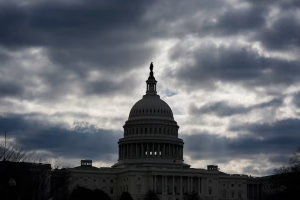
The scandal has rocked Albany. Inside the capitol, aides describe an atmosphere of suspicion and disbelief.
“How could someone so embedded in diversity and inclusion initiatives be working for another government?” one state staffer told Lawyer Monthly on condition of anonymity.
The emotional fallout is profound. Sun was once celebrated as a symbol of representation — an immigrant who rose through the ranks to help shape state policy.
Now she’s emblematic of how influence, ambition, and power can intertwine in ways that test the boundaries of loyalty.
For Governor Hochul’s administration, the trial is an unwelcome reminder of the fragility of public confidence.
State ethics watchdogs are reportedly reviewing vetting procedures for senior hires and expanding disclosure forms to include foreign business relationships and cultural affiliations.
The deeper historical thread
To understand why the Sun case resonates so deeply, it helps to look back.
The Foreign Agents Registration Act was originally drafted to combat Nazi propaganda before World War II.
Over time, it evolved to target covert lobbying, often linked to Russia, China, and Middle Eastern governments. Yet for decades, enforcement was sporadic.
Between 1966 and 2016, only seven criminal FARA cases were filed. That number has surged to more than 40 indictments since 2018, reflecting Washington’s growing unease with global influence.
Sun’s prosecution may mark the first major state-level FARA trial tied to Chinese influence networks — and a turning point in how the U.S. interprets “foreign agency” in domestic politics.
What happens next
If convicted, Linda Sun faces up to 20 years in prison for money laundering and five years for each FARA and bank fraud charge.
Her husband, Chris Hu, faces similar penalties. Both maintain their innocence and accuse the DOJ of “overreach and misinterpretation.”
Legal analysts expect the trial to run through early 2026, with witnesses from New York’s economic development office, Chinese consulates, and the FBI’s counterintelligence division.
Should prosecutors secure a conviction, the case could embolden further crackdowns on undeclared influence networks, especially those operating through trade or cultural programs.
For policymakers and attorneys, the implications are stark:
foreign influence is no longer a Washington problem — it’s a 50-state issue, capable of touching every level of government.
Foreign Agents Registration Act People Also Ask (PAA)
Q: What is the Foreign Agents Registration Act (FARA) and why is it suddenly being enforced more?
A: FARA requires disclosure of activities conducted for foreign governments. Enforcement has intensified since 2020 as global influence operations have targeted local and state officials.
Q: Could a state employee really face federal charges under FARA?
A: Yes. FARA applies to anyone in the U.S. acting at the direction of a foreign principal, regardless of their level of government. The Sun case is expected to clarify that reach.
Q: How can public employees protect themselves from violations?
A: Avoid undisclosed foreign contacts, report all gifts and business links, and consult legal counsel before coordinating with international entities. Transparency is the best protection.
Closing reflection
The Linda Sun case sits at the crossroads of law, politics, and national security, a reminder that corruption doesn’t always look like bribes in briefcases — sometimes it wears a government badge and smiles at press conferences.
For readers, the lesson is sobering: in an era of globalization and hybrid diplomacy, vigilance must reach beyond Washington.
For lawyers, it’s a signal that compliance and disclosure rules once viewed as bureaucratic are now central to defending democracy itself.
And for America, it’s a warning — that loyalty, when bought or borrowed by another power, can erode the very institutions built to protect it.