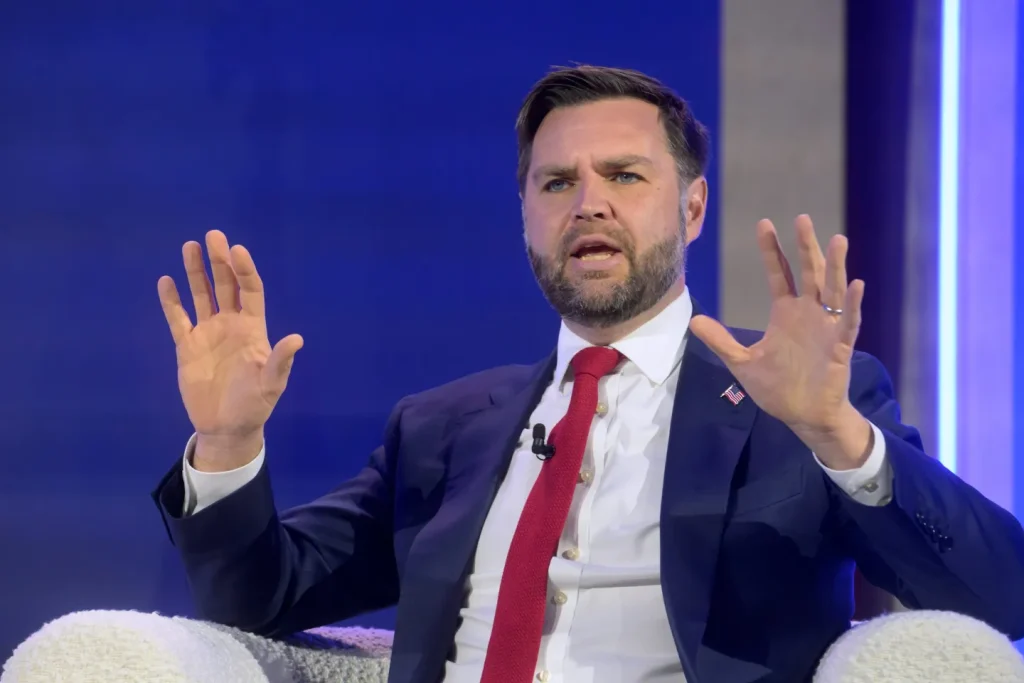
For months there have been rumors that JD Vance has been trying to shape conversations in Washington far beyond what a vice president-elect normally does, and his latest off-the-cuff admission only added more fuel to that fire. During a casual chat with Breitbart’s Matthew Boyle, Vance mentioned that he once texted Jeff Bezos about the Washington Post — not about a specific hire, but about the direction of the place, which has been wobbling its way through an identity crisis for years.
He laughed as he told the story, almost brushing it off like a joke he barely remembered. But the way Washington works, nothing is ever that casual. The moment the words left his mouth, reporters, staffers, and media insiders began turning it over like a puzzle piece that suddenly didn’t fit where they thought it should.
What caught people wasn’t that Vance said he admired Boyle’s sourcing or that he’d nudged Bezos about it — that’s political small talk. It was the fact that he said it out loud, in public, with a certain ease that suggested he knew exactly what kind of reaction it would provoke. For someone who’s spent the last two years positioning himself as the intellectual spine of the Trump movement, it felt like a deliberate move: a reminder that the old media power map has been redrawn, and he intends to be one of the people holding the pen.
Bezos, for his part, has never shown any real intention of dragging the Post into a right-wing makeover. If anything, he’s tried to stay publicly detached from editorial decisions — even as the newsroom churned through leadership shakeups, layoffs, subscriber declines, and the existential question of what the paper is supposed to be in a post-Trump political climate. The text Vance described probably landed on Bezos’ phone the same way most unsolicited advice does for billionaires: politely ignored and half-forgotten.
But the symbolism of it matters. Bezos bought the Post to prove a point about reinvention and civic duty; Vance is trying to prove a point about representation and power. Boyle, whether you love him or hate him, represents a part of the country legacy media has never fully known what to do with. And this tiny anecdote about a text message suddenly became a proxy battle for a much bigger fight — who gets to shape political storytelling in the years ahead.
It didn’t help that the timing landed in a Washington already buzzing with questions about Bezos’ re-emergence in Trump-era social circles. He showed up at Trump’s second inauguration, was spotted at White House dinners, and has been photographed alongside the same tech titans who once tried to keep a healthy distance from the administration. His public posture hasn’t changed much, but his proximity certainly has, and that alone has been enough to make people nervous.
So when Vance revived his “you should hire Boyle” anecdote, it hit a nerve — not because anyone believes Bezos would hand over a newsroom to a Breitbart editor, but because it highlighted how blurry the lines have become between political influence, media ownership, and the awkward reality that every major institution in Washington is trying to figure out how to survive the Trump-Vance era without becoming collateral damage.
It’s the kind of story that doesn’t sound like much at first. Just three men, one newsroom, and a text message. But in this town, that’s usually where the real drama starts.