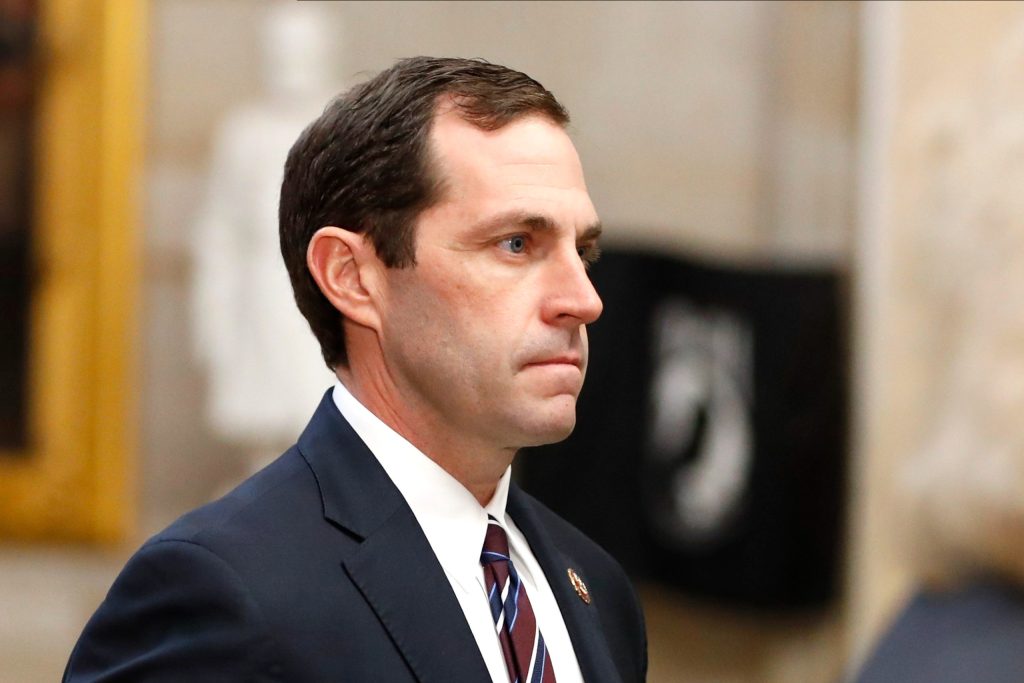
A fast-moving dispute erupted in Washington after Rep. Jason Crow challenged the Justice Department’s response to a viral video urging U.S. service members and intelligence officers to reject any order that violates the law. Deputy Attorney General Todd Blanche acknowledged internally that the video had raised concerns inside the department, placing Crow and several former military lawmakers at the center of a sudden political and legal flashpoint.
The video spread rapidly across social platforms, drawing national attention because it referenced the oath troops take to defend the Constitution. Senior administration officials questioned how the message might affect military discipline, while Crow argued that strong pushback from federal officials underscores the importance of addressing the boundaries between lawful and unlawful commands.
With both Congress and the DOJ now weighing the implications, the debate has quickly become one of the most closely watched civil-military issues of the month.
Who Is Driving the Confrontation in Washington?
Crow, a former Army Ranger and now a Democratic congressman from Colorado, appears in the video alongside other lawmakers with military or intelligence backgrounds.
Their message drew immediate attention from senior administration officials, including Deputy Attorney General Todd Blanche, who said the video raised internal concerns about messaging directed at active-duty personnel.
The issue escalated because the lawmakers involved have long emphasized military professionalism and constitutional duty, making their public appeal unusually direct.
What the Video Says—and Why It Sparked Immediate Pushback
The lawmakers’ video urges troops and intelligence officers to uphold their oath and avoid carrying out any command that clearly violates U.S. law.
It frames this standard around long-standing military rules, focusing on legality rather than politics.
Officials within the administration, however, questioned the timing and clarity of the message. They warned that public calls discussing refusal of orders—even if tied to legality—could create uncertainty within the ranks about how to interpret chain-of-command expectations.
While no formal action has been announced, Blanche acknowledged that the message triggered internal review discussions.
Where and When the Dispute Intensified
The video was released online in mid-November and gained momentum within hours, pulling the issue from congressional messaging into a national security conversation.
With both the DOJ and congressional offices responding publicly, most of the attention has centered in Washington, where legal and political institutions are now addressing the fallout.
The rapid spread of the video made the debate impossible for federal agencies to ignore.
Why This Moment Matters to Troops and the Public
The issue touches on a central principle of U.S. military service: troops must obey lawful orders and reject commands that are clearly illegal.
That obligation predates every modern administration and is a core pillar of military law.
The lawmakers say their goal is to remind service members of their oath.
Administration officials, meanwhile, say they want to avoid any message that could be interpreted as encouraging hesitation in following lawful commands.
Because both positions involve real legal obligations, the issue has moved beyond politics and into a broader public discussion about military duty and constitutional safeguards.
How the Law Handles Order Legality in the U.S. Military
Understanding Lawful vs. Unlawful Orders
Under the Uniform Code of Military Justice (UCMJ), service members must follow lawful orders and must not follow orders that instruct them to commit a clear violation of U.S. law.
Determining whether an order crosses that line generally involves a commander, legal officers (JAGs), and established review channels.
Orders related to deployment or policy rarely meet the threshold of illegality.
The standard is high and based on clear legal violations, not disagreement with policy.
How the DOJ Responds to Situations Like This
The Department of Justice can examine whether public communications involving the military raise any legal issues under existing statutes governing interference with military duties.
Such reviews assess whether the speech encourages unlawful acts or has no legal bearing.
At present, no public indication exists that the DOJ has launched a formal investigation.
How the Military Provides Clarity to Service Members
In periods of public debate involving military conduct, leadership can issue reminders outlining:
-
The legal definition of a lawful order
-
The obligation to question clearly illegal commands through proper channels
-
The chain-of-command process for raising concerns
These communications are standard practice across administrations.
FAQ's — Key Questions People Are Asking
Are troops obligated to follow anything said in the video?
No. Service members follow the UCMJ and official military guidance. Public messages do not change legal obligations.
Can lawmakers comment on military conduct?
Yes. Members of Congress have broad First Amendment protections. Their remarks may draw scrutiny but are generally considered protected speech.
What qualifies as an illegal order?
An order that instructs a service member to commit a clearly defined criminal act under U.S. law. These determinations involve commanders and JAG officers.
Could this affect active-duty personnel now?
Troops may see additional reminders about lawful orders and chain-of-command expectations. These communications are routine and clarify existing rules.
What Happens Next in This Growing Legal and Political Standoff
The exchange between Crow and senior DOJ officials has placed civil-military boundaries under unusual public scrutiny.
Further statements from Congress, the DOJ, or military leadership could shape how the issue evolves, especially if agencies issue additional clarifications about the legal standards governing military commands.
For now, the situation remains fluid, and Washington is closely watching how both institutions respond in the days and weeks ahead.