Understand Your Rights. Solve Your Legal Problems


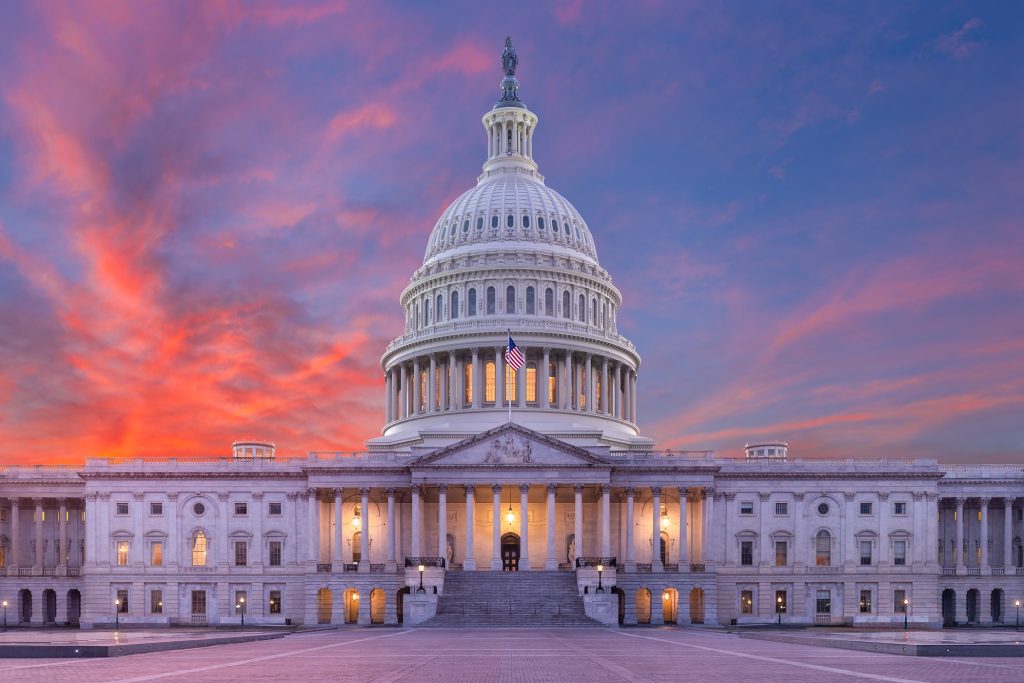
Senate Republicans are now split after the passage of a government-funding bill containing a provision that allows senators to sue if federal investigators request their phone records without the required notice.
That single statutory change has pulled a rarely discussed issue into public view: how far Congress can go in setting boundaries around federal investigative powers, and what notice rights lawmakers actually possess when their communications intersect with a criminal inquiry. The political tension is loud, but the legal implications are clearer, more measurable, and likely to shape how future investigations involving elected officials proceed.
The new measure gives senators a specific statutory right to be notified when federal law enforcement seeks their phone records. If investigators obtain those records without providing notice, the law creates a civil cause of action allowing the senator to seek monetary damages.
The key takeaway is that investigators still retain full authority to request communications data using existing legal tools. The change lies in the added notification requirement, which applies only to sitting U.S. senators and is not part of traditional criminal-procedure frameworks for ordinary citizens.
Because the statute applies retroactively, courts may now be asked to interpret how far back these new rights reach and what counts as a violation—a process governed by standard principles of statutory construction rather than political arguments.
Similar questions around retroactivity, accountability, and privacy are expected to be tested in other jurisdictions, including Prince Harry’s privacy lawsuit in High Court of Justice against the Daily Mail, which is scheduled to begin on Monday, January 19, 2026—a case that will examine how far press freedom extends when set against evolving expectations of personal privacy.
Federal investigators generally rely on three mechanisms for obtaining phone records:
Grand jury subpoenas, which require relevance to an ongoing criminal investigation.
Stored Communications Act (SCA) court orders, which require specific facts showing the records are pertinent.
Search warrants, which require probable cause and are approved by a judge.
These tools do not normally require notifying the person whose records are being sought. Notice is typically delayed or omitted entirely to preserve the integrity of an investigation.
The new provision creates an exception for senators, introducing a notification step that federal agents have not previously been required to provide.
A statutory notice requirement does not change whether investigators can request records—it changes how they must proceed.
Agencies must verify whether the numbers involved belong to a senator.
Internal procedures must document compliance with the notification rule.
Any failure to provide notice now carries civil liability, which may result in more cautious internal review.
These are process adjustments, not prohibitions. They reflect Congress exercising its authority to define how federal agencies interact with its members in limited circumstances.
The measure has created public confusion about the protections lawmakers hold. Several points are clear and verifiable:
Senators do not receive immunity from standard investigative tools.
Phone-record metadata is not classified as legislative work protected by the Speech or Debate Clause.
The law provides a civil remedy, not a barrier to obtaining records.
The rights created are narrow and procedural. They do not alter the underlying investigative thresholds defined by federal law.
Misconception 1: Lawmakers cannot be subpoenaed.
Members of Congress can be subpoenaed, and their personal communications can be requested through lawful channels.
Misconception 2: All communications are privileged.
Only specific categories related to legislative acts are protected. Routine political or personal communications are not.
Misconception 3: Investigators must always provide notice.
Historically, no. Notice requirements are the exception, not the norm, and this provision creates one tailored to senators alone.
Congress has constitutional authority to pass statutes that regulate how federal agencies interact with its members, provided those statutes do not prevent lawful investigations. Historically, Congress has used this power sparingly—focusing on ethics rules, disclosure requirements, or internal procedures.
Creating a statutory right to notice, along with a civil remedy, is a more direct intervention. Courts evaluating future challenges will look at:
whether the law reasonably fits within Congress’s authority
how it aligns with existing federal investigative frameworks
whether it conflicts with established separation-of-powers principles
These questions will likely guide how durable the notice requirement becomes.
For readers following broader federal-records disclosure debates, a related analysis on the legal power and limits of forced federal disclosure explores how far Congress can push agencies to release sensitive investigative materials. “Republicans Rally Behind Epstein Records Bill After Trump’s Support — The Legal Power and Limits of Forced Federal Disclosure.”
The immediate next step is administrative rather than political: federal agencies must adjust internal procedures so that investigators comply with the new statutory notice rule. Any senator seeking relief must file a civil claim and demonstrate that the new requirement applied and was not followed. As cases reach the courts, judges will begin defining the scope and limits of the provision, giving the law practical contours that do not yet exist.
Does this prevent investigators from accessing senators’ phone records?
No. The same investigative tools remain available. The law adds a notice requirement for senators.
Is the notice requirement the same as a privilege?
No. It is a procedural right, not a shield against obtaining records.
Can Congress repeal or narrow the provision?
Yes. Congress can amend or repeal the statute through ordinary legislative process.
Will this change how future investigations involving lawmakers are handled?
It will change procedures, because investigators must now account for the notice rule whenever a senator’s records are involved.