Gavin Newsom at COP30: California Fills Trump's Climate Leadership Void
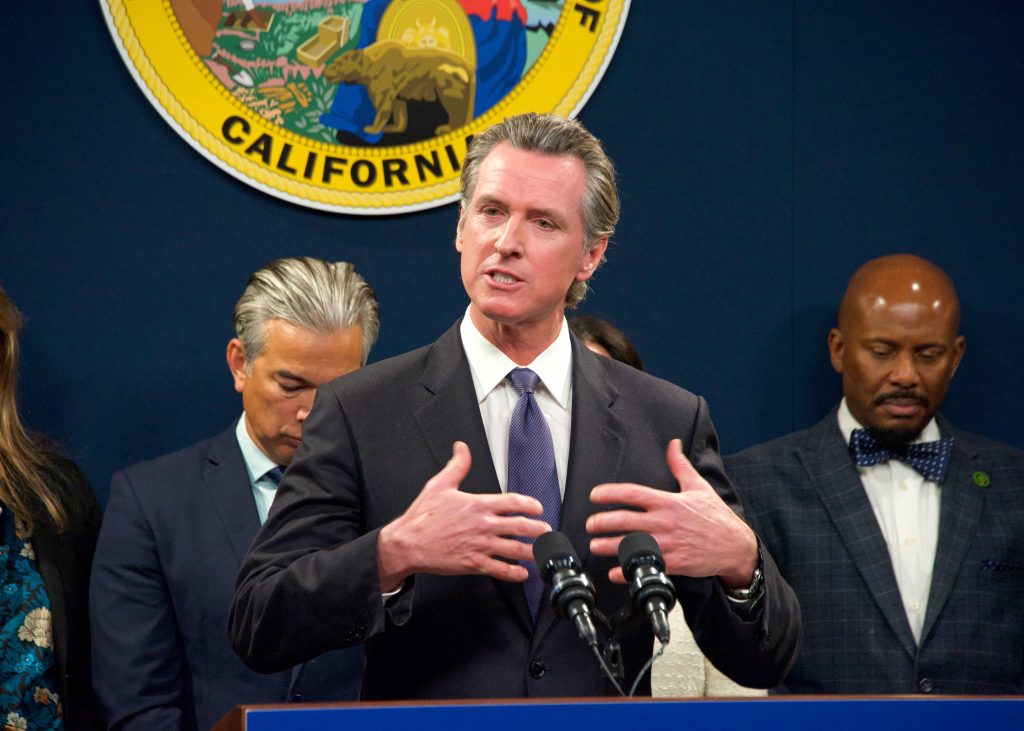
“The United States of America is as dumb as we want to be on this topic, but the state of California is not,” said California Governor Gavin Newsom as he addressed the COP30 Climate Summit in Belém, Brazil, on November 11, 2025.
The comment underscored the vacuum left by Washington’s absence at one of the most consequential climate summits in recent years.
Newsom’s presence in Belém stood in deliberate contrast to President Donald Trump’s decision to skip COP30 entirely, a move that left many observers questioning whether the United States had effectively surrendered its global leadership in the clean-energy race.
How the U.S. Abandoned Its Climate Role
When the U.N. climate summit opened this week, nearly 200 nations sent representatives. The United States did not.
That absence, described by analysts as “historic and deeply symbolic,” came as China and the European Union solidified new trade and energy partnerships designed to expand their green-tech markets.
Into this void stepped Gavin Newsom. “We’re here with an open hand, not a closed fist,” he told delegates, promising that California would continue to act as a “reliable partner” on global climate initiatives—even without federal backing.
His message struck a chord with environmental advocates and foreign ministers alike: if Washington won’t lead, the states might.
For U.S. businesses and investors, the optics are troubling. The American government’s withdrawal sends unpredictable signals to global markets, potentially driving investment, technology partnerships, and manufacturing contracts toward Asia and Europe instead.
California’s Climate Play: More Than Symbolism
California’s economy ranks as the fourth largest in the world, giving the state considerable influence beyond U.S. borders. When its governor attends COP30, the visit carries strategic weight rather than mere symbolism.
During his time in Belém, Governor Newsom focused on building international partnerships, meeting with officials from Brazil, Germany, and Canada to discuss clean-technology manufacturing, renewable-energy financing, and climate-resilient infrastructure.
Meanwhile, the state’s message was clear: America may be absent, but California isn’t.
Key stakes at play:
-
Investment Migration: With federal subsidies canceled, private investors are increasingly turning to state-driven green incentives.
-
Legal Gaps: Without national coordination, states must design their own regulatory and enforcement systems—raising potential conflicts with federal energy policy.
-
Economic Competition: China currently produces eight in ten solar panels and seven in ten EVs, far outpacing U.S. output.
-
Political Fallout: Democrats, including Newsom and Senator Josh Becker, have framed the issue as economic survival, not ideology. “It’s cheaper, that’s why Texas and others are doing it,” Becker said.
What makes this moment remarkable is how the energy transition has evolved into a battleground for national identity and economic sovereignty.
California is not only pursuing emissions reductions; it is also asserting its position in the global race for economic influence and technological leadership.
A Brief History of America’s Climate Crossroads
The U.S. once stood at the forefront of international climate diplomacy.
It helped broker the Paris Agreement, set global emissions targets, and funded major renewable projects through the Inflation Reduction Act (IRA).
But when Trump returned to office in 2025, he reversed key clean-energy subsidies, withdrew federal participation from global accords, and issued a new Executive Order on “Unleashing American Energy.”
The order prioritized oil, coal, and gas exports while restricting state-level enforcement of climate mandates.
At the same time, states like California, New York, and Vermont began suing fossil fuel companies for alleged deception over climate impacts—litigation rooted in public nuisance and consumer-fraud law.
These lawsuits—and the science supporting them—are reshaping global climate law.
A May 2025 report by Columbia’s Sabin Center for Climate Change Law found that attribution science now allows plaintiffs to directly connect specific weather disasters to corporate emissions.
Federalism, Pre-emption & State Climate Power
The U.S. Constitution grants states broad “police powers” over public health and welfare.
But environmental regulation often overlaps with federal statutes—particularly the Clean Air Act and the Commerce Clause, which governs interstate trade.
When state laws attempt to impose penalties or costs on national or multinational corporations for greenhouse-gas emissions, federal pre-emption can come into play.
In April 2025, a White House Executive Order directed the Attorney General to challenge any state climate laws that “burden energy resource development or disrupt interstate energy markets.”
Legal experts saw this as a direct strike at progressive states.
“There are 34 pending lawsuits brought by states and cities against fossil-fuel companies. The new scientific frameworks may be really helpful to plaintiffs,” said Michael Gerrard, Director of the Sabin Center for Climate Change Law at Columbia University
Pillsbury Winthrop Shaw Pittman LLP noted in an April 2025 legal alert that “the Order directs the Attorney General to take immediate steps to halt enforcement of state laws that are pre-empted by federal law or otherwise unenforceable.”
Why It Matters
-
States vs. Washington: Legal friction could determine whether states can hold oil giants accountable for climate harm.
-
Corporate Risk: Companies must now assess exposure to both federal deregulation and state-level enforcement.
-
Public Accountability: Lawsuits like New York v. ExxonMobil (2024) and Vermont v. Shell (2025) may shape corporate climate disclosures for years to come.
For readers, the takeaway is simple: climate policy is now a live legal battlefield—one that could redefine federalism itself.
The Future of U.S. Climate Leadership: Transition, Accountability, and What Comes Next
As the world’s attention turned to Brazil, a question lingered over the conference halls in Belém: can America still lead from the sidelines, and if Washington refuses to, who will take its place?
Governor Gavin Newsom’s words reached beyond energy policy. His tone carried a sense of urgency and something close to defiance.
“Clean energy is more than electric power—it’s economic power,” he said, warning that giving China control of the clean-tech market could undermine America’s long-term prosperity.
Back home, the picture looks different. While the federal government steps away, several states are quietly moving in the opposite direction.
Texas now generates more solar and wind power than California, a shift driven less by politics than by profit.
“That’s good news,” Senator Josh Becker noted, “because it shows that renewables are economically competitive.” In a sense, the market is starting to do the work politics refused to finish.
For businesses, the meaning of this moment is hard to ignore. Regulations, investor expectations, and supply chains are changing at once.
Lawyers are watching new legal theories emerge around state-level climate actions and corporate accountability. Ordinary citizens, too, will feel it—in energy costs, in job growth, in the resilience of the places they live.
The moral and legal questions now overlap. Who carries responsibility for climate leadership when the federal government steps aside?
As Newsom told the crowd, “If Washington will not lead, California will.” But for many listening, the deeper worry was not who would lead next, but how much time the United States has already lost.
People Also Ask
Q: Did the U.S. really skip COP30?
Yes. The federal government did not send an official delegation to COP30 in Belém, Brazil—marking the first total absence of a major developed nation in the summit’s history.
Q: Why does California have so much influence on climate policy?
As the world’s fourth-largest economy, California can independently shape supply chains, auto standards, and energy markets that ripple globally.
Q: What legal risks arise from state climate laws?
Potential federal pre-emption, interstate-commerce conflicts, and corporate liability for historic emissions—all of which are now being tested in court.
Q: What’s next for U.S. climate leadership?
Analysts expect a patchwork future: state-driven policy innovation coexisting with federal deregulation—until political or judicial resolution restores national coherence.