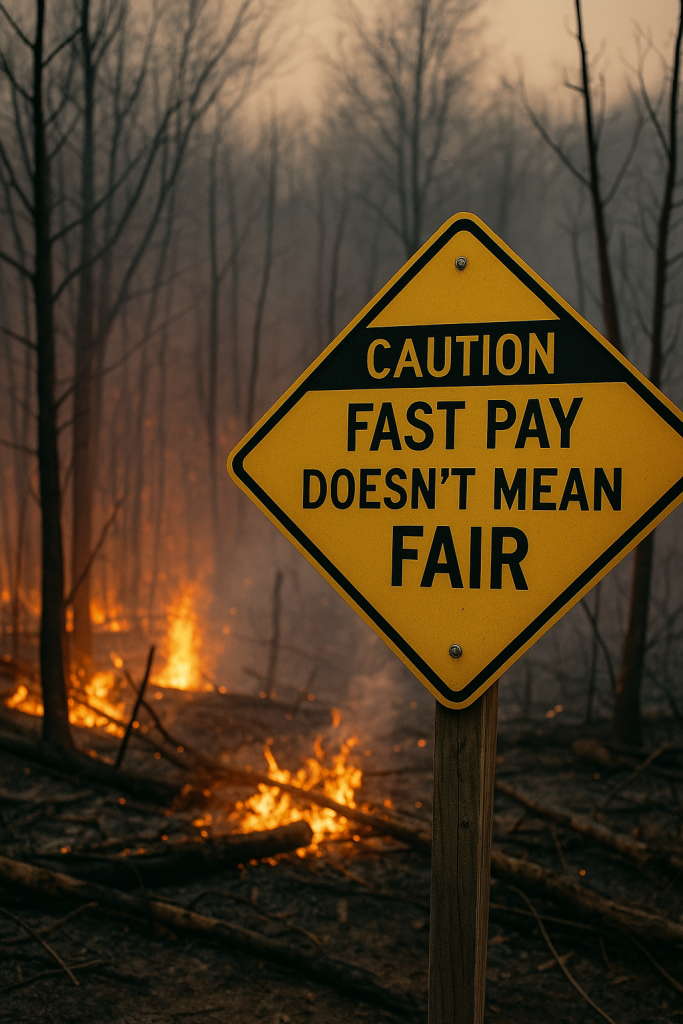
Edison’s Fast Pay Program: Why Fire Survivors Are Being Warned That “Fast Doesn’t Mean Fair”
A new Consumer Watchdog consumer alert is warning Eaton Fire survivors to think twice before accepting Southern California Edison’s “Fast Pay” wildfire settlement. Many survivors are now searching whether Fast Pay is fair, what the payout amount really is, and whether they should accept the offer after losing their homes in the wildfire.
Fast Pay is marketed as quick wildfire compensation, but the alert warns that the settlement may require survivors to waive key legal rights, including the right to seek full damages or sue Edison later. It also raises concerns about insurance deductions, since Edison’s formula subtracts your insurance payout even if your insurer underpaid you — reducing the final amount survivors receive.
Narrated by Eaton Fire survivor Ellen Snortland, the video highlights widespread confusion about the program: “Is Fast Pay legit? Is it fair? How much will I get? What rights do I give up?”
Snortland — a Consumer Watchdog board member and two-time LA Press Club Journalist of the Year — says many people do not realize that Fast Pay is a non-negotiable, take-it-or-leave-it settlement that can leave them with far less than the true cost of rebuilding.
“Edison’s ‘Fast Pay’ program may not be fair,” Snortland warns. “It appeals to people who need money quickly, but many don’t realize they’re giving up their right to pursue many times more than they are offered.”
What Is Edison’s Fast Pay Program?
The Edison Fast Pay Program offers fire survivors a non-negotiable, lump-sum wildfire settlement funded through the California Wildfire Fund, a state-backed pool paid for by both ratepayers and utility shareholders. Survivors cannot negotiate the amount; the figure is calculated using Edison’s formula and presented as a take-it-or-leave-it payout.
The structure of Fast Pay was created by Ken Feinberg, a high-profile mediator who has drawn criticism in past mass-disaster funds for delivering low settlement offers to victims. Edison has not disclosed how much it is paying Feinberg, adding to concerns about transparency.
Although Fast Pay is marketed as a quick and simple alternative to a full insurance or legal claim, consumer advocates warn that the speed comes with significant drawbacks. In many cases, Fast Pay may result in far lower compensation than survivors could receive through a standard wildfire insurance claim, a lawsuit, or a claims dispute process.
Why Consumer Watchdog Is Warning Fire Survivors
According to the alert, several red flags should make survivors pause before signing:
1. The offer is non-negotiable
Edison — not survivors — decides the payout amount. There is no appeal, no dispute process, and no way to ask for more.
2. Fast Pay covers only a portion of rebuilding costs
Expert estimates show Edison’s formula may cover just 53%–73% of the true cost of rebuilding a destroyed home.
For many families, that means tens or even hundreds of thousands of dollars lost.
3. Edison subtracts insurance payments — even if you didn’t receive them
The company automatically deducts the full value of a survivor’s insurance payout, even if:
-
the insurance company underpaid, or
-
the survivor is still fighting to get their full claim paid.
This can result in dramatically reduced settlements.
4. Some survivors are offered less simply because of who they are
Fast Pay values losses differently for:
-
renters
-
children
-
people suffering smoke damage
Consumer Watchdog warns these groups may receive substantially lower compensation, despite suffering real losses from the fire.
The Controversy Around Program Designer Ken Feinberg
The Fast Pay Program was designed by Ken Feinberg, a nationally known mediator who has overseen several major victim compensation funds. While Feinberg has been praised for his work in some high-profile cases, he has also faced criticism for offering “pennies on the dollar” in other disaster settlements when compared to what victims may have recovered through insurance claims, litigation, or a full damages process.
For many wildfire survivors researching Fast Pay, Feinberg’s involvement has become a key point of concern — especially because Edison has not disclosed how much it is paying him to manage the program. That lack of transparency has led critics to question whether the Fast Pay structure is designed to speed up payouts at the expense of full compensation.
What Fire Survivors Give Up If They Accept Fast Pay
Once a survivor signs a Fast Pay agreement, they typically waive their right to pursue:
-
full rebuild costs
-
smoke and ash damage claims
-
lost personal belongings
-
displacement and living-expense damages
-
future claims if hidden structural damage appears later
-
legal action against Edison
This is why Snortland’s warning — “fast doesn’t mean fair” — has resonated with many victims who are still evaluating their options.
Why Consumer Watchdog Calls It “Fast Fund,” Not Fair Fund
Consumer Watchdog refers to Edison’s program as the “Fast Fund” because, despite being marketed as a quick and streamlined relief option, the structure may ultimately shift the financial burden from the utility onto wildfire survivors themselves. Critics argue that Fast Pay relies heavily on the California Wildfire Fund, which is financed in large part by ratepayers, not just the utility’s shareholders.
This means survivors may be accepting a reduced settlement funded partly by their own contributions, rather than receiving full compensation for their losses. In practical terms, Fast Pay can function as a discounted payout, giving survivors less money than their damages are worth while relieving Edison of a portion of its financial responsibility.
What Survivors Should Do Before Signing Anything
Consumer Watchdog advises every Eaton Fire survivor to take these steps first:
-
Speak with an attorney experienced in wildfire litigation.
-
Request a written breakdown of how Edison calculated your payout.
-
Double-check your insurance claim — you may be owed far more.
-
Compare the offer against the real cost of rebuilding or repairing your home.
-
Document all losses, including personal property and long-term damage.
-
Do not sign under pressure — survivors report receiving urgent calls pushing them to accept.
Snortland closes the alert with a clear message:
“Don’t be burned twice. Talk to an attorney and beware of Edison’s Fast Fund. Fast pay doesn’t mean fair pay.”
Survivors can learn more at ConsumerWatchdog.org/fastpay.
Related Reading
👉 common tactics insurance companies use to fight injury claims
FAQs: Edison Fast Pay Program (2025)
Is Edison’s Fast Pay a fair offer?
Advocates say it often covers only 53%–73% of rebuild costs and may subtract insurance funds survivors never received.
Do I give up my rights if I accept Fast Pay?
In most cases, yes. Survivors may lose the ability to sue or pursue full compensation.
Can I negotiate the settlement amount?
No. Fast Pay amounts are fixed and non-negotiable.
Does Fast Pay affect my insurance claim?
Yes — Edison automatically deducts your insurance payout, even if your insurer underpays you.
Who created Fast Pay?
Mediator Ken Feinberg, whose past programs have faced criticism for undervaluing victims’ losses.
Is Edison’s Fast Pay a scam?
No — the program is real, but critics warn that the payouts can be far lower than actual wildfire losses, which leads many survivors to question whether the offer is fair or designed to reduce Edison’s financial liability.
Should I accept Edison’s Fast Pay offer?
Only after consulting an attorney. Fast Pay is a non-negotiable settlement that requires survivors to waive their rights, and many people may be entitled to significantly more through insurance disputes or legal action.
How much money does Fast Pay actually give survivors?
Amounts vary, but expert analyses show Fast Pay often represents only 53%–73% of the real cost to rebuild a home, and may drop further after insurance deductions.
What happens if I reject Fast Pay?
You keep your right to pursue a full wildfire damages claim, challenge your insurance company, or sue Edison — options that may result in a much higher recovery.