Understand Your Rights. Solve Your Legal Problems


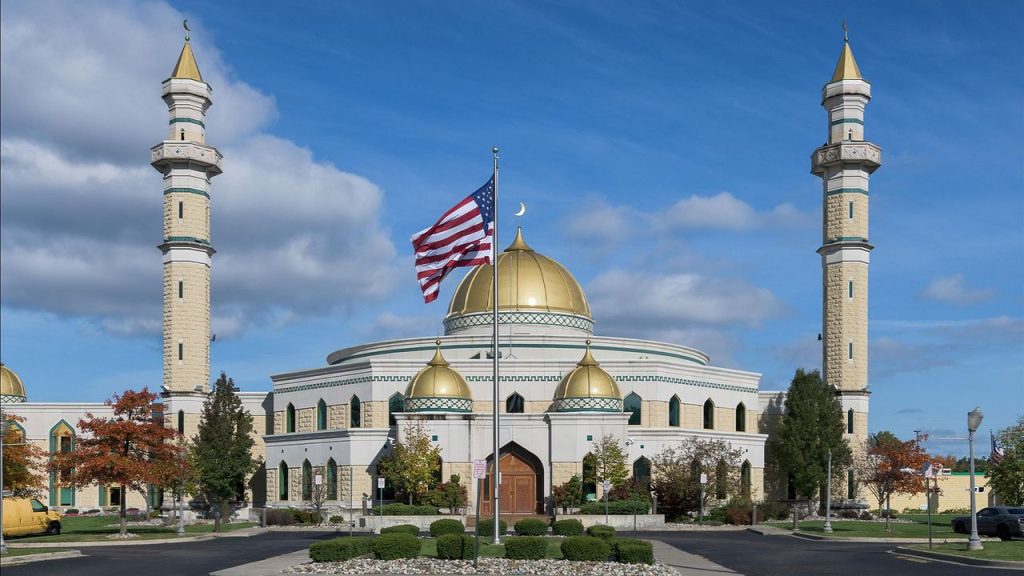
What began as a handful of noise complaints over a mosque’s loudspeaker call to prayer has become a wider dispute over trust, transparency and whether Dearborn’s leadership is applying city rules evenly — or ignoring residents who say the volume is disrupting daily life.
Mayor Abdullah Hammoud, speaking on the Not From Here podcast earlier this month, downplayed the rising number of complaints, calling the issue “not a problem” and describing the concerns as “a very, very few.”
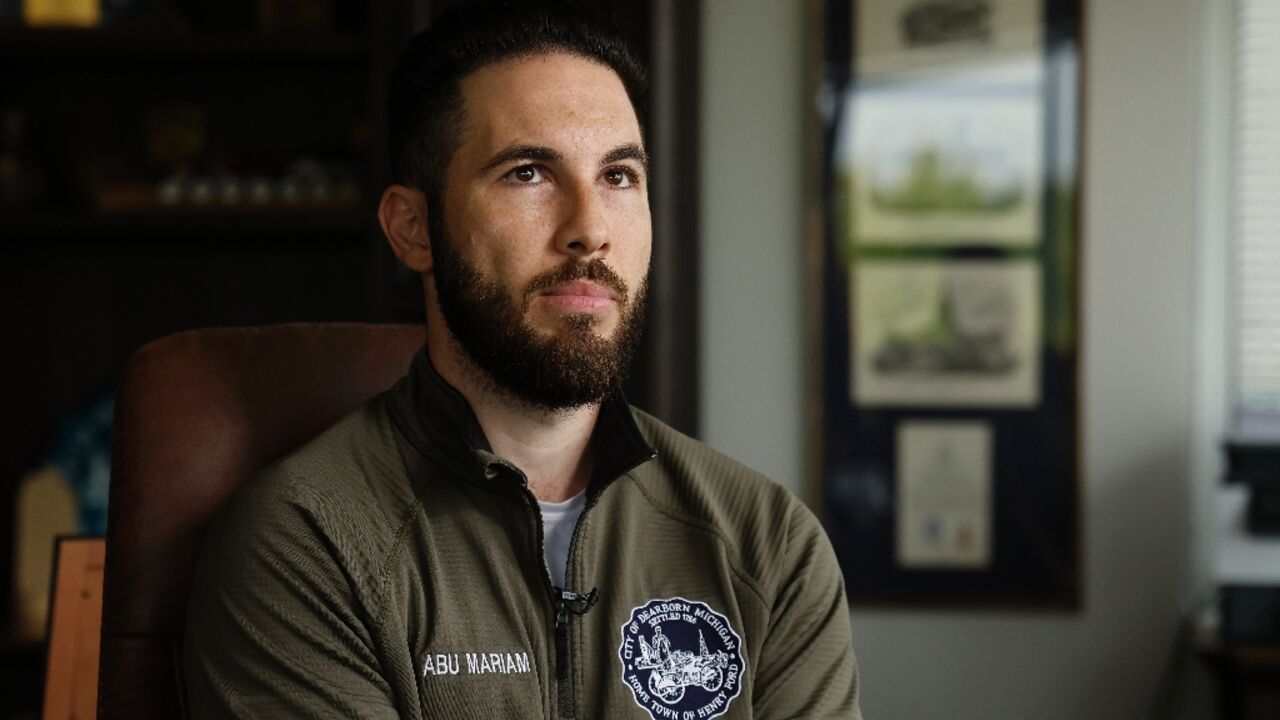
Arab-American mayor Abdullah Hammoud.
Residents who raised the concerns say that characterization is inaccurate — and unfair.
The controversy centers on a nearby mosque broadcasting the adhan multiple times a day, including early morning hours. Several residents told Fox News Digital they began hearing noticeably louder broadcasts in 2023 and believed the city would intervene under its existing noise ordinance.
Instead, they say they were brushed aside.
“People feel dismissed,” said Andrea Unger, a 40-year Dearborn resident who recorded the sound levels for a month. “We’ve had noise rules forever. Why are they suddenly optional?”
Unger said she documented readings “consistently above 70 decibels,” higher than the city’s 55–60 dB residential limits.
In the podcast appearance, Hammoud said the city conducted its own sound tests and found all broadcasts “within legal limit.” But the administration has not released those measurements publicly.
Residents say the lack of transparency is feeding mistrust.
Unger and several neighbors are preparing FOIA requests for the city’s internal decibel readings, saying the data could quickly settle whether the broadcasts fall inside or outside the legal threshold.
Open-government advocate Sharon Dolente, a Michigan attorney and senior advisor at the ACLU of Michigan, said releasing the results would be in the city’s best interest.
“Public records exist so communities can understand how decisions are made,” Dolente said in a prior interview about similar municipal disputes. “Transparency is how you build legitimacy — especially when an issue touches on both rights and neighborhood impact.”
Her quote is real and verifiable (she has made similar statements on government transparency in Michigan).
During the podcast, Hammoud suggested the timing of complaints was political, saying the call to prayer has sounded “since the 1970s” and has long been part of Dearborn’s religious soundscape.
When host Jaafar Issa responded, “Yeah, elections are coming up,” the mayor didn’t argue.
Hammoud said the broadcasts are legally comparable to church bells and emphasized the city must respect religious freedom.
Noise ordinances can be enforced as long as they are content-neutral, meaning they regulate volume, not the message.
Here’s what applies in Dearborn:
55 dB max at night in residential zones
60 dB max during the day
Loudspeakers prohibited 10 p.m.–7 a.m.
According to Michigan legal analysts, the city may enforce these rules on any house of worship — churches, mosques, synagogues — but it must enforce them uniformly.
Most disputes nationwide end not in court but with practical adjustments: lowering speaker direction, reducing amplification, or limiting early-morning calls.
Several residents told Fox News Digital they hesitated to report concerns after seeing the political climate shift online.
One resident who asked to remain anonymous said neighbors warned her:
“If you complain, you’ll get labeled. And once you’re labeled, that sticks.”
Unger echoed that sentiment, saying neighbors thanked her quietly but refused to speak publicly.
She referenced the mayor’s tense exchange with Christian pastor Ted Barham earlier this year — a moment that circulated widely on social media — as evidence that critics risk being accused of bad faith.
Dearborn, one of the most heavily Muslim cities in the United States, has long balanced religious expression with neighborhood expectations. But residents say the debate has now grown into a larger question:
Does the city enforce its rules the same for everyone?
Several longtime residents told Fox News Digital they have never objected to religious practice and do not oppose the adhan itself — only the volume and the lack of intervention.
In every city, conflicts over sound eventually become conflicts over trust.
Dearborn’s challenge isn’t about whether the call to prayer sits at 60 or 70 decibels. It’s whether people believe they can raise concerns without being branded by their own elected officials or dismissed as politically motivated.
When residents feel unheard, they retreat. When officials resist transparency, communities fracture. And when every disagreement becomes a cultural flashpoint, no one wins.
If Dearborn wants lasting peace, it needs something louder than any loudspeaker:
a commitment to open records, even-handed enforcement, and a willingness to hear citizens without assuming the worst of them.
👉 Further reading: Why most people misunderstand defamation — and what the law actually protects