Understand Your Rights. Solve Your Legal Problems


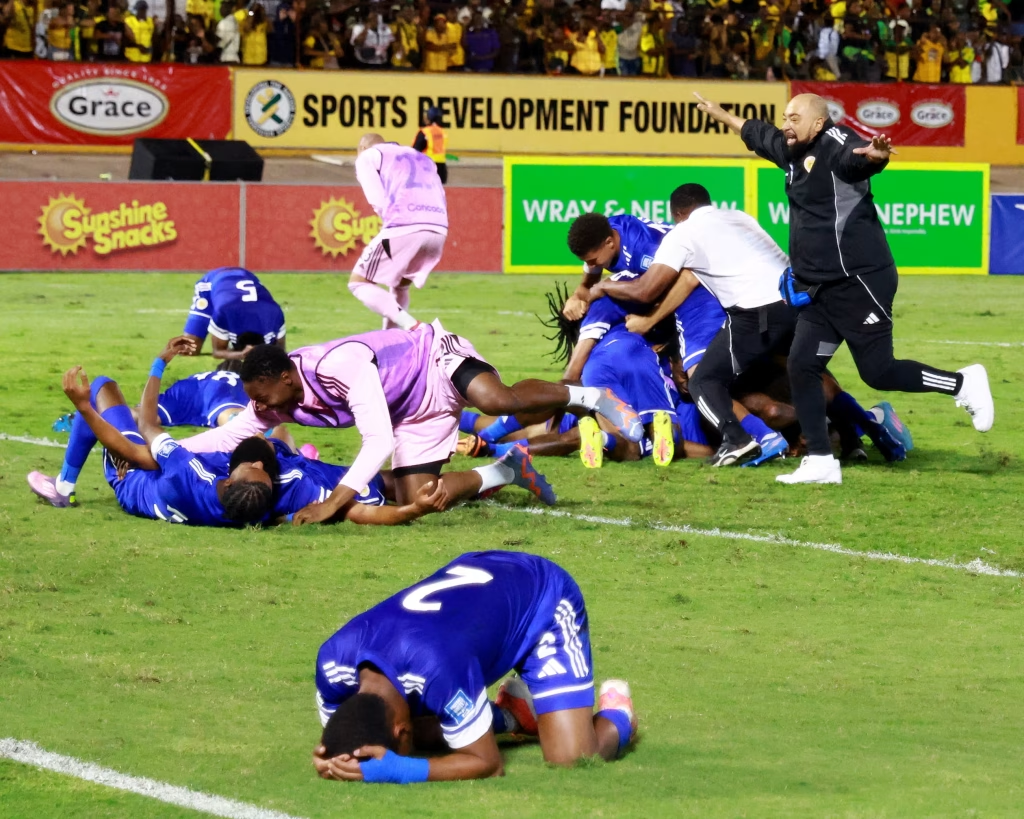
Curaçao stunned the football world on Wednesday night, becoming the smallest nation ever to qualify for a men’s World Cup after a tense, goalless draw away to Jamaica sealed their ticket to the 2026 finals. The Caribbean island, with a population of around 156,000 people, held its nerve in a high-pressure decider to finish top of its qualifying group and book a place on the biggest stage in football.
The result means a country smaller than many European towns will now stand alongside giants such as Brazil, Argentina and Germany at the World Cup in North America. For Curaçao’s players, staff and fans, it is the end of years of struggle and the beginning of an entirely new chapter. For the rest of the world, it is a reminder that in modern football, money and size don’t always decide who gets to dream.
Streets in Willemstad exploded with colour, noise and flags as the final whistle blew in Kingston. On an island where football is woven into everyday life, the moment immediately became the biggest sporting achievement in its history.
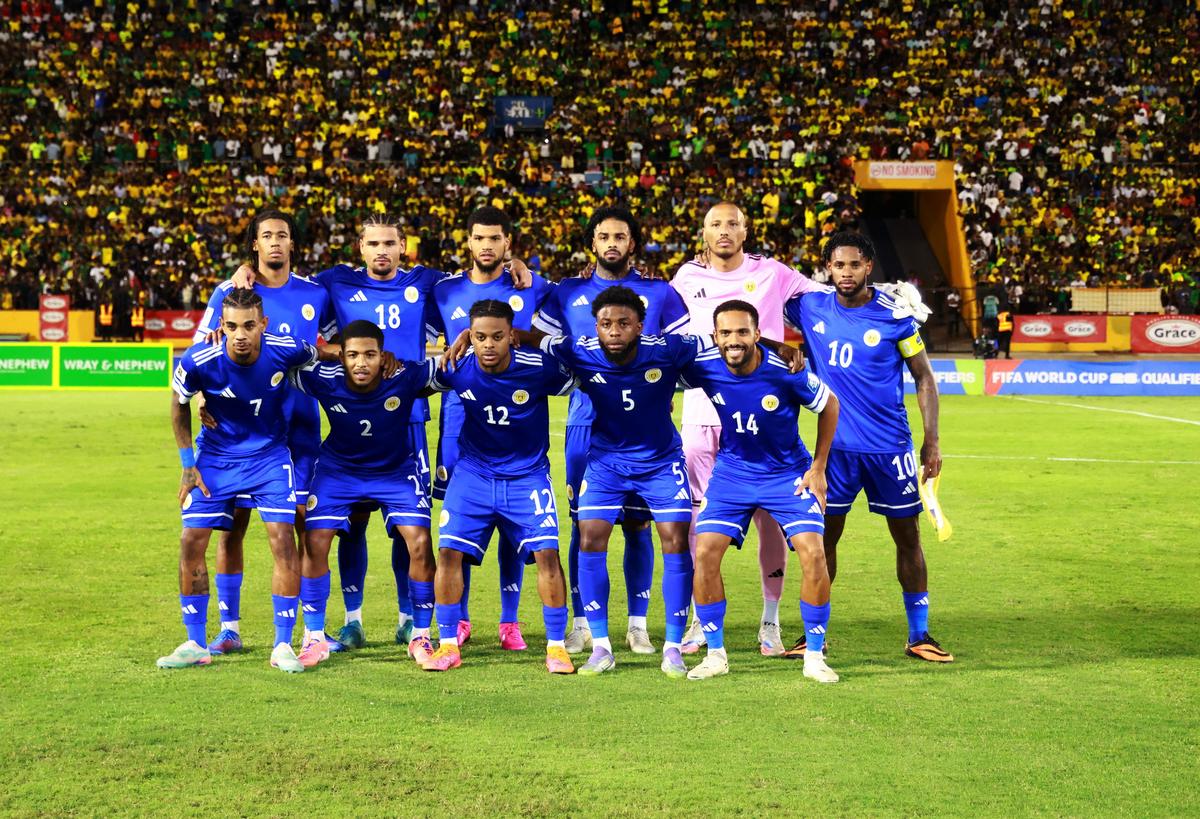
Curaçao makes history as smallest nation by population to qualify for FIFA World Cup
Curaçao’s rise didn’t happen by accident. The country’s federation took a bold step by bringing in one of Europe’s most experienced managers, a coach who has spent decades in international football and knows what it takes to navigate tournament qualification campaigns.
When he arrived, the first task was simple but brutal: professionalise everything. Training camps became stricter. Preparation for opponents got more detailed. Fitness standards were raised. Players were told that if they wanted to go from “nearly there” to “World Cup ready”, nothing could be left to chance.
A key part of the plan was tapping into the Curaçaoan diaspora. Many of the national team’s stars were born or raised in the Netherlands and other European countries, coming through elite academies and youth national teams before choosing to represent Curaçao at senior level. That mix of top-level experience and emotional connection to the island turned a small nation into a serious contender.
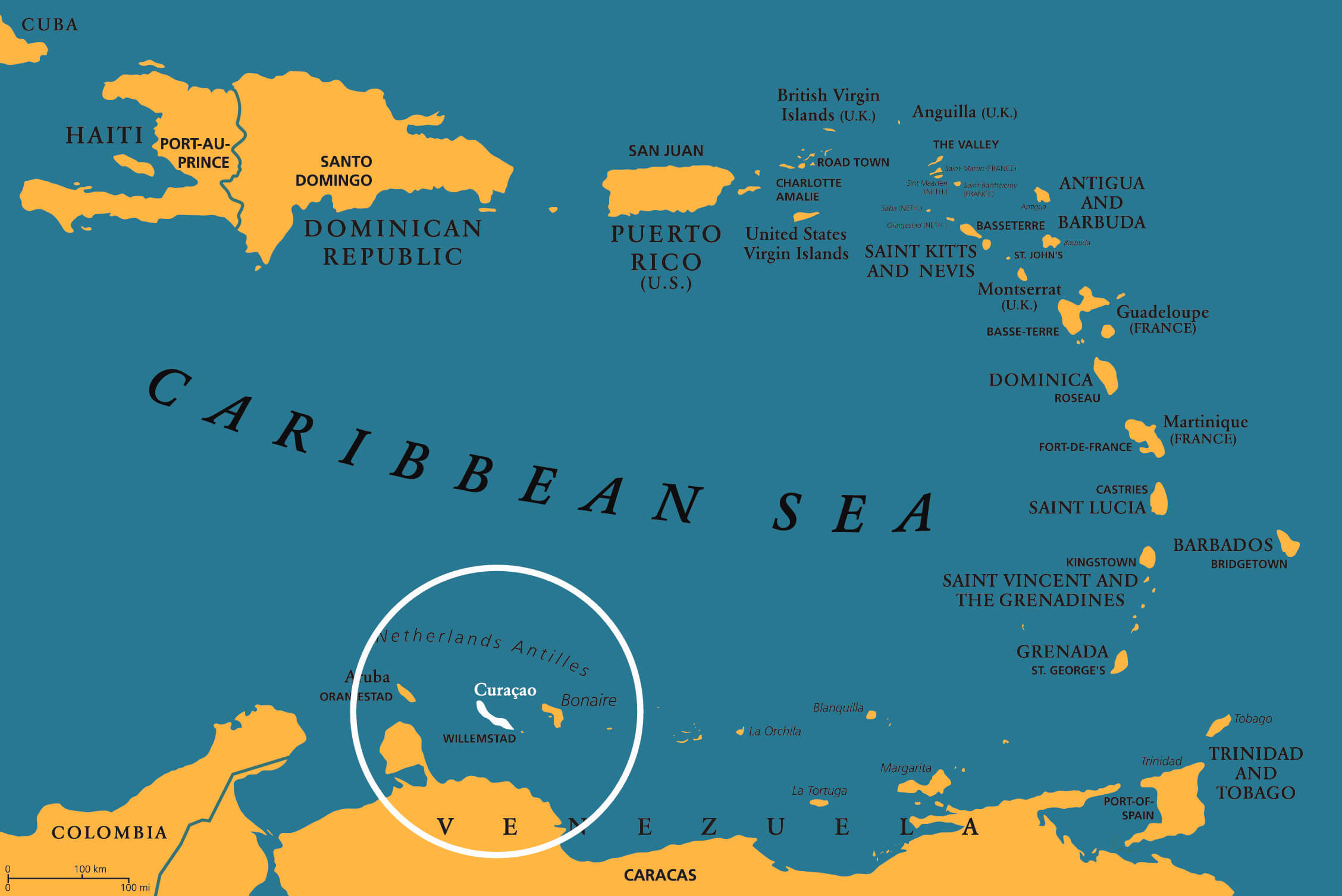
Curaçao sits just 40 miles off the coast of Venezuela in the southern Caribbean — making it the smallest nation by population ever to qualify for a men’s World Cup.
The decisive match in Jamaica felt less like a normal qualifier and more like a cup final. Curaçao knew a draw would be enough, but that knowledge brought its own pressure. Every misplaced pass, every corner conceded, every long ball into the box felt like a potential disaster.
As the second half wore on and legs tired, Jamaica pushed harder. The home crowd sensed panic and turned up the volume. When a late penalty was awarded to the hosts, it looked as if Curaçao’s dream had collapsed in an instant.
Then came the twist. The referee headed to the pitch-side monitor for a VAR review. Seconds dragged into what felt like minutes. Finally, the decision was overturned. No penalty. The Curaçao players roared, the bench erupted, and the final few minutes became a desperate fight to clear every ball and block every shot.
When the whistle finally went, some players dropped to their knees in relief. Others sprinted toward the away fans. Back home, celebrations started instantly and showed no sign of stopping.
One of the most interesting parts of Curaçao’s story sits in the background: how these players are even allowed to represent the island in the first place. The answer comes down to FIFA’s eligibility rules, which are clear and consistent across all member nations.
In simple terms:
A player can represent a country if they hold that nationality, usually through birth, a parent, or sometimes a grandparent.
Many Curaçao players were born in the Netherlands or elsewhere in Europe but have Curaçaoan roots through family.
As long as they have not played a competitive senior match for another national team, they can choose Curaçao at senior level.
Once they appear in an official senior competition, their choice is locked in and they cannot switch again.
Curaçao’s federation has used these rules smartly but legitimately, convincing players with ties to the island to commit their international futures. It’s the same basic mechanism used by many other nations with large diasporas, from Algeria and Morocco to Ireland and Senegal.
Qualifying is only the beginning. Curaçao now waits for the 2026 World Cup draw on 5 December, which will decide both their region (east, central or west) and their group opponents. They could end up facing a host nation such as the USA, Mexico or Canada, or be thrown into a group with one of the traditional heavyweights.
Off the pitch, there are clear next steps governed by tournament rules and regulations. The federation must finalise its preliminary squad list, handle player registrations, and comply with FIFA deadlines on everything from medical records to training-base selection. Every eligible player who wants to be part of the story must stay fit, perform for their club and maintain their status under the same eligibility rules that allowed them to join in the first place.
For fans, attention turns to logistics: flights to North America, match tickets, accommodation and visas or travel authorisations for the USA, Mexico or Canada, depending on where Curaçao’s games are scheduled. For players, the focus is simpler: prepare for the toughest opponents of their lives while carrying the hopes of the smallest nation ever to reach a men’s World Cup.
And for the rest of the football world, Curaçao’s qualification poses one big question: if an island of 156,000 people can fight its way to the World Cup, who really gets to say what’s impossible anymore?
Africa: Algeria, Cape Verde, Egypt, Ghana, Ivory Coast, Morocco, Senegal, South Africa, Tunisia
Asia: Australia, Iran, Japan, Jordan, Qatar, Saudi Arabia, South Korea, Uzbekistan
Europe: Austria, Belgium, Croatia, England, France, Germany, Netherlands, Norway, Portugal, Scotland, Spain, Switzerland
Oceania: New Zealand
Americas: Argentina, Brazil, Colombia, Ecuador, Paraguay, Uruguay, Curacao, Panama, Haiti
Fans will have to wait until March 31, 2026 to know the full list of nations heading to the 2026 World Cup. Europe’s final qualifiers run through March, and the intercontinental playoff — which decides the last two spots — also finishes that month. It means the final tournament lineup won’t be complete until less than three months before kickoff.
Sixteen teams will enter the UEFA playoffs in March, all chasing the final four European tickets:
Albania, Bosnia and Herzegovina, Czechia, Denmark, Italy, Kosovo, Poland, Republic of Ireland, Slovakia, Türkiye, Ukraine, Wales, Romania, Sweden, Northern Ireland, North Macedonia
Six nations from around the world will battle for the last two World Cup berths:
Bolivia, DR Congo, Iraq, Jamaica, New Caledonia, Suriname
Europe’s final qualifying round is a short, high-pressure sprint:
16 teams take part:
– 12 runners-up from the main qualifying groups
– 4 Nations League group winners
They are split into four playoff paths, each containing:
– 2 single-leg semifinals
– 1 single-leg final
Only the winner of each path qualifies, giving Europe its last four World Cup teams.
Semifinals: March 26, 2026
Finals: March 31, 2026
Draw for Playoff Paths: This Thursday at 12:00 GMT
Winners of the four finals join the 12 group winners already qualified from Europe.
Curaçao has a population of around 156,000 people, making it the smallest men’s World Cup nation in history. Previous “minnows” like Iceland had more than double that population when they reached the finals.
They topped their final qualifying group, collecting enough points earlier in the campaign and then earning a crucial away draw in Jamaica to finish ahead of their rivals.
Curaçao will learn their group and match locations at the official World Cup draw on 5 December, when FIFA assigns all qualified teams to groups in the east, central and west regions of the tournament.
In most cases, no. Once a player has played a competitive senior match for Curaçao, FIFA’s rules prevent them from switching to another national side. That means the core of this history-making squad is locked in and eligible to represent the island at the 2026 World Cup.
👉 Review: Claire Danes in The Beast in Me: Netflix’s Killer-Neighbour Thriller You Can’t Look Away From 👈