Crypto Windfall: The Legal Minefield Behind Barron Trump's $150M Stake
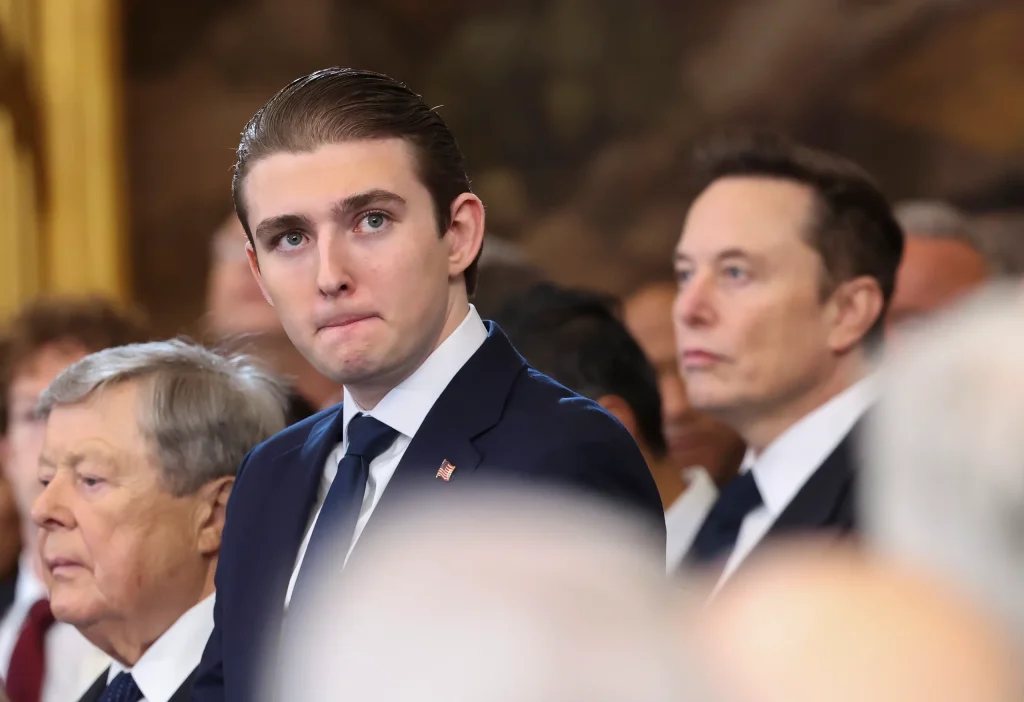
At just 19 years old, Barron Trump has reportedly amassed a $150 million stake primarily through a novel venture: crypto tokens tied to the Trump family brand. This isn't just a sensational headline; it's a powerful case study for the general public, revealing a fundamental shift in how mega-wealth is being created in the digital age—and why the old rules of finance no longer apply.
For Gen Z investors and everyday readers alike, this story cuts through the noise: Could a rapid, nine-figure fortune be built almost overnight, and what are the hidden mechanics, and massive risks, involved?
From Political Brand to Digital Fortune: The Token Vault Backstory
Barron Trump, the youngest son of Donald Trump, typically avoided the spotlight until his name became synonymous with the World Liberty Financial (WLFI) crypto venture. The narrative isn't about traditional stock picking; it's about the convergence of brand power, political timing, and blockchain finance.
- The Crypto Pivot: Late 2024 saw the launch of WLFI's governance token, $WLFI, strategically timed just before a major US presidential election.
- Rapid Monetisation: The company quickly raised hundreds of millions of dollars through token sales and institutional deals, including a significant stablecoin agreement with a UAE-based firm.
- The Stake: Barron's reported $150 million stake comes from his allocation of these tokens and a share in the venture. Importantly, much of this wealth is currently illiquid or "locked," meaning it's paper value tied to the tokens' future success, not cash he can spend today.
As finance professor Seoyoung Kim of Santa Clara University noted, the sheer volume of capital raised in record time is directly attributable to the "Trump" brand leverage, showing that in the token economy, brand matters more than an early Minimum Viable Product (MVP).
The Hidden Engine: Token Sales as Pre-Revenue Cash Flow
The core business mechanism that catapulted this venture's valuation—and Barron's stake—is what sets it apart: Token Sales as a Pre-Revenue Monetisation Strategy.
In a traditional startup, a company builds a product, gains users, generates revenue, and then goes public or sells equity. The WLFI model, however, flipped the script:
- Sell the Promise First: They sold the governance tokens ($WLFI) based on a roadmap and brand promise before the platform delivered significant utility.
- Insider Cash-Out: The venture's structure allegedly allowed the Trump-linked entity to claim approximately 75% of the net revenues from the token sales—channeling massive amounts of cash to insiders immediately.
- The Scale: Reports suggest the family's crypto income in the first half of 2025 dwarfed traditional revenue streams like resorts and licensing, highlighting the transformative power of this high-yield digital finance model.
The Lesson: This structure teaches the public that new digital ventures, armed with strong brands, are monetising potential and future network value immediately, shifting the risk balance heavily toward later retail investors.
The SEC, Celebrity Touting, and Investor Liability
The single most crucial legal question for the public reading this story is: Does the celebrity or founder affiliation in a token sale create legal liability for investors if the project fails or if it's considered an unregistered security?
The Legal Angle: Disclosure and the "Touting" Trap
In the United States, the legal risk for celebrity-backed token sales hinges on the Securities and Exchange Commission (SEC)'s aggressive enforcement of the anti-touting provision of the Securities Act of 1933.
- The Problem: Undisclosed Compensation: The law mandates that anyone promoting a virtual token deemed a security must disclose the nature, scope, and amount of compensation received for that promotion. Failure to disclose this constitutes a violation.
- The Precedent: The SEC has repeatedly targeted high-profile figures (like Kim Kardashian, Floyd Mayweather, and others) for promoting tokens without clearly disclosing their paid relationship. In these cases, the celebrities were forced to pay significant penalties, disgorge the compensation they received, and were banned from promoting crypto assets for several years.
Why This Impacts Every Crypto Investor
For the average Gen Z or retail investor in World Liberty Financial, the founder's compliance matters immensely:
- Token Classification Risk: If the $WLFI governance token is later classified by the SEC (using the Howey Test) as an unregistered security (because investors expect profits from the efforts of others—i.e., the founders), the venture itself faces massive regulatory penalties.
- Touting Liability: The founders and principals are in a different legal position than external celebrities. However, their involvement as founders in a venture that may be selling unregistered securities, or their role in promoting the tokens without clear compensation disclosure, invites extreme regulatory scrutiny and potential liability for securities fraud.
- Stakes for the Investor: If the project is forced to halt or return investor funds (a disgorgement action), the token's value collapses, and retail investors may be left with substantial losses, often after the insiders have already taken their significant share of the cash proceeds.
Expert Interpretation and Your Practical Advice
The lesson here is simple: celebrity-backed ventures, whether they involve endorsements or a founder stake, operate in a high-risk regulatory grey area.
Philip Moustakis, a partner at the law firm Seward & Kissel LLP and a former senior counsel in the SEC’s Division of Enforcement, has stated: "When it comes to celebrity-backed tokens, the primary concern for the SEC is investor protection. If a famous person is involved, the assumption is that the value is driven by fame, not utility. Founders who allocate themselves large, locked token stakes must be hyper-vigilant that their entire offering doesn't run afoul of securities laws, as the risk of an enforcement action is very real."
Your Actionable Insight: Before investing in any token tied to a famous name or brand, always verify the following:
- Product Utility: Does the token do anything right now, or is it merely a bet on the founders' future efforts?
- Disclosure: Were all promotions explicitly labeled as paid endorsements, and was the nature and amount of compensation clearly stated?
- Founder Lock-up: Check the tokenomics. If founders (insiders) have a disproportionately large, quick share of the revenue and can sell their tokens long before the retail investor, the risk is severely skewed against you. Investigate the founder's alignment before you invest.
The Bigger Picture: Gen Z, Risk, and the New Playbook
Barron Trump's $150 million stake is an extreme outlier, but it perfectly illustrates the new wealth playbook:
- Digital Speed: Wealth creation is now instantaneous, global, and digitally native, bypassing traditional decades-long accumulation strategies.
- Risk vs. Reward: The opportunity is enormous, but so is the regulatory and market risk. The high upfront monetization model means that insiders can realize significant gains even if the long-term platform fails.
Final Takeaway: Don't chase the next "Barron moment." Instead, use this story as a warning and an education. Learn to dissect the underlying token economics, scrutinise the founder alignment, and understand the very real SEC liability risks that come with brand-driven digital assets. The key to financial survival in this era is not early entry, but informed skepticism.
Your Investor Questions Answered: Risk, SEC Rules, & Crypto Wealth
1. What Exactly Does it Mean for Wealth to be "Illiquid" or "Locked Up" in Crypto?
Answer: When wealth is described as "illiquid" or "locked up," it means the owner cannot immediately convert that asset into cash at its assumed market value.
- Illiquid Assets: These are things like art, private company equity, or large allocations of new tokens. If Barron tried to sell his entire $150 million stake instantly, there might not be enough buyers willing to pay that price, meaning he'd have to sell for far less, or it would crash the token's market price.
- Locked-Up Tokens: This is a contractual restriction. Founders and insiders (like Barron and his family) are often required to agree to a "lock-up period" (e.g., 6 months to 3 years). This legally prevents them from selling their tokens immediately after the public sale.
- The Purpose: The lock-up is meant to assure the public that the founders are committed long-term and won't "dump" their supply onto the market, which would instantly devalue everyone else's investment.
- The Bottom Line: Barron's $150 million is an "on-paper" valuation. Until the lock-up period expires and the market has enough liquidity to absorb a massive sale, that figure remains a high-risk estimate, not ready cash.
2. How is the SEC's 'Touting' Rule Relevant to Barron Trump, Since He's a Founder and Not a Celebrity Endorser?
Answer: The SEC's anti-touting rule is fundamentally about protecting the public from biased information in investment promotion. While the initial rule targeted celebrity endorsers who failed to disclose being paid for a shout-out, the broader principle applies to anyone associated with selling what the SEC views as an unregistered security.
- Founder Liability (The Core Risk): If the SEC determines that the WLFI tokens are unregistered securities (i.e., people are buying them expecting a profit from the management team's efforts—the Howey Test), the entire project and its principals (including founders/principals like Barron) face significant liability.
- The Disclosure Mandate: Even as a founder, his association with the project and any public statements he or the family made that promoted the tokens could be scrutinized under securities laws, especially regarding how the huge founder allocations were disclosed and whether the token sale was an illegal public offering.
- Key Distinction: The issue isn't just about getting paid to talk (touting), but about being part of the entity that is selling an allegedly illegal product (unregistered security). Barron's founder status puts him directly in the high-risk zone of the broader securities law, making the risk far greater than just a fine for a celebrity endorsement.