


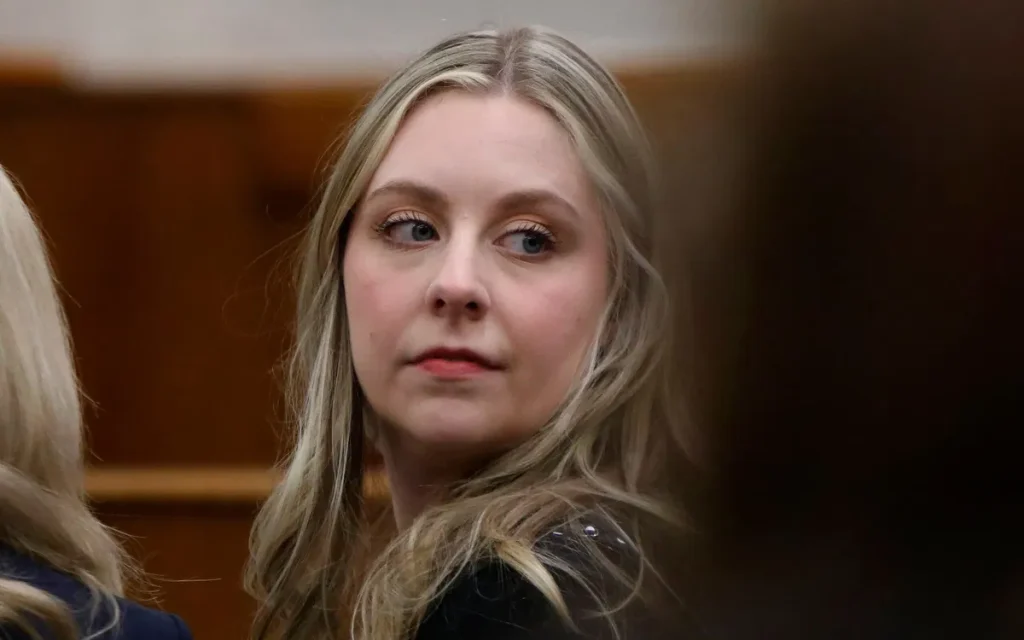
Abby Zwerner’s $40M Lawsuit: Who is Accountable for School Gun Warnings?
The $40 million civil trial filed by Abby Zwerner, the Virginia teacher shot by a 6-year-old student inside her first-grade classroom, has entered a pivotal week, one that could permanently reshape how America assigns legal accountability when schools fail to act on warnings.
A Teacher’s Nightmare in Real Time
On a cold January morning in 2023, at Richneck Elementary School in Newport News, six-year-old student, whose name was never publicly released because of his age, pulled a gun from his backpack and shot his teacher, Abby Zwerner.
The bullet tore through her hand and upper chest, leaving her bleeding beside a reading table as stunned classmates watched. “I thought I was dying,” Zwerner later told the jury through tears. “I thought I had already died.”
Since that day, she has endured six surgeries, ongoing pain, and post-traumatic stress disorder that still affects her sleep, her ability to teach, and even her sense of safety around children.
Her twin sister testified, “She’s just not the same person she was before that day.”
The Lawsuit: $40 Million and a Message
Zwerner’s lawsuit accuses former assistant principal Ebony Parker of ignoring multiple warnings that the student may have had a gun.
Teachers reportedly told Parker that other students had seen the firearm, yet she allegedly dismissed the threat, saying the child had “small pockets.”
Her legal team argues Parker’s inaction was not just careless, it was gross negligence, a level of recklessness so severe that it crosses the boundary between mistake and misconduct.
Parker’s defense maintains she had no legal duty to intervene and could not have predicted the unimaginable.
Her lawyers have brought in expert witnesses from out of state to testify that a first-grader bringing a loaded firearm to school was not “reasonably foreseeable.”
A Rare Legal Frontier
This is no ordinary civil trial. Parker also faces eight felony counts of child neglect in a separate criminal case next month.
Legal scholars note it’s highly unusual for a civil case to precede a criminal one, but that sequencing could give prosecutors a roadmap to what arguments and evidence might surface in the criminal proceedings.
University of Virginia law professor Darryl K. Brown told reporters, “I suspect the defense wanted the civil trial to go first.
It gives them a chance to see how the evidence plays out before the criminal case.”
The outcome of both trials could influence future school-safety litigation nationwide — and determine whether administrators can be held personally accountable when tragedy follows warnings.
The Ripple Effect Beyond One School
Since the 2023 shooting, Richneck Elementary has undergone major upheaval: Parker resigned, the principal was reassigned, and the superintendent was voted out by the school board.
Meanwhile, the child’s mother, Deja Taylor, was sentenced to two years in prison for felony child neglect after admitting she left the firearm unsecured at home.
According to data from the Gun Violence Archive, there have already been 64 school shootings in the U.S. this year — 27 on K-12 campuses — and 359 mass shootings overall.
Each one reopens the same painful question: who, exactly, is responsible when warning signs are ignored?
When Ignoring Warnings Becomes a Crime
Can School Officials Be Held Personally Liable?
At the heart of Abby Zwerner’s lawsuit is a groundbreaking legal question:
Can a school administrator be held civilly and criminally liable for failing to act on clear warnings that a student had a gun?
Under Virginia’s gross-negligence law, the answer may be yes. Gross negligence is more than a lapse in judgment — it’s a “complete disregard for the safety of others.”
Legal analysts explain that once an administrator receives credible information about a potential weapon on school property, they assume a duty of care.
Failing to act, especially when others repeatedly report the same concern could legally be seen as reckless disregard.
William & Mary law professor Jeff Bellin summed up the shift:
“The challenge here is identifying who had the obligation to step in. Once someone had that duty and didn’t act, accountability becomes unavoidable.”
Foreseeability and the “Duty to Protect”
In plain terms, foreseeability means whether a reasonable person could have anticipated the harm.
The defense claims a 6-year-old shooter was unforeseeable. Zwerner’s team argues the opposite — that multiple staff warnings made the shooting entirely preventable.
This debate isn’t just about this one case; it touches every school in America. The legal system is slowly redefining “foreseeable danger” to include credible threats from even very young children if proper warnings exist.
A Verdict That Could Reshape School Safety Law
Abby Zwerner’s $40 million case is not simply about financial restitution — it is about accountability and the evolving definition of duty within America’s education system.
A verdict in her favor could resonate far beyond Virginia, signaling that when schools disregard credible warnings, the defense of “we didn’t think it could happen here” will no longer stand.
As Professor Jeff Bellin observed, “Once the first verdict lands, every school administrator in the country will pay attention.”
The outcome will likely redefine how educational institutions respond to potential threats — transforming safety obligations from policy guidelines into enforceable legal standards.














