Understand Your Rights. Solve Your Legal Problems


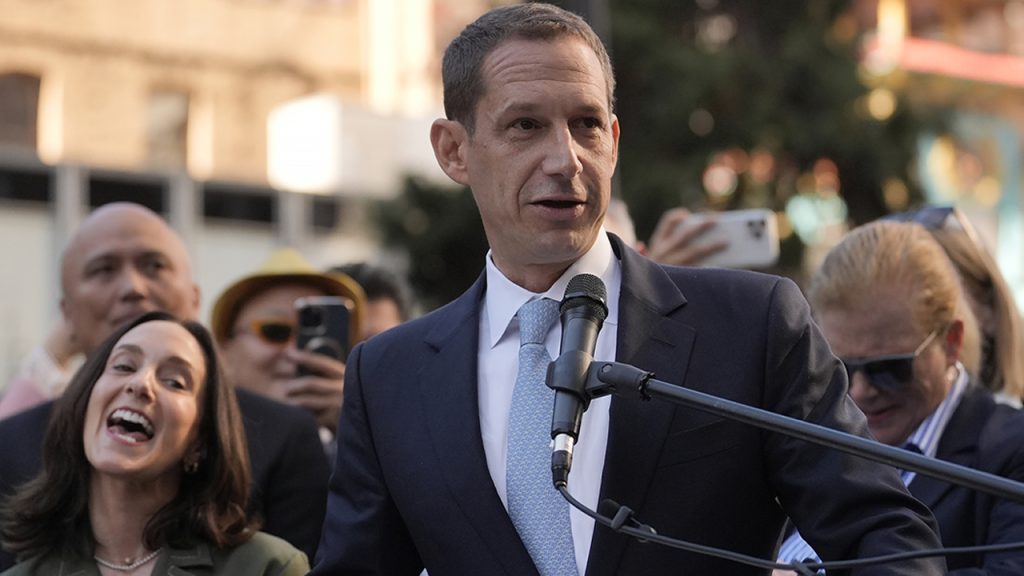
Following widespread condemnation, President Donald Trump has called off the planned deployment of federal agents and the National Guard to San Francisco. The decision came after a key call with Mayor Daniel Lurie, who presented new data showing overall citywide crime is down nearly 30% in 2025. This summary confirms that the threatened federal surge will not proceed, concluding a high-stakes standoff with state and local leaders.
In a stunning turn of events that played out just hours ago, President Donald Trump reversed his plan to send a massive surge of federal agents and National Guard troops into San Francisco. The extraordinary decision, which came as federal agents were reportedly already staging nearby, was directly influenced by a flurry of urgent, last-minute calls from the Bay Area’s most powerful tech CEOs.
The President announced the sudden halt on social media, claiming that "friends of mine who live in the area called last night to ask me not to go forward with the surge." He explicitly named technology giants, including Jensen Huang of Nvidia and Marc Benioff of Salesforce, as key influencers in the cancellation, highlighting the unprecedented political sway of Silicon Valley. Trump wrote that these "Great people... want to give it a ‘shot.’ Therefore, we will not surge San Francisco on Saturday." This dramatic intervention shifts the focus from a purely political battle to a private power play, giving this story a compelling new angle.
Mayor Daniel Lurie confirmed the intense discussion, stressing that he provided the President with hard data and a firm stance against military intervention. “I told him the same thing I told our residents: San Francisco is on the rise,” Lurie stated, emphasizing that the city is already achieving significant results on its own terms.
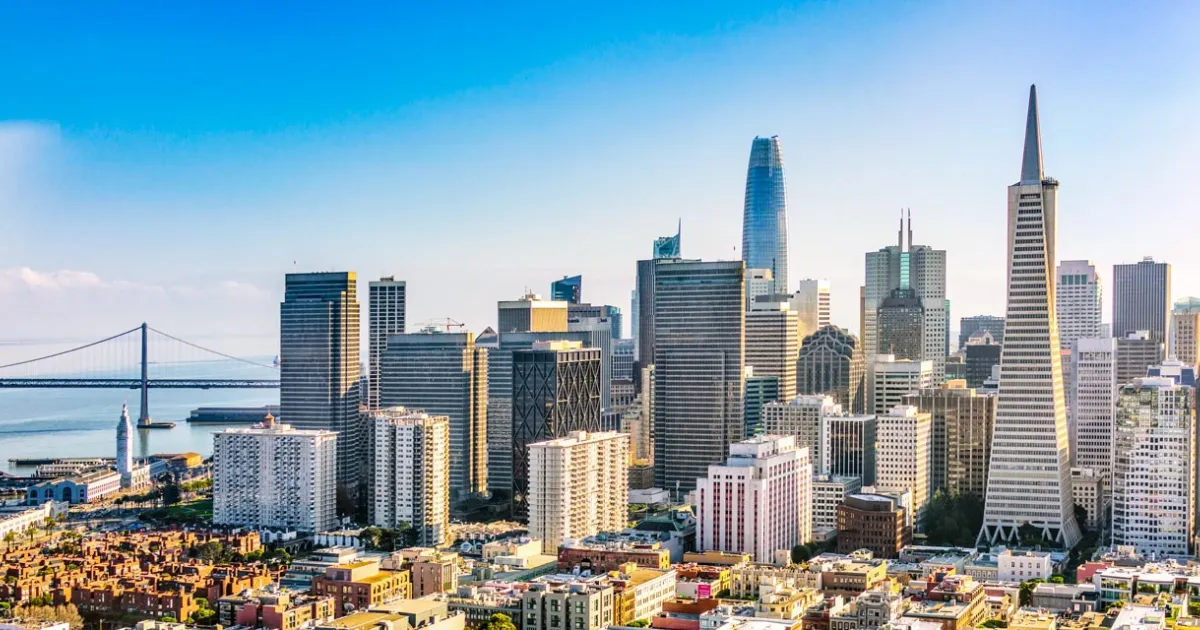
San Francisco’s skyline stands at the center of a national debate after President Trump halted plans to deploy federal troops to the city following an eleventh-hour call with Mayor Daniel Lurie and leading tech CEOs.
“Yesterday, I spoke to San Franciscans about a potential federal deployment in our city. I said then what I have said since taking office, that keeping San Franciscans safe is my top priority.
“Late last night, I received a phone call from the President of the United States. I told him the same thing I told our residents: San Francisco is on the rise. Visitors are coming back, buildings are getting leased and purchased, and workers are coming back to the office. We have work to do, and we would welcome continued partnerships with the FBI, DEA, ATF, and U.S. Attorney to get drugs and drug dealers off our streets, but having the military and militarized immigration enforcement in our city will hinder our recovery. We appreciate that the president understands that we are the global hub for technology, and when San Francisco is strong, our country is strong.
“In that conversation, the president told me clearly that he was calling off any plans for a federal deployment in San Francisco. Secretary of Homeland Security Kristi Noem reaffirmed that direction in our conversation this morning.
“My team will continue to monitor the situation closely, and our city remains prepared for any scenario.
“I am profoundly grateful to all the San Franciscans who came together over the last several days. Our city leaders have been united behind the goal of public safety. And our values have been on full display—this is the best of our city.”
The Mayor’s pushback was backed by undeniable figures showing the city’s successful public safety efforts. Local law enforcement data reveals that overall crime is down nearly 30% citywide in 2025, reaching its lowest point in decades. Specifically, homicides are on track for a 70-year low, and car break-ins have hit 22-year lows.
This strong statistical rebuttal dismantled the administration's main argument that San Francisco was a "mess" and required emergency federal intervention. Mayor Lurie acknowledged the need for targeted, professional assistance, but made it clear that military action would be detrimental.
He warned: “We would welcome continued partnerships with the FBI, DEA, ATF, and U.S. Attorney to get drugs and drug dealers off our streets, but having the military and militarized immigration enforcement in our city will hinder our recovery.”
Salesforce CEO Marc Benioff, who previously drew massive backlash for suggesting he would welcome troops, was among the loudest voices opposing the surge this week. The CEO, who recently apologized for his earlier comment, reinforced his commitment to local solutions by announcing a $1 million donation to support larger hiring bonuses for new police officers in San Francisco.
The decision to back off was not just a political concession; it was a tactical retreat from what legal experts called a guaranteed court defeat. The controversy centers on the Posse Comitatus Act, which strictly prohibits using active-duty military for civilian law enforcement, and the Insurrection Act, which provides the President’s only statutory exception to this rule.
According to analysis reviewed by Lawyer Monthly, legal scholars were prepared to argue that the administration could not legally invoke the Insurrection Act because San Francisco did not meet the rigorous legal threshold. The law requires conditions that amount to an actual rebellion, insurrection, or an obstruction of federal law so severe that it makes ordinary judicial proceedings impossible.
California’s Attorney General Rob Bonta and Governor Gavin Newsom had already prepared a lawsuit, vowing to challenge the deployment “within nanoseconds.” This threat was potent, especially given a recent ruling by a federal judge in Los Angeles that found a similar deployment of federalized troops in that city violated the Posse Comitatus Act.
The certainty of immediate legal scrutiny over the President’s assertion of “unquestioned power” to send troops was likely the final, decisive factor. District Attorney Brooke Jenkins emphasized the local authority: “When San Francisco needs help from state or federal agencies, we have no problem asking for it — but the key word is asking. Resources imposed upon our communities are fundamentally different.” The withdrawal confirms that the administration was unwilling to risk setting a new, unfavorable legal precedent.
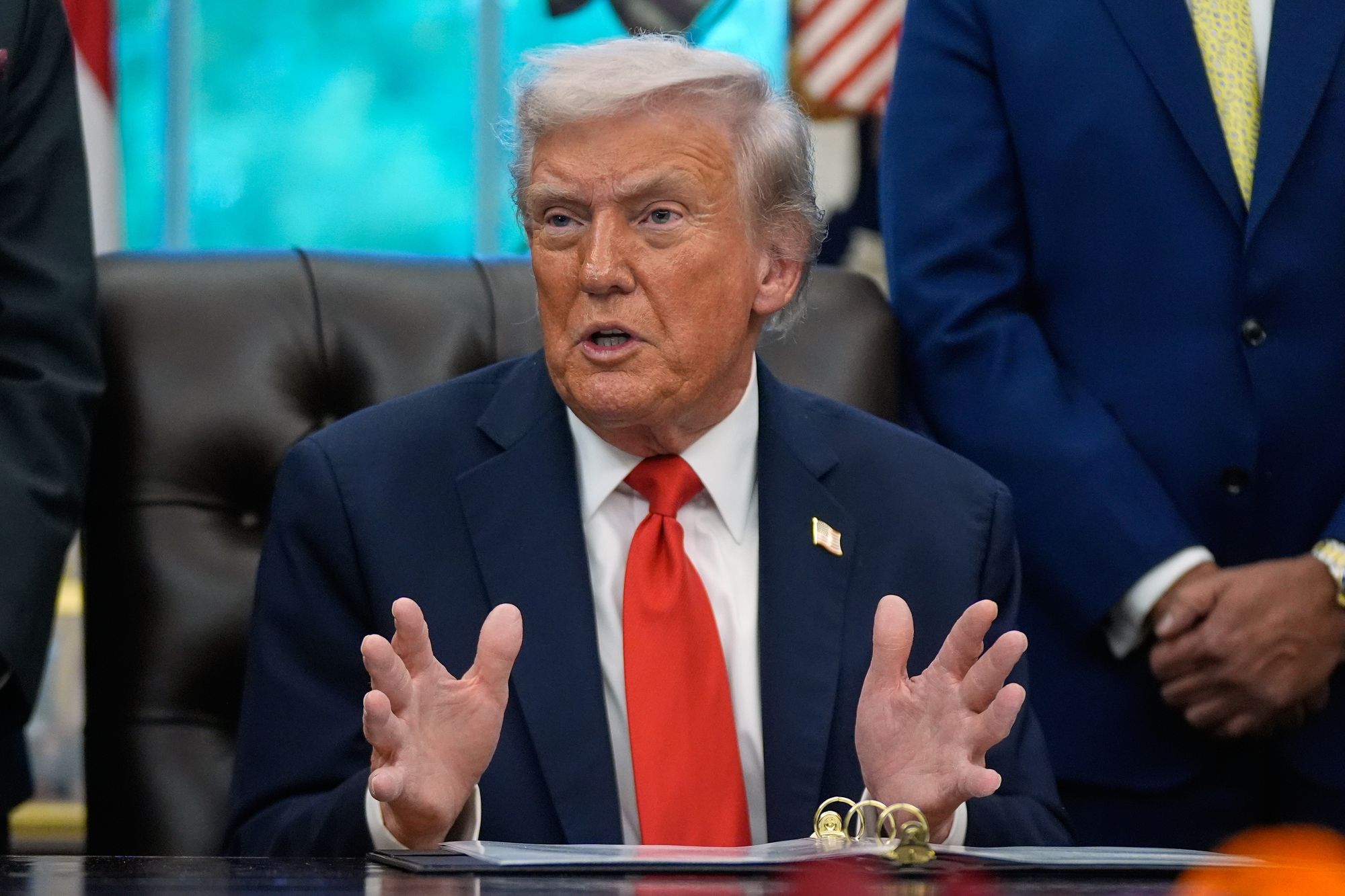
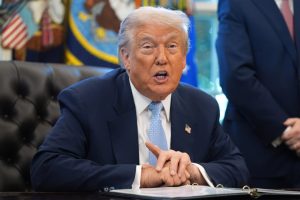
President Donald Trump speaks from the Oval Office after reversing plans to deploy federal troops to San Francisco, following a late-night call with Mayor Daniel Lurie and several prominent tech CEOs.
Mayor Daniel Lurie, the man whose eleventh-hour conversation with President Trump—reportedly brokered by top Tech CEOs—resulted in the SF troop surge reversal, is a political newcomer with a history rooted in both immense wealth and large-scale philanthropy. His unique background provides essential context for his unprecedented victory in the standoff.
Lurie is an heir to the Levi Strauss fortune, a key fact that establishes his deep ties to the Bay Area's elite business and tech communities—the same influential group that privately lobbied the White House. This connection allowed him to leverage political and economic influence in a way few other mayors could.
Prior to entering public service, Lurie was best known for founding the Tipping Point Community, a successful anti-poverty non-profit that raised over half a billion dollars for Bay Area initiatives. This prior experience is critical because it underpins his credibility on data and local effectiveness:
In short, Lurie's distinct blend of private-sector resources, measurable philanthropic success, and a stubborn refusal to conform gave him the leverage needed to negotiate a halt to the federal deployment and declare a victory for local control.
Q: Who were the top tech CEOs that persuaded President Trump? A: The two prominent tech executives confirmed by the President to have called for the reversal were Marc Benioff, CEO of Salesforce, and Jensen Huang, CEO of Nvidia.
Q: Why did Trump agree to halt the federal troop surge to San Francisco? A: President Trump cited a "late-night call" from Mayor Daniel Lurie, who "very nicely" asked for a chance to demonstrate the city's ability to handle the situation. The calls from tech CEOs also assured the President that "the future of San Francisco is great."
Q: Is the federal deployment to San Francisco permanently canceled? A: No, the deployment is temporarily suspended or on hold. The President explicitly stated he was giving the Mayor a "chance to turn it around," and ended his announcement with the phrase: "Stay tuned!"
Q: What was the federal surge intended to do in San Francisco? A: The federal surge was reportedly planned to address crime and homelessness, but was primarily framed by the administration as a stepped-up immigration enforcement operation, which San Francisco leaders widely opposed.