The $15 Million Question: How a Loophole in Texas Law Saved Elon Musk's SpaceX from a Massive Trespass Verdict
The high-profile litigation pitting Cards Against Humanity (CAH) against Elon Musk's Space Exploration Technologies Corp. (SpaceX) has reached a resolution, offering a unique case study in corporate liability and property law.
While the outcome delivered a public relations win for CAH, Musk’s company admitted to illegally trespassing, it delivered a cold, hard lesson in the economics of American litigation.
Cards Against Humanity set out to secure a colossal $15,000,000 for their crowdfunded supporters.
They walked away with a settlement that was reportedly worth less than their projected legal fees for a trial.
The culprit? A quiet, technical legal rule known as the American Rule on attorney’s fees.
This case is a stunning example of how existing legal frameworks can shield billionaires from the full financial cost of their actions, turning a clear-cut victory into a calculated settlement that avoided a major jury verdict.
"Space Garbage" vs. Border Protest Land
The story began in 2017 when CAH, known for its politically charged stunts, purchased a small, empty plot of land in Cameron County, Texas, near the U.S.-Mexico border, specifically to obstruct the construction of a border wall.
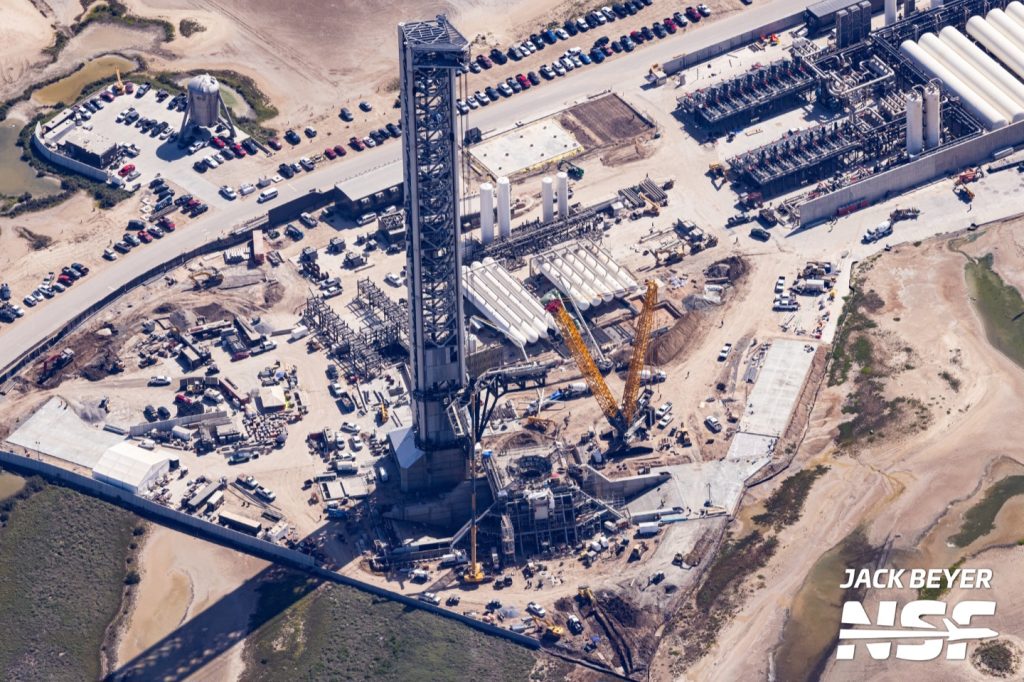
The land, near Brownsville, Texas, soon found itself adjacent to SpaceX's Starbase launch facility.
The lawsuit alleged that as SpaceX rapidly expanded its operations, it simply treated the CAH property as its own for nearly six months.
The complaint detailed how Musk’s company cleared vegetation, dumped gravel, and used the land to store construction equipment - a mess CAH publicly dubbed “space garbage.”
CAH framed the case as a battle for the little guy, promising to distribute any proceeds from the $15,000,000 damages claim back to the 150,000 fans who had funded the land purchase.
They had the moral high ground and, crucially, a clear case of illegal property trespass. So why did they fold on the high-dollar claim?
The Legal Fee Barrier in Texas Property Law
The decision to settle, even with SpaceX admitting to the trespass in the discovery phase, hinged on a harsh reality of the Texas court system: the winner doesn't automatically get their lawyer paid. This is the foundation of the American Rule.
Understanding the American Rule
Under the American Rule, each party in a civil lawsuit is responsible for paying its own attorney's fees, regardless of who ultimately prevails. This rule forces a plaintiff, even one with an airtight case, to conduct a grim cost-benefit analysis before deciding whether to proceed to trial:
(Potential Recovery) - (Your Legal Fees) = (Net Gain)
For a claim involving a trespass on vacant land, the provable compensatory damages (the cost to restore the land and the value of its temporary loss of use) would likely be only a fraction of the $15,000,000 sought.
Meanwhile, taking a multi-billion dollar company to a complex jury trial would incur legal fees that could easily climb into the millions of dollars.
The Texas Trespass Loophole and Fee-Shifting
While Texas has several statutory exceptions that allow the winning party to recover fees - a process called fee-shifting, these exceptions are often inapplicable to traditional common law torts like trespass.
- Allowed Recoveries in Texas: Texas Civil Practice and Remedies Code Section 38.001 allows the prevailing party to recover attorney's fees for claims involving breach of contract or rendered services.
- The Glaring Omission: There is no general statute in Texas that allows a plaintiff to recover attorney's fees for simple property trespass or property damage claims.
This distinction is what gave SpaceX an enormous advantage. Knowing that CAH would likely have to absorb 100% of their legal costs, even if they won a favorable verdict on the trespass, Musk's company could deploy a massive legal budget to run up the bill.
The sheer cost of fighting the case effectively acted as a ceiling on the final judgment, making a trial economically disastrous for CAH.
In the end, CAH publicly confirmed the financial pressure: a trial "would have cost more than what we were likely to win from SpaceX."
A Crucial Lesson for Landowners
The CAH v. SpaceX settlement is a powerful example of how corporate defendants can weaponize the American Rule to pressure settlements.
For any individual landowner or small business in Texas facing a property damage claim or land-use dispute against a deep-pocketed entity, this case underscores a critical need for an aggressive legal strategy:
- Plead Statutory Claims: Litigators must aggressively search for any statutory hook—such as the Deceptive Trade Practices Act (DTPA) or specific property code violations—that explicitly allows for fee-shifting.
- Focus on Punitive Damages: The plaintiff’s only real leverage to counteract the fee barrier is by pursuing evidence of bad faith or gross negligence that warrants significant exemplary damages (punitive damages).
- Cost-Benefit Analysis: The CAH experience highlights the necessity of a rigorous, ongoing cost-benefit analysis. A moral victory can still be a financial loss.
Cards Against Humanity ultimately achieved its core objective: securing the removal of SpaceX's equipment and obtaining an admission of guilt for the trespass.
However, for legal and business observers, the settlement represents a far more significant narrative: the silent, formidable power of the American Rule on attorney's fees as a corporate defense mechanism.
This two-century-old principle effectively established a substantial financial barrier to entry for the prevailing property owner, preserving the deep-pocketed defendant's resources.
The case thus serves as a contemporary and costly reminder that while the substantive law may guarantee the protection of property rights, the transactional price of enforcing those rights against well-funded adversaries remains a critical and often prohibitive factor in American litigation.
Elon Musk & AWS Outage: Legal Fallout
People Also Ask (PAA)
What is the American Rule on attorney’s fees?
The American Rule means each party pays its own lawyer, win or lose, unless a statute or contract allows otherwise. It often discourages plaintiffs from pursuing costly trials.
Why didn’t Cards Against Humanity pursue the full $15 million?
Because under the American Rule they would still pay their own legal fees, making a jury trial financially risky despite clear trespass evidence.
Does Texas allow fee-shifting for trespass claims?
Generally no. Texas Civil Practice & Remedies Code §38.001 allows recovery of attorney’s fees for contract claims, but not for common-law trespass.
What damages can be recovered for trespass in Texas?
Typically restoration costs, loss of use, and sometimes diminished property value. Punitive damages may apply if there’s proof of bad faith or gross negligence.
Why do large corporations have an advantage under the American Rule?
Because they can afford to extend litigation, knowing plaintiffs must cover their own legal fees. This often pressures smaller opponents to settle early.
Can Texas landowners recover attorney’s fees in similar cases?
Only when a statute, contract, or specific property code provision allows it. Otherwise, plaintiffs must bear their own costs even if they win.
What lesson does the CAH vs. SpaceX case teach?
That even with strong evidence, the American Rule can turn a clear legal win into a financial loss—underscoring the need for fee-shifting reform and strategic litigation planning.