Understand Your Rights. Solve Your Legal Problems


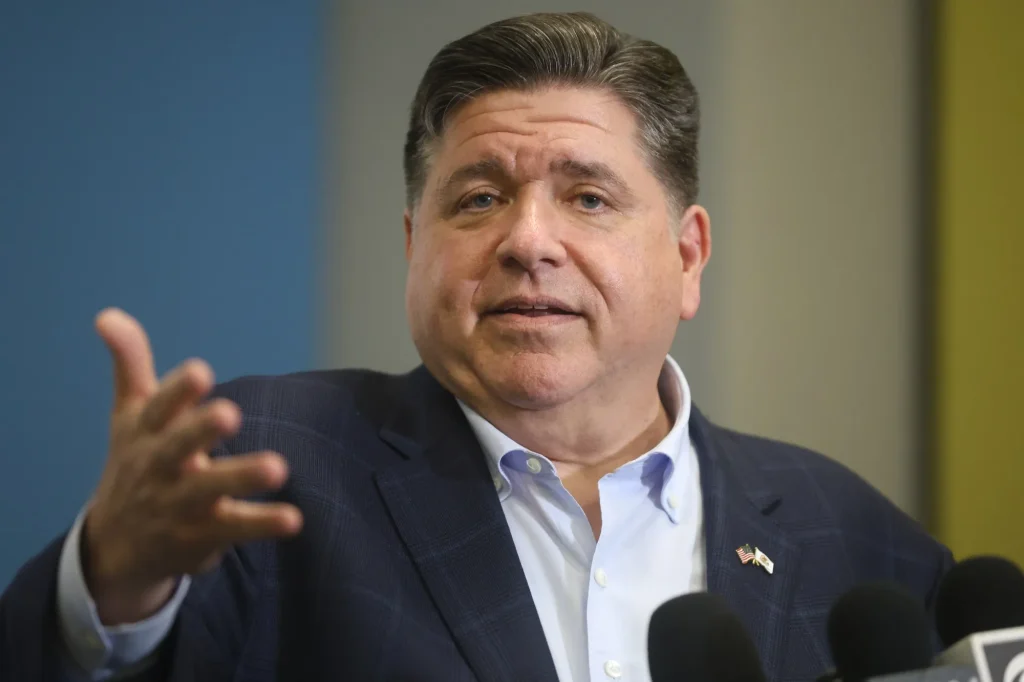
Illinois Governor J.B. Pritzker, the Democratic billionaire heir, found himself under intense, immediate scrutiny after a recent televised interview where he appeared to downplay Chicago's murder problem, triggering a firestorm of legal and ethical questions about public accountability. The drama unfolded live, creating a must-watch moment that has since dominated national headlines and sparked fresh debates over the reality of public safety in major American cities—a crucial long-tail keyword for readers searching for the latest Chicago crime updates.
The controversy centers on a heated exchange on Fox News' Special Report, where host Bret Baier asked the Governor directly, “Why does Chicago have the highest murder rate?” Pritzker’s startling response—“We’re not in the top 30”—was almost instantly contradicted by FBI data displayed on screen, showing Chicago’s homicide rate at 17.5 murders per 100,000 residents in 2024, one of the highest among the nation's most populous cities.
While the Governor aggressively defended his record, claiming, “Our murder rate has been cut in half over the last four years, and every year it has gone down by double digits,” the presented map suggested a different reality. The data confirms a mixed picture, which Pritzker and his allies often highlight: violent crime has been measurably dropping in Chicago, with homicides down by 33% in the first half of 2025 compared to the year before. This progress is real, yet critics are quick to point out a harsh truth: Chicago still leads the nation in total number of homicides—a figure it has tragically topped for over a decade.
This subtle, yet critical, distinction between total murders and homicide rate per capita—a key search term in crime analysis—is where political spin and reality violently collide. Criminologists prefer the rate, which adjusts for Chicago’s enormous population, but citizens often react to the raw, harrowing number of victims. The Governor’s statement seemed to gloss over this crucial nuance, infuriating critics and giving oxygen to his political rivals.
The heated exchange over Chicago's crime statistics raises a fundamental legal question that affects every Illinois resident: What good is a democracy if its leaders can't be trusted to tell the truth about public safety?
The most compelling legal angle here, directly impacting consumers, is the principle of Public Trust and Ethical Disclosure, which is mandated by the Illinois Governmental Ethics Act (5 ILCS 430).
While a Governor enjoys broad free speech protection—meaning he won't be prosecuted just for political spin—his public statements are not the same as those made by an average citizen. In Illinois, and across the United States, high-ranking officials operate under a special legal standard rooted in the concept of Public Trust.
The Illinois Governmental Ethics Act requires all officials to act “in a manner that promotes public confidence in the integrity of government.” This law establishes an ethical line in the sand: government should be transparent. When a Governor misrepresents official FBI crime data, he isn't just scoring political points; he's potentially undermining the very foundation of public confidence needed for effective law enforcement, legislative debate, and resource allocation.
Legal experts stress that public officials have a foundational legal and ethical obligation to be truthful. “While a politician can argue numbers all day long, there’s a fine line between political spin and material misrepresentation,” said David Yellen, former President of the Illinois State Ethics Commission. He further emphasized that, “When the data concerns public safety, false claims can undermine trust and even impact policy decisions — and that’s where legal scrutiny begins.”
For the average Chicago resident or business owner, a misrepresentation of the crime rate is more than just a slight against the Governor's integrity—it has tangible, real-world stakes.
Since you can't sue the Governor for political speech, your power lies in leveraging accountability mechanisms.
The most effective, often overlooked, legal recourse is demanding the correction of official, publicly distributed data through official state channels, such as the Office of the Executive Inspector General (OEIG). While the OEIG cannot overturn a Governor's political comment, it can investigate allegations of misconduct or misuse of state resources, including the release of misleading official government data.
This local controversy is now inextricably linked to the national political battle over crime, with the Trump White House seizing on the issue. President Donald Trump has repeatedly labeled Chicago the “murder capital of the world,” using the city’s struggle as a political talking point against Democratic leadership.
Pritzker, in a defiant stance against federal intervention, has fought back hard, accusing Trump of manufacturing a crisis for political gain. “If you come for my people, you come through me,” the Governor stated defiantly in a press conference. “So come and get me.” This “come and get me” quote has become a rallying cry for the resistance against perceived federal overreach, showcasing the high-stakes political drama gripping the state.
The recent deployment of National Guard forces, even partially from Illinois, following clashes between ICE officers and protesters, only intensifies this conflict. Federal officials have publicly contradicted some of Pritzker's claims regarding these deployments, further complicating the narrative of who is telling the complete truth about the Chicago crime crisis.
Ultimately, Governor Pritzker’s on-air denial, though perhaps politically calculated, has reopened a deep moral wound in Illinois politics. The state’s citizens expect accountability and honesty from their leaders, and while the legal fallout may be minimal, the ethical cost of appearing to mislead the public about the true scope of gun violence and urban crime could be immense for the billionaire politician’s legacy and future ambitions.
You can watch White House Press Secretary Karoline Leavitt criticize the Governor's record in this YouTube video: 'More than double of Islamabad…': Leavitt blasts Chicago crime rate, criticises Governor Pritzker. This video is relevant because it is a recent news item that directly references the Governor and the controversy over Chicago's crime statistics, which is the central theme of the article.
The Answer: It's extremely difficult, but not impossible, and the legal threat often centers on ethics, not just the lie itself.
In the U.S., statements made by high-ranking executive officials like a Governor are typically protected by a principle called "Executive Immunity" or a form of "Qualified Privilege." This makes it nearly impossible for a private citizen to win a civil lawsuit (like defamation) against a Governor for political statements.
However, a public official who intentionally misrepresents data can still face consequences under state law:
The "So What?" for the Consumer: You can't sue for the lie, but you can use the official state ethics channels to demand accountability for the misuse of public data.
The Answer: You have a legal right to access government data, and its misrepresentation can jeopardize your community's access to vital safety resources.
The cornerstone of your power is the Freedom of Information Act (FOIA), both at the federal and state level. FOIA guarantees citizens the right to request and receive public records, including the exact crime statistics used by law enforcement agencies. If a state official's claims contradict the official records, FOIA is your tool for securing the raw, verifiable truth.
Misrepresenting or selectively using crime data has a direct, detrimental impact on consumers and communities in two major ways:
The Actionable Takeaway: Use the FOIA process to request the official FBI UCR (Uniform Crime Report) data the Governor claimed to use. If the numbers don't match his statement, you have the evidence needed to file an ethics complaint with the OEIG, demanding a public correction of the official record.