Understand Your Rights. Solve Your Legal Problems


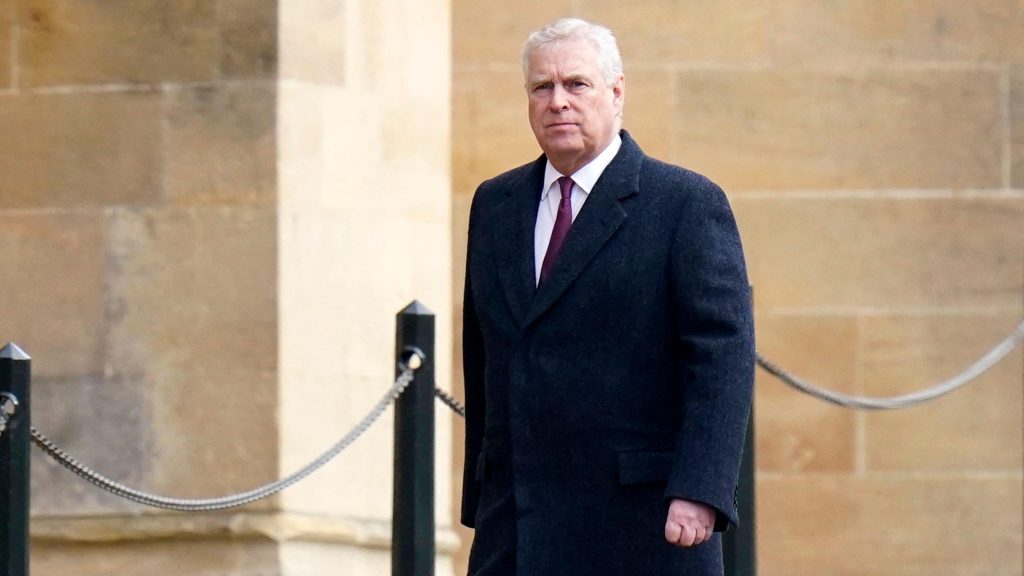
The growing scrutiny of Andrew Mountbatten-Windsor’s tenure as the UK’s Trade Envoy has forced a national reckoning with a simple question: if a person in a publicly funded role uses their position for private gain, can the system—and the institution they represent—maintain public trust?
Appointed to serve British trade interests, Andrew Mountbatten-Windsor now faces renewed allegations that suggest a starkly different agenda. This is the legal threshold where royal privilege meets government accountability.
The allegations fueling this inquiry come from historian Andrew Lownie, who asserts Prince Andrew "used his taxpayer-funded post to line his pockets and chase women." Lownie's claims, detailed in his biography and on the Daily Mail Deep Dive podcast, center on the alleged misuse of official travel, including arranging for up to 40 women to visit his hotel during a 2002 Thailand trip. While the Palace declined comment on Lownie's specific claims of misconduct, the allegations emerged just before King Charles III took the rare, formal step in 2025 of stripping Andrew of his remaining royal title and residence.
This paragraph is the core legal anchor of your article, and it is already quite strong because it correctly identifies the legal standard, cites precedent (R v Dytham), and features a named expert (Jonathan Fisher KC).
However, it suffers from the same density issue identified in the first critique. It tries to cover the definition, the precedent, the applicability to Andrew, and the expert commentary all in one block.
Related: What will Prince Andrew do Next?
Under UK common law, the offence of Misconduct in Public Office applies when an individual in a public role willfully neglects their duties or abuses their power for personal gain. This legal framework, which originated in landmark cases such as R v Dytham [1979] QB 722, is the standard for prosecuting corruption in public life and is reinforced by Crown Prosecution Service guidance.
The central legal question here is whether Prince Andrew’s Trade Envoy position (2001–2011) qualifies as a "public office." Because it was a Crown appointment funded by taxpayers, legal scholars generally argue that it does, in theory, fall under the scope of the common law offence.
Barrister Jonathan Fisher KC of Red Lion Chambers explains the path forward:
“If credible evidence linked official duties to private financial benefit, the CPS could review it under misconduct in public office or the Bribery Act 2010. Proving intent, however, would be an enormous legal challenge.”
For many, the secrecy surrounding the Trade Envoy records is the central issue. Dr. Catherine Haddon of the Institute for Government warns that the "continued classification of royal-related records erodes confidence in constitutional accountability."
While the Freedom of Information Act 2000 mandates the release of most government papers after 20 years, the Duke’s Trade Envoy files remain closed at the National Archives, likely under specific royal exemptions. This lack of transparency is compounded by a 2012 National Audit Office memorandum that confirmed royal trade-mission expenses were subject to only limited oversight.
If these sealed records were released and showed the promotion of private business ventures instead of public duty, it wouldn't just be an ethical failure. Such documentation could provide the necessary evidence to trigger a formal review of the UK's conflicts-of-interest rules and the Ministerial Code, potentially shifting the case from mere allegation to documented legal concern.
The high bar for prosecution requires investigators to meet specific legal criteria. To bring a case for misconduct in public office, three elements must align:
Oxford constitutional scholar Prof. Richard Ekins stresses that the allegations must directly connect to these strict standards: “Unverified impropriety, however damaging to reputation, does not meet the evidentiary bar unless linked to an act of office.” He further cautions that royal appointments often struggle to meet the strict public-office threshold, particularly when documentary proof remains absent. Could the release of one sealed file shift this from scandal to criminal inquiry?
The scrutiny of Prince Andrew resonates far beyond the Royal Family. It touches upon institutional themes of accountability and systemic failure, drawing parallels to the Post Office Horizon Scandal—a case where a lack of transparency and unchecked authority caused mass public harm.
Dr. Catherine Haddon of the Institute for Government underscores this point:
“Both cases reveal what happens when authority shields itself from scrutiny. Transparency is not optional—it’s the foundation of public trust.”
While King Charles's decision to remove Andrew's title signaled a willingness to reform the institution internally, many legal and constitutional observers argue that only legal transparency—the release of the sealed Trade Envoy files—will truly restore the public's faith in the principle that justice is applied equally.
| Year | Event | Relevance |
|---|---|---|
| 2001 | Appointed UK Trade Envoy under Govt. | Start of official role |
| 2002 | Thailand trip issues later alleged. | Key alleged misuse |
| 2005 | Reports of lavish travel costs emerge. | Raises public-duty concerns |
| 2010 | Business links to David Rowlands surface. | Conflict-of-interest issues |
| 2011 | Steps down amid Epstein-link fallout. | End of official tenure |
The scrutiny has already prompted a quiet political response: MPs across parties have called for tighter oversight of honorary trade roles, and the Cabinet Office is reportedly reviewing whether such positions should be subject to full audit and disclosure standards.
Ultimately, the prospect of a formal prosecution hinges on the release of the sealed Trade Envoy files. As Barrister Jonathan Fisher KC concludes, the legal and political thresholds remain high:
“Absent new evidence or a formal referral, prosecution is improbable. But public demand for fairness is real—and persistent. Transparency alone can restore trust in the Crown’s integrity.”
What is the penalty for misconduct in public office under UK law?
If convicted, the offence can carry a maximum life sentence, though most sentences are shorter. It depends on the severity of the abuse and damage to public trust. The Crown Prosecution Service typically pursues this charge only in serious corruption or exploitation cases.
Could the National Archives be compelled to release Prince Andrew’s files?
Possibly. Under the Freedom of Information Act 2000, requests can challenge withheld records, but exemptions apply to royal correspondence and national security. If Parliament or the Cabinet Office deems the files to serve a public-interest purpose, they could authorize a limited release.
What reforms might follow this case?
Lawmakers could push to audit honorary royal roles, expand FOIA coverage, and clarify the Ministerial Code regarding Crown appointments. This would ensure future trade envoys and royal representatives face the same transparency obligations as public officials.