Understand Your Rights. Solve Your Legal Problems


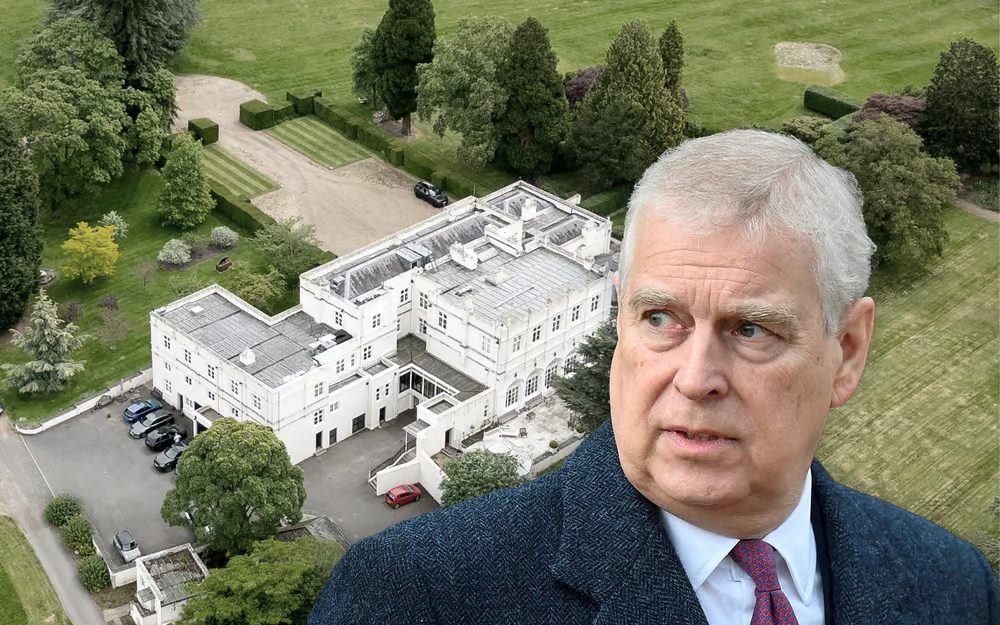
WINDSOR, UK – Prince Andrew is reportedly in tense, last-minute negotiations to vacate Royal Lodge, his lavish 30-room Windsor mansion, as King Charles III applies relentless pressure to resolve the ongoing public relations crisis caused by his disgraced brother.
The escalating drama, fueled by renewed outrage over Andrew’s financial arrangements and a fresh wave of scandal, may see the Duke of York walk away from his home of over 20 years with a substantial six-figure compensation payout.
Royal insiders confirm to multiple news outlets that Buckingham Palace is "strongly encouraging" the Duke to surrender the lease on the Grade II-listed property, which has become a powerful symbol of royal excess and a lingering distraction from the King’s efforts to modernize the monarchy.
The development comes just days after Andrew relinquished his remaining titles and patronages amid intensified focus on his continuing links to convicted sex offender Jeffrey Epstein and the posthumous release of accuser Virginia Giuffre’s memoir.
At the core of the standoff is a watertight 75-year lease signed by Prince Andrew in 2003 with the Crown Estate, the body that manages royal properties on behalf of the monarch. Andrew paid £1 million upfront and committed to £7.5 million in refurbishments, agreeing to a token “peppercorn rent” of £1 per year, if demanded.
The key flashpoint is a legally binding compensation clause. Documents now under review by the Public Accounts Committee reveal that if the Duke voluntarily surrenders the lease—or is forced out within the first 25 years (which runs until 2028)—the Crown Estate is obliged to pay him around £558,000 in compensation.
That figure, representing the unexpired value of the initial payment, means British taxpayers could effectively fund a £558,000 payout to remove the Duke from his rent-free residence more than half a century early.
“The optics of the taxpayer effectively buying out Prince Andrew’s lease at this time are terrible, but the King has limited legal leverage,” royal commentator Robert Hardman told the BBC. “Andrew has a private tenancy agreement with the Crown Estate; it’s a cast-iron deal. The only real power Charles has is to make his life financially and socially untenable until he agrees to a negotiated surrender.”
Related: What will Prince Andrew do Next?
The urgency for a swift resolution has been magnified by recent revelations about Royal Lodge’s deteriorating condition. Photos taken this week show visible mould, cracked walls, and peeling paintwork, suggesting the Duke has failed to maintain the home “in good and tenantable condition” as required by his lease.
Critics argue this neglect could provide the Crown Estate with legal grounds for forfeiture, potentially opening the door to a formal eviction process — though insiders insist the King prefers a quiet, negotiated deal over a public legal battle.
Meanwhile, the issue has spilled into Parliament, where MPs on the Public Accounts Committee are demanding full disclosure from the Crown Estate and HM Treasury about the lease terms, particularly why crucial details — such as the “one peppercorn” rent — were redacted in public filings two decades ago.
Shadow Justice Secretary Robert Jenrick told the BBC, “The public are sick of Prince Andrew and the damage that he’s done to the reputation of our royal family and this country.”
This growing political focus adds immense pressure on the King to finalize an exit strategy for his brother.
Sources close to the negotiations say the main sticking point now is where Andrew will live once he leaves Royal Lodge. The Duke, who shares the property with his ex-wife Sarah Ferguson, is resisting any proposal that would “exile him to the countryside.”
Smaller residences such as Frogmore Cottage or a home on one of the King’s private estates in Norfolk or Scotland have been discussed. However, Andrew reportedly insists on staying near London or Windsor, close to his daughters Princess Beatrice and Princess Eugenie — a move he believes is essential to preserving what remains of his royal identity.
Further complicating matters, the King could withdraw remaining financial support, including Andrew’s estimated £3 million-a-year security bill, leaving the Duke reliant on his naval pension as his only stable source of income.
Royal analysts say the King’s intervention, while expensive in the short term, could prove necessary to protect the long-term reputation of the monarchy.
The deal would effectively close one of the most damaging chapters in recent royal history and signal the King’s determination to restore dignity to the institution.
According to the article reviewed by Lawyer Monthly, the finalisation of the Royal Lodge eviction deal is now viewed by royal watchers as imminent — a decisive moment marking the full and final banishment of Prince Andrew from the heart of the royal family.
Prince Andrew’s looming exit from Royal Lodge — and the half-million-pound payment he is reportedly due — shines a harsh spotlight on a crucial, often misunderstood aspect of UK property law: the difference between renting and a long-term leasehold agreement.
For the average consumer, this legal distinction is far more important than any royal drama. It determines your rights, your property’s value, and who holds the financial power when a tenancy or lease ends early.
The reason King Charles’s Crown Estate may have to pay Prince Andrew £558,000 lies in a key legal fact: Andrew is not a renter — he is a long-term leaseholder.
The Duke paid £1 million upfront (known as a premium) in 2003 to secure a 75-year lease. This premium essentially bought him the right to occupy the property for the entire term, giving him rights closer to ownership than tenancy.
When a leaseholder surrenders their lease early, the landlord (in this case, the Crown Estate) regains possession of the property immediately. This instantly increases the landlord’s asset value.
Therefore, under UK property law, the landlord is often legally obliged to compensate the leaseholder for the remaining unexpired value of the initial premium payment. Andrew’s £558,000 represents the calculated value of the 53 years he is forfeiting under that agreement.
This compensation principle isn’t exclusive to royalty — it directly applies to millions of UK homeowners who buy flats or houses under long-term leasehold.
It reveals a powerful truth: a long lease is an asset you own, not just a rental contract. In legal terms, a leasehold interest carries market value, and if it’s taken back early, you may be entitled to compensation.
For ordinary consumers, the stakes are typically reversed. In commercial leases, the tenant often pays a surrender premium to the landlord to escape future rent obligations.
However, in long residential leases (typically 99 years or more), especially where a substantial premium was paid upfront, the balance of power shifts.
If your landlord or freeholder wants to reclaim your property early — perhaps to redevelop or demolish it — they can’t simply evict you. They must negotiate a formal surrender, and you are entitled to be paid the full value of what you’re giving up. This could include both the remaining value of your original premium and the current market value of your leasehold interest.
1. Check Your Lease
If you own a long leasehold property — especially a flat — locate your original lease document. Look for any clauses mentioning “Surrender” or “Forfeiture.” Note whether you paid a premium and how many years remain on your lease.
2. Know Your Power
The longer the remaining term, the more valuable your asset — and the stronger your negotiating position. If a freeholder or developer approaches you to buy back the lease, seek independent legal advice immediately from a specialist property solicitor.
Do not accept the first offer. It’s unlikely to reflect the full market value of the rights you’re surrendering.
Prince Andrew appears to be on the verge of a compensation deal worth around £558,000 to leave Royal Lodge. The arrangement, rooted in his original 75-year lease, would allow King Charles III to reclaim a prime Windsor property and move beyond a scandal that has tarnished the monarchy for years.
Is Prince Andrew being forced out of Royal Lodge by King Charles?
While Buckingham Palace is framing the move as voluntary, multiple reports confirm King Charles III is exerting significant pressure on Andrew to surrender his lease, supported by legal negotiations over compensation.
How much compensation will Prince Andrew get for leaving Royal Lodge?
Under his 75-year lease with the Crown Estate, Prince Andrew is entitled to an estimated £558,000 in compensation for the unexpired portion of his lease if he agrees to quit the property now.
Will the Crown Estate evict Prince Andrew from the 30-room mansion?
There are potential legal grounds for eviction due to the home’s disrepair, but a negotiated settlement is seen as the most likely outcome.
Why is Prince Andrew resisting leaving Royal Lodge?
The Duke of York wants to remain close to his family — particularly his daughters and ex-wife Sarah Ferguson — and views the Windsor mansion as the last bastion of his royal identity.