Man Arrested After Crashing Car into White House Security Checkpoint
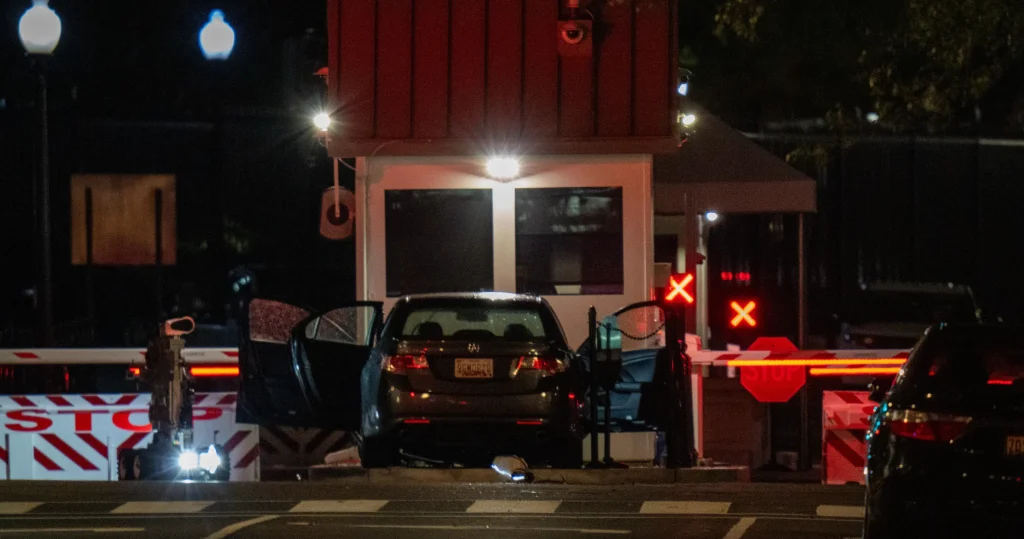
A man was immediately arrested by Secret Service officers late Tuesday night after his vehicle smashed into a security checkpoint on the west side of the White House complex.
The startling incident, which occurred around 10:40 p.m. on October 21st, instantly triggered high-level security protocols, highlighting the perennial challenge of protecting the President.
Authorities are currently tight-lipped on the details, but here is everything we know right now about the White House security incident:
Rapid Response and Safety Assessment
The crash happened at a vehicle-gate entrance near the intersection of 17th and E Streets NW. According to the Secret Service, the response was swift and decisive:
- Immediate Arrest: U.S. Secret Service Uniformed Division officers took the driver into custody right at the scene.
- No Injuries: Crucially, the agency confirmed that no injuries were reported to any personnel.
- Bomb Robot Deployed: In a striking display of the standard threat assessment protocol, images from the scene show authorities inspecting the dark-colored car with a bomb detection robot. This immediate action underscores the procedure for any such breach, treating the vehicle as a potential threat until proven safe.
- All Clear: After the inspection, the vehicle was declared “deemed safe” by the Secret Service and the Metropolitan Police Department.
- President Safe: Reports confirmed that President Donald Trump was inside the White House at the time, but officials stated the presidential complex was not placed on lockdown due to the quick containment and assessment of the situation.
Unanswered Questions Driving the Federal Investigation
While the immediate security breach was contained and the threat neutralized, key factual and legal questions remain pending the conclusion of the joint investigation by the Secret Service and the Metropolitan Police Department.
The current focus of the inquiry hinges on establishing the following critical factors:
- Driver Identification and Status: The Secret Service has maintained its policy of withholding the identity of the arrested individual. Revealing the driver’s name is typically deferred until formal federal charges are filed or a determination of intentionality is made.
- Determination of Intent: Authorities have yet to specify whether the vehicle collision was an intentional act. Legally, the distinction between a non-malicious traffic accident (such as impairment or mechanical failure) and a deliberate act of aggression or protest is fundamental, directly influencing the severity and nature of the criminal charges brought under U.S. federal statutes.
- Motive Assessment: Currently, no official motive has been disclosed. Investigators are working to assess the driver's state of mind and any preceding actions to determine a possible motive, which could range from a vehicular error to politically motivated hostility or an individual experiencing a mental health crisis.
The Secret Service reiterated its official stance, concluding its public remarks with the statement:
"Additional information will be provided upon conclusion of the investigation." The forthcoming details will be instrumental in defining the scope of the legal action.
Legal Analysis: Potential Federal Charges
For legal experts and those following national security laws, this incident is already setting the stage for serious federal prosecution.
Depending on the eventual findings regarding the driver's intent, the man could face several severe charges.
- Entering a Restricted Building or Grounds: Since the crash occurred at a federal security checkpoint, the most immediate and likely charge is violating 18 U.S.C. § 1752, which prohibits unauthorized entry onto restricted grounds. This charge can carry up to a 10-year prison sentence if a dangerous weapon is involved or if bodily injury results.
- Destruction of Government Property: If the security barrier or gate suffered significant damage (estimated to be over $1,000), the driver could be charged with depredation of U.S. property (18 U.S.C. § 1361).
- Threats Against the President: If the investigation uncovers evidence that the driver intended to harm the President, or even intended to make a credible threat, charges under 18 U.S.C. § 871 (Threats against President and successors) are possible, carrying up to five years in federal prison.
The swift arrest and detailed forensic examination of the vehicle are key steps that will determine the final charges.