Understand Your Rights. Solve Your Legal Problems


The 2025 Pacific Palisades wildfire destroyed nearly 7,000 Los Angeles homes and caused an estimated $150 billion in losses, making it the most destructive urban fire in American history.
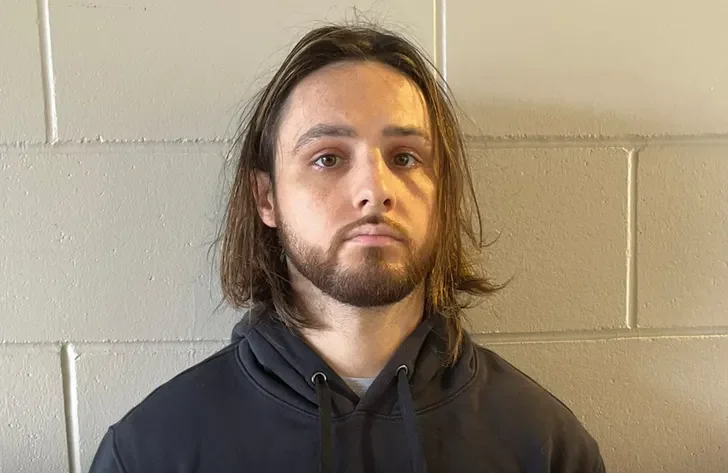
According to federal court filings unsealed in October, Jonathan Rinderknecht, 29, a former resident of the area now living in Melbourne, Florida, stands accused of setting the spark that triggered the disaster.
Known by the aliases “Jonathan Rinder” and “Jon Rinder,” he was arrested in Florida and appeared before the U.S. District Court for the Middle District of Florida.
Prosecutors allege that his actions on New Year’s Day 2025 ignited what became the Palisades Fire - a blaze that not only destroyed homes but also reshaped the legal boundaries of environmental accountability.
Federal prosecutors have charged Rinderknecht with three felony counts, including destruction of property by means of fire and arson affecting property used in interstate commerce.
Acting U.S. Attorney Bill Essayli described it as “one of the worst fires Los Angeles has ever seen,” calling the case an unprecedented test of criminal responsibility amid worsening climate conditions.
At the request of local authorities, the Bureau of Alcohol, Tobacco, Firearms and Explosives (ATF) led the investigation using fire-pattern mapping, surveillance analysis, and cellphone data reconstruction.
Under 18 U.S.C. § 844(i), arson becomes a federal crime when it damages property linked to interstate commerce—such as power lines, communications systems, or federally funded land.
Because the flames spread across property owned by the Mountains Recreation and Conservation Authority (MRCA), which receives federal funding, jurisdiction shifted from California to the federal government.
If convicted, Rinderknecht faces five to forty-five years in prison.
According to an affidavit filed in federal court, investigators concluded that the Palisades Fire was a “holdover” from an earlier, smaller blaze known as the Lachman Fire, which began just after midnight on January 1, 2025.
Though firefighters quickly contained that first fire, embers smoldered underground until January 7, when powerful Santa Ana winds reignited them above ground turning a hidden threat into a firestorm.
Investigators allege that Rinderknecht had been working as an Uber driver that night. Passengers later told law enforcement he appeared agitated and angry.
After dropping off one rider, he drove toward the Skull Rock Trailhead, parked, attempted to contact a former friend, and hiked up the trail.
He allegedly filmed himself on his iPhone while listening to a rap track that featured imagery of fire, moments before the blaze began.
At 12:12 a.m., environmental sensors registered the first ignition.
Rinderknecht made several failed 911 calls, eventually reporting the fire once he reached a signal area by which time others had already contacted emergency services.
According to court records, he then followed fire engines back to the scene and took more videos as flames spread.
Cell data placed him within 30 feet of the origin point, and investigators later said he lied about his location during questioning.
While Rinderknecht’s prosecution may deliver justice, it will not deliver restitution.
Under the Mandatory Victims Restitution Act, courts must order full payment for damages, even when impossible.
Legal scholars point out that in catastrophic arson cases such as United States v. Kaczynski, restitution orders are largely symbolic.
Victims of the Palisades Fire face a patchwork of insurance denials, FEMA claims, and civil suits.
Some insurers invoke arson exclusions or procedural loopholes to delay coverage.
Behind the scenes, reinsurers are disputing liability, creating further delays for those who lost everything.
The crisis has renewed calls for a federal wildfire insurance program, modeled on the National Flood Insurance Act, to protect homeowners in high-risk zones.
Beyond financial recovery, the case has reignited debate over climate negligence, whether government agencies or utilities share indirect blame for the scale of destruction.
California’s drought conditions and aging power infrastructure created a tinderbox; Rinderknecht may have lit the match, but environmental instability supplied the fuel.
This intersection of criminal law and environmental liability could define future disaster litigation nationwide.
The Palisades Fire is forcing a national reckoning over how the U.S. assigns blame for disasters intensified by human action and environmental stress.
Lawmakers are revisiting proposals for a Federal Wildfire Compensation Fund and new public–private fire-risk bonds to distribute financial risk.
At the same time, federal prosecutors are using the case to expand their reach, setting precedent for when individual acts become national catastrophes.
Rinderknecht remains in custody awaiting trial.
His defense team is expected to request a psychological evaluation, and prosecutors continue to examine digital evidence that may reveal motive or obsession.
If found guilty, he faces decades behind bars, but the broader legal question remains unresolved:
how does the justice system balance punishment, restitution, and prevention in a world where one spark can cost billions?
Legal experts say the Palisades case marks a turning point, where a single act of recklessness can ignite not only a forest, but a nationwide legal reckoning.
1. What caused the 2025 Pacific Palisades wildfire?
According to a federal indictment, prosecutors allege that Jonathan Rinderknecht deliberately started a smaller blaze called the Lachman Fire on January 1, 2025, which smoldered underground before reigniting days later as the Palisades Fire. Investigators say strong winds and dry conditions turned that rekindled flame into one of the worst wildfires in Los Angeles history.
2. Why is the Palisades Fire being prosecuted as a federal case?
Federal jurisdiction applies because the fire damaged property tied to interstate commerce and burned across federally funded land managed by the Mountains Recreation and Conservation Authority (MRCA). That connection allows prosecutors to charge Rinderknecht under 18 U.S.C. § 844(i) for arson affecting interstate commerce.
3. Who is legally responsible for the $150 billion in wildfire losses?
Criminally, the accused arsonist faces charges that could lead to decades in prison. Financially, compensation falls to insurance carriers, FEMA disaster aid, state relief funds, and civil lawsuits against utilities or public agencies whose negligence may have worsened the spread. Restitution orders exist but are rarely collectible in full.
4. Does insurance cover homes destroyed by an arsonist?
Many homeowner policies still cover third-party arson, but coverage varies by policy wording and exclusions. Victims often face disputes over “intentional-act” clauses and claim documentation, prompting lawsuits and renewed calls for a federal wildfire-insurance program similar to the National Flood Insurance Act.
5. Could California’s drought or infrastructure issues play a role in future lawsuits?
Yes. Legal scholars argue that climate negligence, failing to maintain vegetation, power lines, or emergency resources—could make cities or utilities partially liable when foreseeable conditions fuel devastation. The Palisades case is expected to influence how courts handle such environmental-liability claims.
6. What sentence could the alleged arsonist face if convicted?
If found guilty of all federal counts, Rinderknecht faces a mandatory minimum of five years and up to forty-five years in prison, along with restitution orders covering the fire’s documented damages.