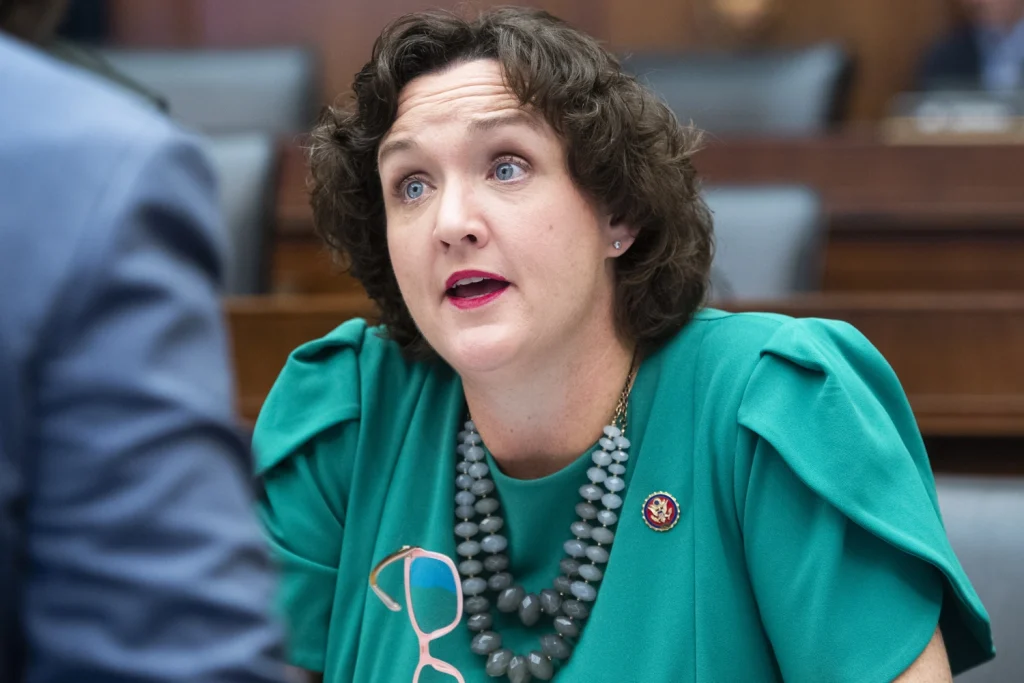
Katie Porter Abuse Allegations Resurface After Viral Interview Outburst
Former Congresswoman’s Interview Sparks Political Firestorm
Former U.S. Representative Katie Porter, now a leading candidate in California’s 2026 governor’s race, is facing renewed scrutiny after abruptly cutting off a television interview that quickly went viral. The clip has revived decade-old abuse allegations stemming from her divorce — accusations Porter has long denied — and injected fresh turbulence into one of the nation’s most high-profile gubernatorial campaigns.
Why It Matters
California’s open governor’s race has already become a test of temperament, transparency, and gendered double standards in politics. Porter, known nationally for her sharp questioning style during congressional hearings, is now confronting a narrative shift — from tough interrogator to potentially volatile candidate.
As she works to consolidate Democratic support in a crowded field, the controversy threatens to distract from her policy platform on housing, healthcare, and corporate accountability.
The Interview That Went Viral
During a sit-down with CBS News California Investigates correspondent Julie Watts, Porter was pressed about Proposition 50, a proposed ballot measure that could reshape California’s congressional maps. The tone shifted when Watts asked:
“What do you say to the 40 percent of California voters, who you’ll need in order to win, who voted for Donald Trump?”
Porter responded that she doesn’t believe she’ll need to win over Trump voters, citing California’s strong Democratic lean. As the reporter pressed further, Porter grew visibly irritated.
“I don’t want to keep doing this. I’m going to call it,” Porter said. “Not like this — not with seven follow-ups to every single question you ask.”
CBS later clarified that Porter stayed to finish the interview. Still, the video spread rapidly on X (formerly Twitter), prompting critics to question her temperament and leadership style.
The Allegations Revisited
Online commentators quickly resurfaced old abuse allegations from Porter’s contentious 2013 divorce from ex-husband Matthew Hoffman.
Hoffman once claimed that Porter had poured boiling or near-boiling potatoes on his head during a domestic dispute. Porter denied the allegation and filed for a restraining order, accusing Hoffman of being the aggressor. Her spokesperson, Lindsay Reilly, later said Hoffman’s lawyer filed a “reciprocal” protection order on the morning of the hearing — a common defensive tactic, she said, meant to intimidate victims.
“Her then-husband later admitted he regretted making these allegations,” Reilly told Fox News Digital.
The incident has become a flashpoint again after the viral interview, with conservative pundits framing Porter’s outburst as evidence of a long-standing anger problem.
Political strategist Steve Guest posted:
“CONFIRMED: Katie Porter has an anger problem.”
Republican commentator Matt Whitlock went further, writing:
“This Katie Porter crashout is incredible. Easy to imagine her pouring boiling mashed potatoes on her husband’s head.”
The renewed wave of scrutiny also revived a separate viral clip — Porter berating a staff member during a video call with then–Energy Secretary Jennifer Granholm, in which she told the staffer:
“Get out of my f****** shot.”
Inside the California Governor’s Race
The Democratic field remains crowded, with Xavier Becerra, Tony Thurmond, Antonio Villaraigosa, and Betty Yee also in contention. Republicans Chad Bianco and Steve Hilton are expected to compete for a smaller but energized GOP base.
Despite the uproar, Porter remains one of the best-known names in the race. Polling suggests her support remains steady among Democratic primary voters, though a large number of Californians remain undecided.
Former HHS Secretary Xavier Becerra appeared to allude to the controversy, saying:
“I’m not interested in excluding any voter. Every Californian deserves affordable health care, safe streets, and a roof over their head.”
Analyst Nate Silver offered a more sympathetic take, noting that “TV is a really unnatural medium,” and that Porter’s frustration may have been a “human reaction” to an adversarial setup.
Legal Angles: When Politics and Reputation Collide
Though most of the allegations are more than a decade old, several legal dynamics continue to shape how they’re handled and perceived:
| Legal Issue | Potential Impact | Key Considerations |
|---|---|---|
| Defamation Law | Porter could face or file suits over false or defamatory statements | As a public figure, Porter must prove “actual malice” — that false statements were made knowingly or with reckless disregard for the truth. |
| Reciprocal Restraining Orders | Mixed filings in her divorce case create ambiguity | California courts often see cross-filings in volatile domestic disputes. Porter’s team argues this was a defense maneuver. |
| SLAPP Protections | Lawsuits against media or commentators could backfire | California’s anti-SLAPP statute shields public commentary on matters of political or social concern. |
| Ethics and Disclosure | Past allegations may appear in opposition research or ethics reviews | Political opponents could legally obtain or publicize old filings under public records laws. |
| Privacy vs. Public Interest | Porter’s personal life remains politically relevant | Courts typically protect the public’s right to scrutinize candidates’ pasts when tied to character or conduct. |
New Section: The Temperament Trap — and Why It Matters
Political experts say Porter’s current challenge is less about the truth of the allegations and more about the narrative they create. In modern campaigns, especially for women in politics, emotional expression is often scrutinized differently — what might appear “passionate” in a male candidate can be labeled “volatile” in a female one.
The legal implications intersect with optics: a defamation lawsuit, for instance, could signal confidence in her innocence, but it could also prolong public discussion of the same allegations. Likewise, strategic silence risks letting online speculation harden into perception.
Campaign attorneys often advise candidates in Porter’s position to:
-
Preemptively release relevant documents from prior cases to show transparency.
-
Rely on verified court filings and legal records rather than public statements to avoid defamation exposure.
-
Monitor coordinated online activity for potential cyberdefamation or false information campaigns.
Ultimately, Porter’s legal and political teams face the same question: can they reframe the story before it defines her campaign?
What Comes Next
Porter’s campaign has yet to issue a formal comment, but sources say her team is refocusing on her policy message while privately reviewing legal options against any demonstrably false claims.
As the California primary season heats up, the intersection of law, politics, and personal narrative could determine whether Katie Porter remains a front-runner — or becomes the latest casualty of viral outrage in American politics.