Understand Your Rights. Solve Your Legal Problems


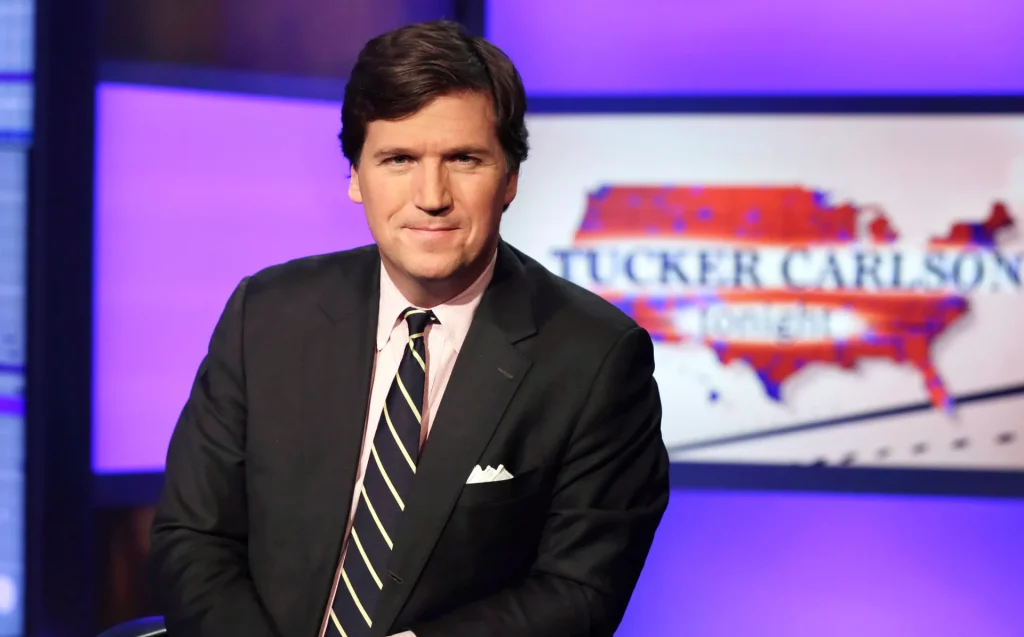
When Heritage Foundation president Kevin Roberts publicly defended Tucker Carlson after the podcaster’s friendly interview with Holocaust-denier Nick Fuentes, the backlash was immediate—and far from purely political. What looked like another flashpoint in America’s culture wars quickly raised deeper legal questions: Where does free speech end and reputational liability begin?
Roberts’ response, posted to X, framed the controversy as a moral and procedural test—a “cancel culture” trial by public opinion that, he argued, ignored the principle of due process. But his stance also spotlighted the fine line between moral conviction and legal exposure for nonprofits.
Heritage’s alignment with Carlson triggered internal unease and external criticism. In his video statement, Roberts condemned the “venomous coalition” attacking Carlson, calling him a “close friend of Heritage.”
The remarks collided with the Foundation’s own Project Esther, launched to combat antisemitism, and drew attention to 501(c)(3) governance limits. The IRS Office of Exempt Organizations warns that public endorsements inconsistent with charitable purpose can invite scrutiny. [Source: IRS Exempt Organizations Manual, §7.25.5]
“Nonprofits are fiduciaries of public trust,” said Dana Levenson, a media-law attorney. “When leaders defend figures accused of hate speech, they inherit reputational risk—even when the speech is constitutionally protected.”
Roberts contends that “canceling” controversial voices violates the spirit of open discourse. But critics argue that equating social accountability with censorship undermines ethical governance.
Legal ethicist Laura Friedman noted: “Due process in public debate isn’t a legal right—it’s an ethical aspiration. Invoking it gives institutions rhetorical cover against backlash, but it doesn’t remove responsibility.”
The Heritage controversy underscores how the language of law is often used to fight cultural battles—and how both sides risk losing the nuance in the noise.
Three key doctrines frame the discussion:
Defamation Law – Under New York Times v. Sullivan (1964), public figures must prove “actual malice.” Roberts’ defense skirts that threshold but amplifies reputational exposure.
Incitement Standard – Brandenburg v. Ohio (1969) limits prosecution of speech unless it advocates imminent lawless action. Carlson’s interview doesn’t meet that bar.
Nonprofit Compliance – 501(c)(3) rules prohibit campaign intervention but permit issue advocacy. Board oversight remains critical when public messaging risks donor or mission conflict.
These doctrines show why cancel-culture disputes often live in a gray area between law and ethics.
Policy groups are now drafting “disagreement clauses”—internal codes defining how staff can express or defend contentious viewpoints.
“Think-tanks face the same speech dilemmas as corporations,” said Professor Richard P. Chait. “Credibility is its currency — once trust erodes, even mission-driven advocacy becomes a liability.”
Expect more institutions to formalize internal review mechanisms that balance speech rights, public trust, and donor accountability.
The Heritage case reveals the human strain behind every reputational crisis—employees fearing guilt by association, donors questioning alignment, leaders trapped between principle and optics.
Roberts’ appeal for fairness may resonate with those fatigued by outrage culture, but it also exposes a new professional reality: in the digital age, speech is evidence. Every statement carries potential legal and reputational consequence.
For lawyers and nonprofit leaders alike, navigating that minefield isn’t optional—it’s survival.
There’s no specific “cancel culture law,” but existing legal frameworks offer partial protection. The First Amendment bars government censorship, not private or corporate backlash. However, defamation law, employment statutes, and tort claims—such as tortious interference with business relationships—can provide remedies when reputational damage causes measurable loss. Nonprofits also face exposure under 501(c)(3) rules if public statements breach fiduciary duties.
In practice, “canceling” may be cultural, but the fallout often plays out through established legal channels.