Understand Your Rights. Solve Your Legal Problems


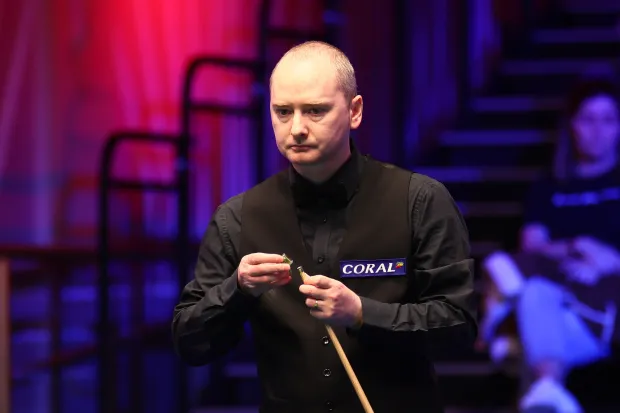
The case of former World Snooker Champion Graeme Dott, charged with historic child sex offences in Scotland, has reignited debate about how a justice system built on fair trial rights operates in an era of instant headlines and social media judgment.
At the High Court in Edinburgh, Dott, 48, appeared for a procedural hearing to amend his bail conditions ahead of a trial set for 2026.
He has denied all charges, which relate to two alleged victims from the Glasgow region, one dating back to the 1990s and another in the 2000s.
Even before any evidence is heard, his case has drawn the attention of a global audience and with it, questions about how far media coverage can go without jeopardising a fair trial.
Under Article 6 of the European Convention on Human Rights, every defendant is entitled to a fair and public hearing.
In practice, however, that right is increasingly hard to protect when online commentary and rolling news shape public perception long before juries are sworn in.
Legal commentators in Scotland have warned that pre-trial publicity can threaten impartiality.
A 2023 Scottish Government justice consultation described social-media speculation as a “modern challenge to fairness in criminal proceedings.”
While the Contempt of Court Act 1981 restricts reporting that risks prejudicing a case, the speed and reach of online media often outpace enforcement. What once appeared in print now circulates worldwide within minutes, blurring the line between information and influence.
At Dott’s hearing, defence lawyer Euan Dow told the court that an “administrative oversight” had prevented the accused from visiting his matrimonial home - a restriction promptly lifted by Judge Lord Harrower.
The adjustment, though minor, illustrates how bail conditions are finely balanced in serious criminal cases.
Under the Criminal Procedure (Scotland) Act 1995, judges must weigh public safety, flight risk, and the accused’s liberty, ensuring each restriction is proportionate.
Bail conditions may include curfews, travel bans, or no-contact orders. For public figures, scrutiny can intensify, as judicial decisions attract commentary that risks being mistaken for verdicts.
The allegations against Dott cover two time periods - 1993 to 1996, involving a girl, and 2006 to 2010, involving a boy.
These are classed as historic sexual abuse cases, where complaints are made years after the events in question.
Scotland has no statute of limitations for serious sexual offences, allowing prosecution regardless of delay.
However, such cases often hinge on witness testimony and credibility, as physical evidence may be unavailable. Judges must navigate the tension between trauma-sensitive justice and the procedural fairness owed to the accused.
Following the charges, Dott was suspended by the World Professional Billiards and Snooker Association (WPBSA) under its safeguarding policies.
The organisation stated the decision aimed to protect the sport’s integrity pending the trial’s outcome.
This raises wider questions about whether individuals should face professional sanctions before conviction.
Supporters view such suspensions as precautionary; critics see them as eroding the presumption of innocence. Governing bodies must balance duty of care against due process, a dilemma that Dott’s case makes particularly visible.
In high-profile criminal trials, digital-age publicity can blur the boundaries between reporting and judgment. Every update risks being interpreted as confirmation of guilt or innocence.
The Judicial Office for Scotland has urged media restraint, emphasising that justice “depends on disciplined and accurate reporting.”
The Graeme Dott case underscores how maintaining that discipline is becoming increasingly difficult in an environment of viral headlines and online speculation.
Beyond the allegations themselves, Dott’s case represents a broader test of Scotland’s ability to uphold fair trial rights amid digital-era pressures.
Courts, journalists, and the public are being forced to reconsider how justice functions when reputation can be reshaped overnight.
Whatever the verdict, this trial will serve as a benchmark for how Scotland balances media freedom with judicial impartiality - a balancing act that lies at the core of democratic justice.
How does Scottish law protect the right to a fair trial?
Article 6 of the ECHR guarantees fair trial rights. Scottish courts enforce this through jury vetting, contempt-of-court restrictions, and evidentiary safeguards.
What are bail conditions in serious criminal cases?
Bail conditions may include curfews, reporting requirements, or contact bans. Judges balance risk, safety, and proportionality under the Criminal Procedure (Scotland) Act 1995.
Can the media influence the outcome of a trial?
Yes. Pre-trial publicity can risk jury bias, which is why the Contempt of Court Act 1981 limits prejudicial reporting while proceedings are active.
Are historic abuse cases still prosecuted in Scotland?
Yes. There is no statute of limitations for serious sexual offences, though such cases often depend on credibility and corroboration.