Freed Israeli Hostages to Receive Millions in Compensation After 738 Days of Captivity — as Families Reunite and Israel Launches National Recovery Plan
After more than two years in Hamas captivity, seven Israeli hostages have finally returned home — and the Israeli government has unveiled a sweeping National Hostage Rehabilitation and Compensation Program worth millions of shekels. Announced just hours after their release on October 13, 2025, the plan promises every survivor a one-time payment, lifelong medical care, and monthly financial support — marking Israel’s largest civilian restitution effort since the Yom Kippur War.
Under the new Israeli hostage compensation plan 2025, each freed captive will receive a one-time grant of 60,000 shekels (≈ $16,000), a monthly stipend of 9,000 shekels (≈ $2,400), and up to 300,000 shekels (≈ $80,000) in housing aid to help rebuild shattered lives. The state has pledged full coverage of medical and psychological treatment for as long as required, with additional support for families of those still missing or killed in Gaza.
Officials say the program will be managed jointly by the Hostages and Missing Persons Directorate and Bituach Leumi (National Insurance Institute), with funding from Israel’s national budget and contributions from U.S. and European humanitarian partners. A new charitable fund — Am Israel Chai: The Hostage Fund — will channel private donations for trauma therapy, education, and rehabilitation.
Tears, Flags, and a Nation United
Israel erupted in collective relief Monday as the first group of Israeli hostages released by Hamas were handed over to the Red Cross and flown home after 738 harrowing days underground.
The seven freed hostages — Matan Angrest, twin brothers Gali and Ziv Berman, Alon Ohel, Eitan Mor, Guy Gilboa-Dalal, and Omri Miran — were taken into custody by the Red Cross and transported to the Re’im military base near Gaza for immediate medical checks.
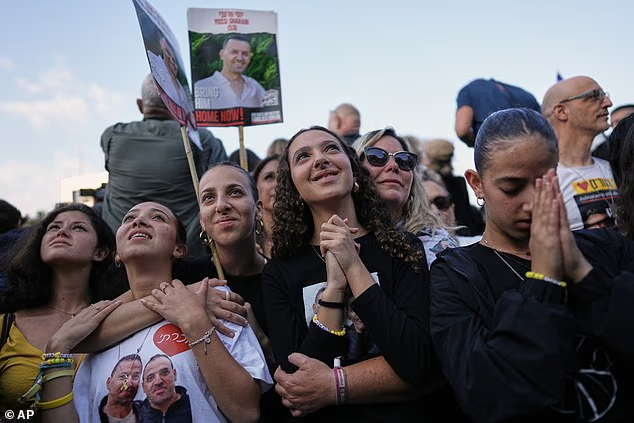
Crowds filled Tel Aviv’s Hostages Square to watch the live broadcast. “We’ve been holding our breath for two years,” said Liat Oren, a cousin of another captive still in Gaza. “Now, for the first time, we can breathe.”
Across Israel, car horns blared, flags waved from balconies, and strangers embraced in the streets as confirmation came that the convoy had crossed the border.
Reunion at Re’im
At the Re’im military base, trauma specialists and doctors stood ready as helicopters carrying the freed men landed before dawn. They were draped in Israeli flags, visibly frail but alive.
British-Israeli survivor Emily Damari, who was freed last January, wept as she watched her best friends Gali and Ziv Berman on live TV. “We all promised each other we’d come home,” she said. “I just never thought this day would come.”
“I don’t know what kind of son I’m getting back,” said Ilan Dalal, father of hostage Guy Gilboa-Dalal. “I just want to hug him and tell him the nightmare is over.”
Inside the Captivity
Medical reports confirm severe malnutrition and trauma among the returned hostages. One still-held captive, Evyatar David, was reportedly forced to dig tunnels — and at one point, his own grave. Survivors described hunger, darkness, and isolation as daily torment.
“They talked about food to stay sane,” said an IDF psychologist who debriefed one of the men. “They clung to small memories of normal life just to feel human.”
A Fragile Peace Deal
The Donald Trump–brokered Israel–Hamas peace deal paved the way for this release, under which 20 living Israeli hostages will be freed in exchange for 1,900 Palestinian prisoners.
Trump arrived in Tel Aviv Monday morning, calling the moment “a triumph of courage and diplomacy.” He will address the Knesset before heading to Egypt for a joint peace summit with Sir Keir Starmer, President Abdel Fattah el-Sisi, and Qatari envoys.
Prime Minister Benjamin Netanyahu hailed the exchange as “the beginning of a new path,” adding: “Together we will win, and with God’s help we will guarantee the eternity of Israel.”
The Israel Defense Forces confirmed plans to destroy all remaining Hamas tunnels in Gaza, while an Arab-led peacekeeping mission will secure the enclave’s interior. The ceasefire — delicate and heavily monitored — has been described by international observers as a “make-or-break moment” for long-term stability.
Rebuilding Lives: Compensation and Recovery
For those returning home, freedom marks the beginning of a different battle — learning how to live again. Under the National Hostage Rehabilitation and Compensation Program, the Israeli government has committed to long-term care, financial support, and community reintegration.
Each released hostage will receive:
-
One-time payment: 60,000 ₪ (≈ $16,000)
-
Monthly stipend: 9,000 ₪ (≈ $2,400) for life
-
Housing grant: Up to 300,000 ₪ (≈ $80,000) toward a new home
-
Medical and psychological coverage: Unlimited trauma care, rehabilitation, and therapy
-
Family support: Travel reimbursement, income replacement, and counselling for relatives
Officials say the initiative will be funded primarily through the Israeli state budget, supplemented by U.S. humanitarian funds, European donors, and private Jewish organizations. The Knesset is also debating a proposal to raise the disability classification for former hostages to 100%, unlocking higher pensions and expanded benefits.
“The state owes them everything,” said government spokesperson Yael Ben-David. “They suffered because they were Israeli — their recovery belongs to all of us.”
Private donations have already begun flowing in through the Hostage Fund, which is expected to raise tens of millions of shekels over the coming months for long-term rehabilitation and education programs.
The Long Road to Recovery
Experts warn that while freedom has come, healing will take years. “They have endured starvation, sensory deprivation, and constant fear,” said Dr. Liat Ben-Ami, head of Israel’s Trauma Recovery Unit. “Coming home is only the first step.”
As families reunite, a quiet wave of gratitude has replaced months of public anguish. Yellow ribbons still hang from balconies, a national reminder of those yet to come home.
Former hostage Emily Damari summed up the mood: “Money can’t erase what happened. But knowing the country stands behind us — that’s how you start to live again.”