Former NFL Star Doug Martin, 36, Dies After 'Brief Struggle' with Police During Detention — Legal Questions Mount Over Mental Health and In-Custody Death
Oakland, CA – October 21, 2025 – Former Tampa Bay Buccaneers and Oakland Raiders running back Doug Martin, a two-time Pro Bowl selection and fan favorite, died unexpectedly on Saturday morning at the age of 36 after becoming unresponsive while being detained by police in Oakland, California.
The tragic incident, which the Oakland Police Department (OPD) is classifying as an "in-custody death," has immediately ignited a national conversation about police response to mental health crises and the critical question of accountability in law enforcement.
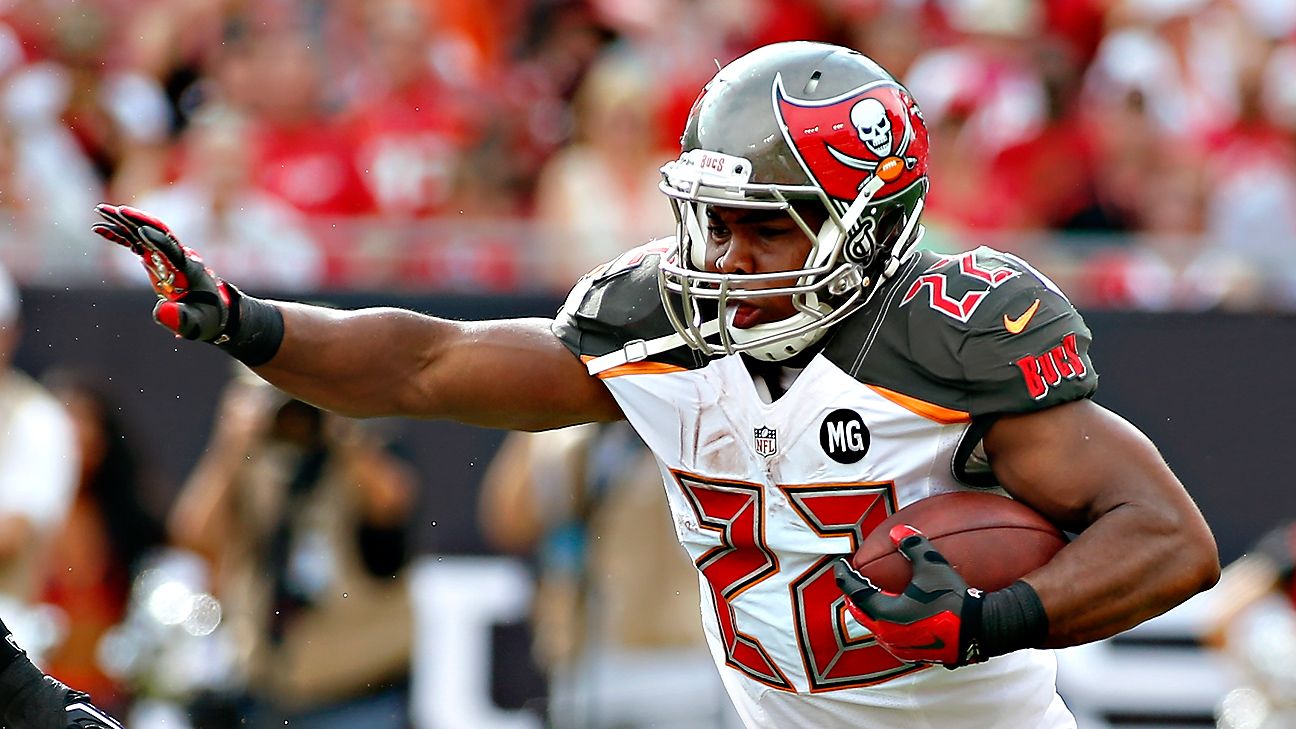
Former Tampa Bay Buccaneers running back Doug Martin in action during an NFL game. The two-time Pro Bowler’s death after a reported struggle with Oakland police has sparked investigations and renewed debate over in-custody deaths and police accountability.
The Emergency Call, the Struggle, and the Silence
According to a statement released by the Oakland Police on Monday, officers responded to a reported break-in at a residence in East Oakland around 4:15 a.m. Saturday. Upon arrival, they encountered Doug Martin, who was allegedly involved in the break-in.
Police stated that a “brief struggle occurred” while officers attempted to detain him. After Martin was handcuffed and taken into custody, he reportedly became unresponsive. Paramedics were called to the scene, provided medical aid, and transported the former athlete to a local hospital, where he later died. The official cause of death remains unconfirmed pending an autopsy by the Alameda County Coroner’s Office.
Heartbreak: Family Reveals Mental Health Battle
The police narrative was quickly clarified and complicated by a devastating statement from Martin’s former agent, Brian Murphy, on behalf of the family.
“Privately, Doug battled mental health challenges that profoundly impacted his personal and professional life,” Murphy stated. The family shared that Martin’s parents had been actively trying to get him medical help and had contacted local authorities for support.
The events leading up to the arrest were apparently driven by his disorientation: “Feeling overwhelmed and disoriented, Doug fled his home during the night and entered a neighbor’s residence two doors down, where he was taken into custody by police,” the statement revealed.
The family’s heartbreaking conclusion: “Ultimately, mental illness proved to be the one opponent from which Doug could not run.”
This revelation shifts the entire focus of the investigation, raising urgent questions about whether responding officers recognized Martin was in a severe psychiatric or medical crisis, not simply a criminal event.
The Legal Fallout: Constitutional Rights and Duty of Care
The death of a detainee while in the custody of law enforcement triggers immediate and rigorous legal review under U.S. law. In this case, the legal scrutiny centers on two critical areas: the police use of force and their constitutional “duty of care.”
1. Excessive Force and Constitutional Violation
The "brief struggle" mentioned by police will be the primary focus of the legal inquiry. Under the U.S. Constitution's Fourth and Fourteenth Amendments, police force must be reasonable and proportional to the threat.
- The Key Question: Did the force used by officers during the struggle—even a "brief" one—contribute to Martin's death, or was it a factor in his loss of consciousness? Restraint methods that impede breathing, particularly when the subject is under mental or medical duress, have been deemed unconstitutional by courts in excessive force cases.
- The Federal Claim: Martin’s family could pursue a federal civil rights claim under 42 U.S.C. § 1983, which allows citizens to sue government actors for the deprivation of constitutional rights.
2. Medical Negligence and Failure to Render Aid
Once police detain an individual, they assume a constitutional “duty of care” to ensure the detainee’s safety and medical well-being. This responsibility is paramount when a person is showing signs of distress, disorientation, or a medical emergency—all factors potentially present in Martin’s case.
- Duty to Recognize Distress: Civil rights attorneys will investigate whether officers failed to recognize Martin’s actions as signs of a mental health emergency, especially given the OPD was potentially contacted by the family beforehand seeking support.
- Timely Medical Care: Legal precedent, including the Supreme Court’s 1983 decision in City of Revere v. Massachusetts General Hospital, mandates that officers must ensure detainees receive prompt medical care. Any delay in calling paramedics or administering CPR once Martin became unresponsive could constitute deliberate indifference, a high bar for negligence that can lead to liability.
Accountability: Multiple Agencies Descend on the Case
Acknowledging the severity of an in-custody death, the Oakland Police Department has confirmed that the officers involved have been placed on paid administrative leave, which is standard policy.
However, reflecting the layered oversight in California, the investigation is not limited to the OPD. Multiple independent agencies are involved, including:
- The OPD Homicide Section and Internal Affairs Bureau.
- The independent civilian-led Community Police Review Agency.
- The Alameda County District Attorney’s Office.
- The state Attorney General, as mandated by California Government Code S 12525 for all in-custody deaths.
These investigations will be crucial in determining whether the officers’ actions violated departmental policy or Martin’s civil rights.
A Star’s Legacy Overshadowed
For football fans, Doug Martin was the explosive "Muscle Hamster," the 31st overall pick in the 2012 NFL Draft. His rookie season with the Buccaneers was legendary, totaling 1,454 rushing yards and 11 touchdowns—a performance that earned him a Pro Bowl nod and First-Team All-Pro honors. He returned to the Pro Bowl in 2015.
The Buccaneers released a statement expressing their grief: "We are deeply saddened to learn of the sudden and unexpected passing of Doug Martin... He was a fan favorite and was honored as one of the Top 50 Buccaneers of all time."
Martin’s career was ultimately cut short by injuries and personal issues, but his sudden death shines a spotlight not just on his legacy on the field, but on the national crisis of how law enforcement handles individuals—including public figures—suffering a severe mental health crisis.
As the body camera footage and investigation findings are reviewed, the ultimate legal question will be laid bare: Did Doug Martin’s constitutional rights to safety and medical care end the moment he was detained?
The family, now left to mourn a vibrant life cut short, is demanding answers and justice, an all-too-familiar plea in the growing number of police custody deaths across America.
Doug Martin’s death Frequently Asked Questions (FAQ)
What caused Doug Martin’s death?
Doug Martin’s exact cause of death has not yet been officially determined. According to the Oakland Police Department, Martin became unresponsive after a brief struggle with officers who were detaining him in connection with an alleged break-in at a residence in Oakland, California, on October 18, 2025. He was taken to a local hospital, where he later died. The Alameda County Coroner’s Office is conducting an autopsy to determine the medical cause of death, while multiple agencies continue to investigate the circumstances surrounding the incident.
What happens when someone dies in police custody?
Under U.S. law, any death that occurs while a person is detained or restrained by law enforcement triggers immediate internal, local, and often state-level investigations. In California, Government Code §12525 requires that all in-custody deaths be reported to the Attorney General within 10 days. Federally, the Death in Custody Reporting Act of 2013 also mandates reporting to the U.S. Department of Justice.
If investigators find evidence of misconduct, civil rights charges may be filed under 42 U.S.C. §1983, and the victim’s family may pursue a wrongful death or excessive force lawsuit.
What happened to Doug Martin?
According to police reports, officers responded to a break-in in the 11000 block of Ettrick Street in Oakland early on the morning of October 18, 2025. When officers encountered Martin, they attempted to detain him, resulting in a “brief struggle.” Shortly after being restrained, he became unresponsive. Paramedics arrived to provide medical aid and transported him to a hospital, where he died a short time later. His family’s representative has said he had been experiencing a mental health crisis at the time of the incident.
Where was Doug Martin when he died?
Doug Martin died in Oakland, California, after being transported from the scene of an alleged residential break-in to a nearby hospital. Police confirmed the location of the initial incident was a private residence on Ettrick Street in the city’s eastern district.